









































How to Prepare Your First Greenhouse Gas Inventory: A Step-by-Step Guide for Businesses
Learn how to prepare your first Greenhouse Gas (GHG) inventory with a structured approach to identifying emission sources, collecting accurate data, calculating your carbon footprint, ensuring compliance, and developing a sustainability roadmap. Discover how businesses can strengthen their sustainability journey through effective GHG reporting and consultancy with Conserve Solutions.

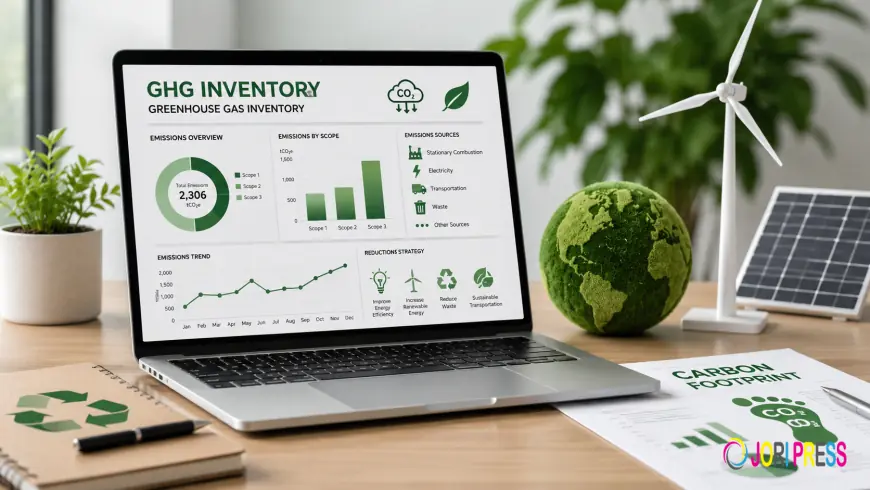
As sustainability expectations continue to grow, businesses are under increasing pressure to understand and manage their greenhouse gas (GHG) emissions. Governments, investors, customers, and other stakeholders now expect organizations to measure, report, and reduce their carbon footprint. Preparing your first greenhouse gas inventory is an important step toward building a transparent and sustainable business.
A well-prepared GHG inventory helps organizations understand where emissions originate, improve operational efficiency, support compliance with reporting requirements, and establish a foundation for long-term carbon reduction initiatives. According to Conserve Solutions, GHG reporting is more than a compliance exercise—it is a strategic process that enables businesses to make informed sustainability decisions and strengthen stakeholder confidence.
Who Should Prepare a Greenhouse Gas Inventory?
A greenhouse gas inventory is valuable for organizations that are:
-
Beginning their sustainability journey
-
Looking to understand their carbon footprint
-
Preparing for regulatory or voluntary reporting requirements
-
Setting measurable sustainability goals
-
Planning carbon reduction initiatives
Whether your organization is taking its first step or improving an existing sustainability program, having accurate emissions data is essential for informed decision-making.
Step 1: Identify Your Emission Sources
The first step in preparing a greenhouse gas inventory is identifying the activities that generate emissions within your organization.
Conserve Solutions emphasizes evaluating major emission sources such as:
-
Energy consumption
-
Transportation
-
Waste generation
-
Other operational emission sources
Collecting information from these areas provides the foundation for calculating your organization's total carbon footprint.
Step 2: Collect Accurate Data
Reliable reporting depends on quality data.
A structured data collection process ensures that emissions calculations are consistent and meaningful. Conserve Solutions follows recognized industry protocols, including ASHRAE and ISO 50001, to support accurate data collection and detailed analysis. Using recognized methodologies helps organizations improve confidence in their reporting and provides a stronger basis for future sustainability planning.
Step 3: Calculate Your Carbon Footprint
Once operational data has been gathered, it can be used to determine the organization's overall greenhouse gas emissions.
The emissions inventory combines information from identified sources to provide a comprehensive view of the business's carbon footprint. This inventory becomes an important reference point for monitoring progress and identifying future improvement opportunities.
Step 4: Ensure Compliance with Reporting Requirements
Reporting expectations continue to evolve, making compliance an important part of greenhouse gas reporting.
Businesses need to ensure that their reports align with applicable international standards as well as local reporting requirements. A compliant report reduces regulatory risks while providing confidence to customers, investors, and other stakeholders that environmental information is being reported transparently.
Step 5: Benchmark Performance and Set Practical Goals
After establishing the inventory, organizations can compare their emissions against industry benchmarks.
Benchmarking provides valuable insights into current performance and helps businesses establish realistic, science-based reduction targets for continuous improvement. Rather than viewing the inventory as a one-time exercise, organizations can use it as a planning tool for future sustainability initiatives.
Step 6: Develop a Carbon Reduction Strategy
Understanding emissions is only the beginning.
The next step is developing a structured carbon reduction strategy that supports a transition toward lower emissions. Conserve Solutions helps businesses create practical plans focused on energy efficiency improvements and emission reduction initiatives that align with organizational objectives.
Step 7: Create a Sustainability Roadmap
Long-term sustainability requires a clear plan.
A sustainability roadmap provides a step-by-step approach that outlines practical actions organizations can take to achieve their environmental goals. Having a structured roadmap allows businesses to monitor progress while continuously improving sustainability performance over time.
Step 8: Explore Renewable Energy Opportunities
As part of ongoing sustainability efforts, organizations can evaluate renewable energy options.
Conserve Solutions supports businesses in integrating renewable energy sources such as solar and wind to reduce dependence on fossil fuels while lowering greenhouse gas emissions. Renewable energy can become an important component of a broader carbon reduction strategy.
Step 9: Engage Employees in Sustainability
Successful sustainability initiatives involve more than systems and processes—they require people.
Employee engagement and sustainability training help organizations build awareness of best practices and encourage participation in environmental initiatives. Creating a culture of sustainability supports long-term organizational success and helps maintain momentum toward emission reduction goals.
Why Your First GHG Inventory Matters
Preparing a greenhouse gas inventory provides more than a record of emissions. It enables organizations to:
-
Better understand their carbon footprint
-
Improve operational efficiency
-
Meet reporting and compliance expectations
-
Build credibility with customers, investors, and stakeholders
-
Establish measurable sustainability objectives
-
Support informed business decisions using accurate emissions data
A structured inventory also creates the foundation for continuous improvement as sustainability expectations continue to evolve.
Conclusion
Preparing your first greenhouse gas inventory is an important milestone in any organization's sustainability journey. By identifying emission sources, collecting accurate data, ensuring regulatory compliance, benchmarking performance, and developing practical carbon reduction strategies, businesses can build a strong foundation for long-term environmental responsibility.
Conserve Solutions supports organizations throughout this process by providing comprehensive greenhouse gas reporting and consultancy services—from emissions inventory and data analysis to compliance support, sustainability roadmaps, renewable energy integration, and carbon reduction strategies. With a structured, data-driven approach, businesses can confidently begin their sustainability journey while building transparency, improving operational performance, and working toward meaningful environmental impact.
What's Your Reaction?
 Like
0
Like
0
 Dislike
0
Dislike
0
 Love
0
Love
0
 Funny
0
Funny
0
 Angry
0
Angry
0
 Sad
0
Sad
0
 Wow
0
Wow
0