





































How to Choose the Right Landscape Rendering Services for Commercial Projects
Learn how to choose the right landscape rendering services for commercial developments. Discover key criteria for evaluating CAD/BIM integration, portfolios, and costs.

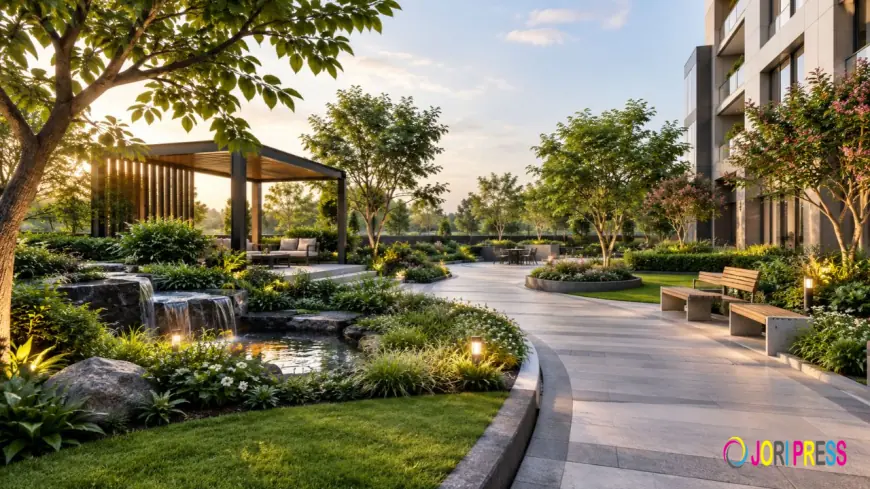
In modern commercial real estate development, outdoor environments are central to a property's identity, foot traffic, and overall asset value. Whether designing corporate headquarters, mixed-use retail centers, high-rise urban plazas, or resort destinations, project teams must communicate site plans with absolute visual clarity. Utilizing professional landscape rendering services helps architects, developers, and contractors convert complex civil plans into photorealistic digital visuals. Highlighting specialized landscape rendering for commercial developments ensures that planning boards, equity partners, and future tenants share a clear, unified vision of proposed site improvements before construction begins.
Key Technical Requirements in Landscape Architecture Rendering
Commercial site designs feature complex combinations of hardscaping, softscaping, site grading, and civil infrastructure. When evaluating rendering studios, assessing their technical proficiency in landscape architecture rendering is essential to maintain design integrity.
High-quality 3D landscape rendering requires specific technical execution:
- Botanical Accuracy: The visual team must accurately depict climate-appropriate plant species, seasonal foliage changes, and natural growth scaling relative to surrounding structures.
- Hardscape and Material Precision: Stone pavers, retaining walls, custom outdoor millwork, and water features must accurately reflect specified material schedules and surface textures.
- Environmental Context and Lighting: Photorealistic visuals depend on accurate sun angles, natural shadow casting, weather effects, and atmospheric conditions that match real-world site orientation.
Firms with deep expertise in broad architectural visualization bring structural rigor to every scene, bridging the gap between schematic civil drawings and realistic spatial experiences.
Aligning Rendering Scope with Commercial Project Needs
Commercial developments vary significantly in scale, requiring visualization partners to adapt their approach based on the project phase and target audience. Ensure your rendering partner offers a complete suite of services suited to your specific requirements.
Pedestrian-Level Streetscapes and Urban Spaces
For city developments, mixed-use centers, and commercial corridors, specialized streetscape rendering highlights storefront interaction, sidewalk seating, public furniture, transit connections, and street lighting with natural human activity.
Seamless Building and Site Integration
A successful site presentation demonstrates how green spaces connect with built structures. Detailed exterior rendering solutions help teams show how courtyards, entry plazas, and green roofs interact with building facades and glass reflections.
Partnering with a firm capable of handling both detailed street-level interactions and broad aerial master plans prevents visual inconsistencies across your project marketing collateral.
CAD and BIM Pipeline Compatibility
Technical accuracy is critical when translating civil engineering and architectural plans into 3D models. A common challenge in commercial landscape rendering occurs when visualization artists work isolated from constructible project files, leading to discrepancies on site.
Ensure your rendering partner works directly with industry-standard file formats, including AutoCAD, Revit, BIM models, SketchUp, and Rhino. Working directly from design documentation eliminates duplicate work, speeds up revision cycles, and ensures visual accuracy. Established AEC support partners like McLine Studios provide integrated CAD, BIM, and visualization services, ensuring that rendered outdoor elements match constructible architectural plans.
Evaluating Landscape Rendering Cost and Return on Investment
Understanding how pricing is calculated helps project managers allocate budget effectively without sacrificing visual quality. A studio’s landscape rendering cost is typically determined by:
- Site Scale and Topography: Expansive master plans with complex terrain require more modeling time than compact entry plazas.
- Level of Detail (LOD): Custom vegetation, specialized outdoor furniture, and complex lighting setups increase production hours.
- Deliverable Formats: High-resolution still images, 360-degree interactive virtual tours, and full 3D video walkthroughs carry different production demands.
While low-cost rendering providers may seem budget-friendly initially, choosing an established landscape rendering company yields significant long-term ROI. Photorealistic visuals accelerate municipal zoning approvals, identify spatial clashes before construction, and drive pre-leasing agreements with major anchor tenants.
Workflow Best Practices for Design Teams
To ensure an efficient and successful rendering process, design teams should establish clear project protocols:
- Supply Complete Input Packages: Share accurate CAD/Revit files, site grading plans, lighting specifications, and specific plant schedules.
- Define Presentation Goals: Identify whether the renders are intended for municipal planning reviews, investor pitch decks, or public marketing campaigns.
- Finalize Camera Angles Early: Approve wireframe or clay render camera views before the studio applies high-resolution textures, lighting, and botanical details.
Conclusion
Selecting the right partner for commercial outdoor visualization requires balancing artistic realism, software compatibility, and technical expertise. By reviewing portfolio depth, ensuring CAD/BIM integration, and establishing clear review milestones, developers and design professionals can secure high-impact visual assets. Investing in professional landscape rendering services streamlines municipal approvals, mitigates risk, and brings commercial developments to life.
What's Your Reaction?
 Like
0
 Dislike
0
 Love
0
 Funny
0
 Angry
0
 Sad
0
 Wow
0