







































How Professional House Painters in Brisbane Work: From Preparation to Final Finish
See what happens behind a professional paint job, from surface repairs and product selection to careful application and the final quality check.

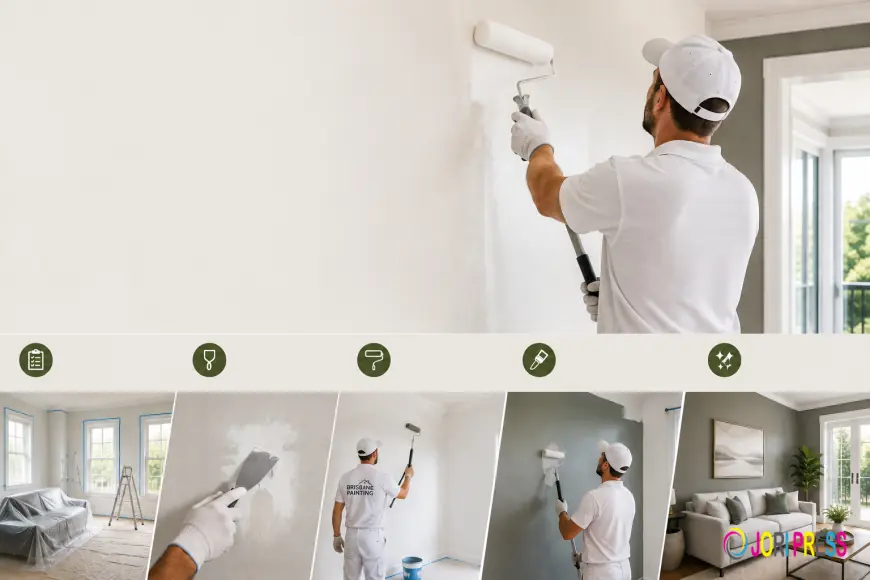
A professional house painting job is rarely about simply choosing a colour and putting two coats on the wall. The visible paint is actually the final step in a much longer process.
When you hire house painters in Brisbane, the quality of the result depends heavily on what happens before painting starts, from checking the surface and fixing defects to choosing coatings that can cope with Brisbane's weather.
That preparation is easy to overlook because most of it disappears once the project is finished. But it is often where the difference between a quick repaint and a durable finish is created.
1. The Job Begins With a Surface Assessment
Before opening a paint tin, an experienced painter looks closely at the property.
Interior walls may have dents, old patches, grease, stains or several layers of previous paint. Exterior walls can have chalking, mould, mildew, dirt, peeling coatings and weather-related deterioration.
Timber adds another consideration. Fascias, eaves, doors and other timber elements may show splitting, exposed areas or coating failure that needs attention before repainting.
The painter is essentially trying to answer one question:
What does this surface need before it is ready to accept new paint?
That answer determines the preparation, primer and coating system required.
2. Cleaning Comes Before Cosmetic Improvements
A dirty surface can make even good paint perform poorly.
Interior surfaces might need dust removal or degreasing, particularly around kitchens and high-touch areas. Exterior surfaces generally require more substantial cleaning because they are exposed to Brisbane's dust, rain, humidity and organic growth.
Pressure washing can be useful on appropriate exterior surfaces, but it has to be done carefully. Excessive pressure can damage substrates, force water into unwanted areas or make an existing problem worse.
The objective isn't simply to make the wall look clean.
It is to create a sound surface with which the new coating can properly bond.
3. Cracks, Holes and Peeling Paint Need Attention
Painting over defects is one of the easiest ways to produce a disappointing result.
Small nail holes and surface imperfections can generally be filled and sanded. Larger cracks require more investigation. If a crack is caused by movement or another underlying issue, simply filling it may only provide a temporary cosmetic repair.
Loose paint also needs to be removed. If a new coating is applied over unstable old paint, the new finish is only as reliable as the layer underneath it.
This is why preparation isn't just about making walls look smooth. It is about creating a stable substrate.
4. Primer Is Selected According to the Surface
Primer has a specific job. It can improve adhesion, seal porous surfaces, help cover certain stains and create a suitable base for the finishing coats.
But there is no universal primer that should be used everywhere.
Bare timber, patched plasterboard, masonry and previously painted surfaces can have different requirements. A painter needs to consider the substrate and the existing coating before deciding what system makes sense.
This is particularly relevant when a repair has been made. A freshly patched section can absorb paint differently from the surrounding wall, potentially leaving a noticeable patch or variation in sheen.
A suitable primer or sealer can help prevent that problem.
5. Brisbane's Climate Changes the Exterior Painting Equation
Brisbane's subtropical climate deserves consideration when an exterior painting project is planned.
Exterior coatings have to deal with strong sunlight, rainfall, humidity and temperature fluctuations. Moisture can also become a concern when painting surfaces that have not dried sufficiently after cleaning or wet weather.
Timing therefore matters.
A professional painter needs to consider the weather and the manufacturer's application requirements rather than treating every day as an ideal painting day.
Painting in unsuitable conditions can affect drying, adhesion and the final appearance of the coating.
For homeowners, this is one reason an exterior project shouldn't be judged solely by how quickly a contractor says it can be completed.
6. Different Surfaces Require Different Techniques
A house isn't made from one material.
You may have plasterboard walls inside, masonry outside, timber doors, metal fixtures, rendered surfaces and previously painted trims. Treating all of them identically is unlikely to produce the best result.
Rollers are useful for covering large wall areas efficiently. Brushes provide control around corners, trims and detailed sections. Spray application can be effective for particular surfaces and larger areas, but it requires careful masking and preparation.
The equipment is only part of the equation.
Knowing which method to use, where to use it and how to finish the surface is what matters.
7. The Number of Coats Isn't the Only Measure of Quality
Homeowners sometimes focus heavily on whether a painter is applying one or two coats.
That's understandable, but coat count alone doesn't tell you much.
Coverage depends on the existing colour, substrate, paint product, application method and chosen finish. A dramatic colour change may require a different approach from repainting a similar shade.
More coats aren't automatically better, either. Each layer needs to be compatible with the previous one and applied under suitable conditions.
The better question to ask is:
What coating system is appropriate for this particular surface, and why?
That question gives you much more useful information than simply asking how many tins of paint will be used.
8. Edges and Trim Reveal the Quality of the Work
Large walls are relatively forgiving. Details aren't.
Look closely at skirting boards, architraves, window frames, door edges and transitions between walls and ceilings. Poor cutting-in or careless application becomes obvious in these areas.
Professional results usually come from controlled application rather than rushing to cover square metres.
There is also a practical reason for this. Clean edges make different surfaces visually separate, which gives the room a more finished appearance even when the colour scheme itself is simple.
9. Drying Time Is Part of the Process
One common misconception is that once paint feels dry, another coat can immediately go on.
Not necessarily.
Paint manufacturers specify drying and recoating conditions, and those can be affected by temperature, humidity, ventilation and the particular product being used.
Brisbane's humidity can therefore matter during a painting project.
A painter who allows the coating to cure appropriately may take longer than someone trying to rush through the job. In this case, slower can actually mean better.
10. The Final Inspection Is More Than a Quick Look
When the painting is finished, the property should be inspected carefully.
That means checking the walls, ceilings, trims and other painted surfaces for inconsistent coverage, drips, missed areas, visible marks or sections requiring touch-ups.
The inspection should happen before equipment and protective coverings completely disappear from the work area.
A useful final walkthrough also gives the homeowner a chance to raise concerns while the painting team is still on site.
What Homeowners Should Ask Before Hiring a Painter
If you're comparing painting contractors in Brisbane, don't limit the conversation to price.
Ask:
- What preparation is included in the quote?
- Will damaged or peeling areas be repaired?
- Which primer and paint products are being recommended?
- How many coats are appropriate for the existing surface?
- How will exterior surfaces be cleaned?
- How will weather conditions affect the schedule?
- Is protection of floors, furniture and landscaping included?
- What happens if touch-ups are required after the final inspection?
These questions make quotes easier to compare because you're looking at the scope and quality of the work, not just the final number.
A Professional Finish Starts Before the Paint
The biggest misconception about house painting is that the paint itself does most of the work.
It doesn't.
A durable, clean-looking finish comes from a sequence of decisions: inspect the surface, address defects, clean it properly, select compatible products, apply them under suitable conditions and pay attention to the details.
That's the part homeowners don't always see.
And that's also why two freshly painted houses can look very different a year or two later. The colour may be identical, but the preparation and application behind it may not be.
What's Your Reaction?
 Like
0
Like
0
 Dislike
0
Dislike
0
 Love
0
Love
0
 Funny
0
Funny
0
 Angry
0
Angry
0
 Sad
0
Sad
0
 Wow
0
Wow
0