






































How Oil Seals Improve Equipment Performance
An oil seal, also known as a shaft seal or rotary seal, is a mechanical sealing component designed to retain lubricants inside equipment while preventing contaminants from entering. Oil seals create a tight sealing barrier between rotating shafts and stationary machine components.

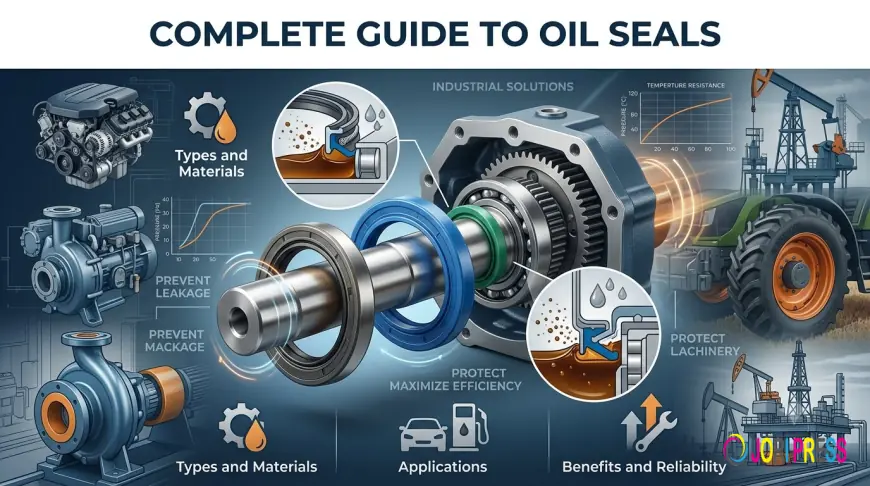
Oil seals are essential sealing components used in industrial machinery, automotive systems, hydraulic equipment, and rotating machinery. Their primary function is to prevent lubricant leakage while keeping dust, dirt, moisture, and contaminants away from moving components. High-quality industrial oil seals improve equipment efficiency, reduce maintenance costs, and extend machinery lifespan.
Modern industries rely on durable oil seals because they ensure smooth machine operation under demanding conditions. Whether used in pumps, motors, gearboxes, compressors, or heavy industrial equipment, selecting the right oil seal plays a crucial role in achieving reliable sealing performance.
What Are Oil Seals?
An oil seal, also known as a shaft seal or rotary seal, is a mechanical sealing component designed to retain lubricants inside equipment while preventing contaminants from entering. Oil seals create a tight sealing barrier between rotating shafts and stationary machine components.
Manufactured using high-quality elastomers and reinforced materials, industrial oil seals are designed to perform efficiently under varying temperatures, pressures, and operating environments.
Why Oil Seals Are Important
Without effective oil seals, machinery would experience lubricant leakage, contamination, excessive wear, and premature component failure.
Key advantages include:
-
Prevent lubricant leakage
-
Protect against dust and contaminants
-
Reduce equipment wear
-
Improve machine efficiency
-
Increase bearing life
-
Minimize maintenance costs
-
Support reliable equipment operation
-
Enhance sealing performance
-
Reduce downtime
-
Improve operational safety
These benefits make oil seals an indispensable component across industrial sectors.
Types of Oil Seals
Different applications require different oil seal materials and designs.
Nitrile Oil Seals
Nitrile oil seals provide excellent resistance to:
-
Mineral oils
-
Grease
-
Hydraulic fluids
-
Petroleum-based lubricants
They are widely used in automotive and industrial machinery.
Silicone Oil Seals
Silicone oil seals offer outstanding performance in high and low temperature environments. They are commonly used in food processing, pharmaceutical, and medical equipment.
EPDM Oil Seals
EPDM oil seals perform well in water, steam, and weather-resistant applications but are generally not recommended for petroleum oils.
Fluoro Rubber Oil Seals
Fluoro elastomer oil seals provide excellent resistance to:
-
Chemicals
-
High temperatures
-
Aggressive industrial fluids
-
Synthetic lubricants
These are suitable for demanding industrial environments.
Applications of Oil Seals
Industrial oil seals are used across numerous industries.
Common applications include:
-
Electric motors
-
Gearboxes
-
Pumps
-
Hydraulic cylinders
-
Compressors
-
Agricultural machinery
-
Construction equipment
-
Automotive engines
-
Industrial conveyors
-
Mining equipment
-
Textile machinery
-
Food processing equipment
-
Marine applications
-
Heavy engineering
-
Manufacturing plants
Their versatility makes them suitable for almost every rotating equipment system.
Benefits of High-Quality Oil Seals
Premium industrial oil seals provide significant operational advantages.
Excellent Leak Prevention
Oil seals effectively retain lubricants while preventing external contamination.
Improved Equipment Efficiency
Proper sealing reduces friction losses and supports smoother machine operation.
Longer Equipment Life
By preventing dirt and moisture entry, oil seals protect bearings and moving parts from premature wear.
Reduced Maintenance Costs
Reliable sealing reduces lubricant loss and minimizes unexpected equipment failures.
Chemical and Temperature Resistance
Modern oil seals are engineered to perform under demanding environmental conditions.
Better Operational Reliability
Consistent sealing performance improves overall machine productivity.
Choosing the Right Oil Seal
Selecting the appropriate oil seal depends on several important factors.
Consider:
-
Shaft speed
-
Operating temperature
-
Lubricant type
-
Chemical exposure
-
Pressure
-
Shaft diameter
-
Housing dimensions
-
Environmental conditions
-
Rotation speed
-
Material compatibility
Matching the seal material with application requirements ensures maximum service life.
Installation and Maintenance
Proper installation greatly influences oil seal performance.
Best practices include:
-
Clean installation surfaces
-
Avoid damaging the sealing lip
-
Lubricate the seal before installation
-
Ensure correct shaft alignment
-
Replace worn seals promptly
-
Inspect equipment regularly
-
Prevent contamination during assembly
Routine inspection helps maintain reliable sealing performance while extending equipment lifespan.
Industries That Use Oil Seals
High-quality industrial oil seals are widely used across:
-
Automotive Industry
-
Manufacturing
-
Mining
-
Oil & Gas
-
Agriculture
-
Marine
-
Construction
-
Food Processing
-
Pharmaceutical
-
Textile Industry
-
Steel Plants
-
Chemical Processing
-
Power Generation
-
Heavy Engineering
-
Industrial Automation
These industries depend on oil seals to maintain operational efficiency and reduce equipment downtime.
Future of Industrial Oil Seals
Advancements in sealing technology continue to improve industrial oil seals by offering enhanced wear resistance, better chemical compatibility, higher temperature performance, and longer service life. Modern manufacturing techniques also allow customized sealing solutions for specialized industrial applications.
As industries demand greater reliability and lower maintenance costs, advanced oil seal technologies continue to play an increasingly important role in modern machinery.
Conclusion
Oil seals are essential components that ensure efficient machinery operation by preventing lubricant leakage and protecting equipment from contaminants. High-quality industrial oil seals improve sealing performance, reduce maintenance costs, increase equipment lifespan, and support reliable industrial operations. Selecting the correct oil seal based on operating conditions, material compatibility, and application requirements helps maximize machine efficiency while minimizing downtime. Investing in premium oil seals is a cost-effective solution for maintaining long-term industrial productivity.
What's Your Reaction?
 Like
0
Like
0
 Dislike
0
Dislike
0
 Love
0
Love
0
 Funny
0
Funny
0
 Angry
0
Angry
0
 Sad
0
Sad
0
 Wow
0
Wow
0