






































How Instrumentation Cables Ensure Accurate Signal Transmission
Explore how instrumentation cable manufacturers ensure accurate signal transmission through quality conductors, effective shielding and precision engineering.
Modern industrial operations depend on the continuous exchange of information between sensors, measuring instruments, controllers, and automated systems. Even minor signal disturbances can affect measurement accuracy, equipment performance, and operational efficiency. Therefore, selecting reliable instrumentation cables is essential for maintaining effective communication across industrial environments.
Instrumentation cables are specifically designed to transmit low-level electrical signals while minimising electromagnetic interference, signal distortion, and external disturbances. Manufacturers focus on conductor quality, insulation materials, shielding techniques, and comprehensive testing to maintain reliable signal transmission.
Building a Strong Foundation With High-Quality Conductors
The conductor forms the foundation of every instrumentation cable. Copper is widely used because of its excellent electrical conductivity, flexibility, and ability to transmit signals with relatively low resistance.
Manufacturers select solid, stranded, or flexible copper conductors according to application requirements. Bare and tinned copper options are also available for different operating conditions.
Maintaining consistent conductor dimensions and material quality helps minimise electrical resistance and supports dependable signal transmission.
Selecting Insulation That Preserves Signal Integrity
Insulation protects conductors against electrical leakage, unwanted contact, and environmental disturbances. Its electrical properties can also influence cable capacitance and signal performance.
Common insulation materials include polyvinyl chloride (PVC), polyethylene (PE), and cross-linked polyethylene (XLPE). Each material offers different electrical, thermal, and mechanical characteristics.
Manufacturers assess operating temperatures, voltage requirements, and environmental conditions before selecting suitable insulation materials. This careful selection contributes to stable cable performance throughout its service life.
Controlling Electromagnetic Interference Through Effective Shielding
Industrial facilities contain motors, generators, transformers, and electrical machinery that can generate electromagnetic interference (EMI). These disturbances may affect sensitive signals travelling through instrumentation cables.
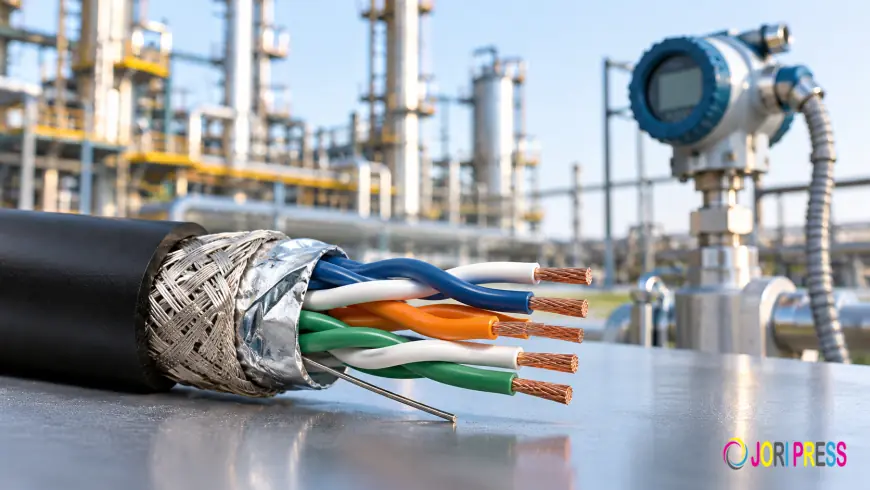
Experienced instrument cable manufacturers in India incorporate shielding materials such as aluminium-polyester tape, copper tape, and copper braid to reduce unwanted electrical noise.
Effective cable screening, combined with appropriate system design, helps maintain measurement accuracy and dependable communication between industrial instruments and control systems.
The Engineering Behind Twisted Cable Configurations
Cable geometry plays an important role in maintaining signal quality. Twisted conductor arrangements help reduce susceptibility to electromagnetic disturbances and interference between neighbouring circuits.
Depending on the intended application, manufacturers produce instrumentation cables in pair, triad, and quad configurations. These arrangements support different measurement and communication requirements.
Suyog Electrical
Controlled twisting and consistent conductor spacing contribute to balanced electrical characteristics. Consequently, well-designed cable configurations can support stable signal transmission in complex industrial networks.
Managing Electrical Characteristics for Consistent Performance
Signal integrity depends on several electrical characteristics, including conductor resistance, insulation resistance, capacitance, and inductance.
Excessive capacitance can influence signal response, particularly over longer cable distances. Similarly, variations in electrical resistance may affect the accuracy of certain measurement circuits.
Manufacturers control cable dimensions, material properties, and construction consistency to maintain suitable electrical characteristics. These considerations become particularly important in sensitive measurement systems and automated process control applications.
Protecting Sensitive Signals From Harsh Industrial Conditions
Industrial cables frequently encounter moisture, dust, vibration, temperature fluctuations, and mechanical stress. Without suitable protection, these conditions can gradually affect cable performance.
Protective sheathing and armouring provide additional resistance against environmental exposure and physical damage. Galvanised steel wire or strip armour may be incorporated where mechanical protection is required.
Manufacturers also select flame-retardant and low-smoke sheath materials according to project specifications. Appropriate protective construction helps maintain cable reliability in demanding operating environments.
Maintaining Consistency Through Controlled Manufacturing
Accurate signal transmission depends not only on raw materials but also on manufacturing consistency. Variations in insulation thickness, conductor diameter, twisting patterns, or shielding coverage can influence electrical performance.
Controlled manufacturing processes help maintain uniform cable construction throughout production. Precision extrusion and dimensional monitoring contribute to consistent insulation quality.
Furthermore, systematic production inspections allow manufacturers to identify irregularities before finished cables reach industrial customers. This attention to detail supports long-term operational reliability.
Verifying Cable Performance Through Quality Testing
Comprehensive testing helps determine whether instrumentation cables meet their specified electrical and mechanical requirements.
Depending on the applicable standards and cable design, testing may include conductor resistance measurements, insulation resistance testing, voltage withstand testing, capacitance measurements, and dimensional inspections.
These assessments help verify manufacturing consistency and identify potential defects. Quality assurance therefore plays a valuable role in reducing the likelihood of signal transmission problems during industrial operations.
Adapting Cable Designs to Specialised Industrial Applications
Different industries require different cable performance characteristics. A chemical processing facility may require enhanced environmental protection, while an automated manufacturing plant may prioritise interference resistance and flexibility.
Leading instrument cable manufacturers in India develop cable configurations based on application-specific requirements. Customisation may include conductor sizes, insulation materials, shielding arrangements, core configurations, and protective sheathing.
Such flexibility allows industrial organisations to select cables that align with equipment specifications and environmental demands rather than relying on a single standard design.
Supporting Real-Time Monitoring and Industrial Automation
Modern industrial automation relies heavily on accurate information from temperature sensors, pressure transmitters, flow meters, and other measuring instruments.
Instrumentation cables establish communication pathways between field devices and systems such as programmable logic controllers (PLCs), distributed control systems (DCS), and supervisory control and data acquisition (SCADA) platforms.
Reliable signal transmission helps these systems receive consistent information, supporting process monitoring, equipment coordination, and operational decision-making. As industrial automation expands, dependable instrumentation cable infrastructure remains increasingly important.
Reducing Operational Disruptions Through Reliable Cable Design
Signal disturbances can contribute to inaccurate measurements, communication errors, unnecessary maintenance, and production interruptions. In critical industrial applications, unreliable information may also create operational safety concerns.
Quality cable construction, effective shielding, and suitable environmental protection help reduce the likelihood of cable-related performance issues.
Although overall system reliability depends on equipment selection, installation quality, and maintenance practices, properly specified instrumentation cables provide an important foundation for dependable industrial communication.
Conclusion
Accurate signal transmission begins with thoughtful cable engineering, quality materials, controlled manufacturing processes, and appropriate performance testing. Every component, from copper conductors and insulation to shielding and protective sheathing, contributes to overall cable reliability.
As industries increasingly adopt automation, intelligent monitoring, and advanced process control technologies, the importance of reliable instrumentation cables continues to grow. Selecting appropriately designed cables helps industrial facilities maintain measurement accuracy, operational efficiency, and consistent system performance.
What's Your Reaction?
 Like
0
 Dislike
0
 Love
0
 Funny
0
 Angry
0
 Sad
0
 Wow
0