





































How AI for Evidence-Based Care Is Improving Patient Outcomes Across Healthcare
A new wave of clinician-built intelligence tools is closing the gap between integrative medicine expertise and the practitioners who need it most.
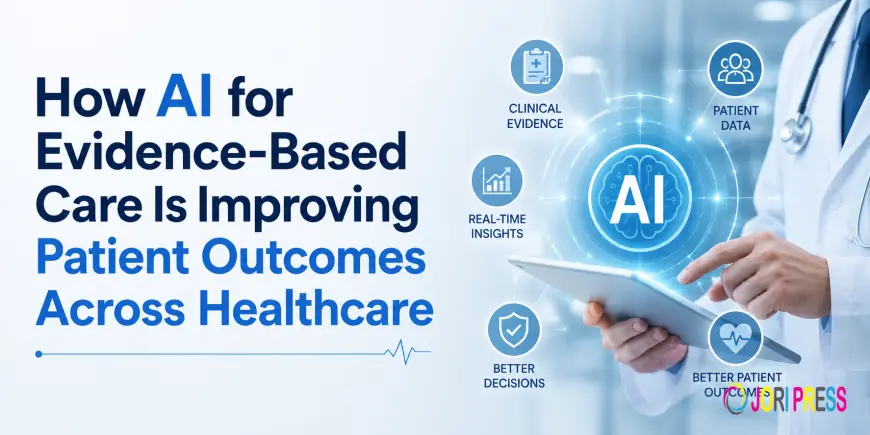
A solo practitioner in a mid-sized city sits down with a complex patient — one managing autoimmune dysfunction, nutrient depletions and a stack of conventional medications. Thirty years ago, navigating that case took weeks of literature review. Today, it can take under eight minutes.
Artificial intelligence is changing the face of patient care — not by replacing clinical judgment, but by amplifying it. Across healthcare, AI-powered tools are enabling practitioners to make faster, more comprehensive and better-evidenced decisions. And in integrative and functional medicine, where the complexity of whole-person care has long outpaced the available clinical decision support, that shift is particularly profound.
The evidence gap in integrative medicine
For decades, integrative medicine practitioners — naturopathic doctors, integrative MDs, functional medicine specialists, and allied health professionals — have worked with an uncomfortable paradox: they serve some of the most complex patients in the healthcare system, yet they have had access to the least sophisticated clinical support tools.
Conventional clinical decision support platforms were built for conventional medicine. They cover pharmaceuticals. They flag drug-drug interactions. But they rarely account for the thousands of natural medicines in widespread clinical use, the nuances of nutrient depletion from long term medication use, or the emerging evidence around dietary and lifestyle interventions. Practitioners filling that gap have had to rely on fragmented resources, time-consuming literature searches, and hard-won clinical experience — all while managing full patient loads.
"The integrative medicine space has been chronically underserved by existing clinical decision support tools. Our practitioners were being asked to do more, with less."
The result is not just a burden on practitioners. It's a burden on patients, who may receive inconsistent care depending on which practitioner they see and how much time that practitioner had to prepare.
What evidence-based AI actually looks like in practice
Not all healthcare AI is created equal. The landscape is filling quickly with tools that can summarize a document, generate a note, or retrieve a study. But evidence-based clinical AI goes further: it synthesizes evidence into actionable, graded protocols that a practitioner can use at the point of care.
That distinction matters enormously. A practitioner doesn't just need to know that magnesium has been studied for migraines. They need to know which form, at what dose, in combination with which other interventions, with which contraindications flagged, and whether it interacts with the patient's current medications. That kind of comprehensive, integrated clinical intelligence requires years of curation by domain experts — not just a language model trained on general text.
-
3,000+ Clinician-Reviewed Monographs
-
800+ Diagnoses Covered
-
2,500+ Natural Medicines
-
1,400+ Practitioners Across North America
How ClarityTX.ai is closing the gap
ClarityTX.ai was built precisely to solve this problem. The platform is a clinician-built AI clinical intelligence system designed for integrative and functional medicine practitioners — and it delivers something that simply hasn't existed before: a complete, evidence-graded treatment protocol covering supplements, medications, diet, lab tests, and lifestyle interventions, generated in under eight minutes.
What sets ClarityTX.ai apart is not just the speed — it's the depth and the rigor behind it. The platform was built over four years by a multidisciplinary team of MDs, naturopathic doctors, and pharmacists, and its clinical database reflects that collaborative expertise. With over 3,000 clinician-reviewed monographs, coverage of more than 800 diagnoses, and a library of 2,500-plus natural medicines, it represents one of the most comprehensive integrative medicine clinical knowledge bases ever assembled.
Critically, ClarityTX.ai includes automatic drug-supplement interaction alerts and nutrient depletion warnings — the kinds of clinical safety checks that conventional platforms routinely miss for natural medicine.
Responsible AI, built by clinicians
The conversation about AI in healthcare often bifurcates into two camps: enthusiastic early adopters who trust any output and skeptics who reject AI outright. The more useful question is: who built it, and how was it validated?
ClarityTX.ai's clinical foundation is led by Medical Director Dr. Keith Berkowitz, MD — a board-certified internist with over 30 years of experience in integrative medicine. That clinical leadership is not incidental; it's structural. The platform's monographs and protocols are reviewed and maintained by practicing clinicians, not generated wholesale by large language models and pushed to production.
This is what responsible healthcare AI looks like: AI that accelerates the work of expert clinicians, rather than attempting to replace their judgment.
The downstream impact on patient outcomes
When practitioners have access to better information, patients receive better care. It's that straightforward — and that significant. More than 1,400 practitioners across North America are now using ClarityTX.ai in their practices, which means thousands of patients are receiving more comprehensive, evidence-informed protocols than they would have otherwise.
What's next for AI in integrative care
We're still early. The integration of AI into clinical workflows is advancing rapidly, but the foundations that will determine whether that integration helps or harms patients are being laid right now.
ClarityTX.ai's trajectory — four years of clinical database development, a multidisciplinary founding team, and a growing community of over 1,400 practitioners — reflects a commitment to getting the foundations right. As the platform expands its diagnostic coverage, deepens its interaction databases, and develops integrations with the broader clinical technology ecosystem, it will continue to represent what the field most needs: AI that earns the trust of clinicians, and through them, better outcomes for patients.
What's Your Reaction?
 Like
0
Like
0
 Dislike
0
Dislike
0
 Love
0
Love
0
 Funny
0
Funny
0
 Angry
0
Angry
0
 Sad
0
Sad
0
 Wow
0
Wow
0