







































How Business Directory Websites Actually Make Money
A practical breakdown of how business directory websites actually generate revenue — covering paid and featured listings, subscription models, lead generation, display advertising, and data licensing. The piece explains why most new directories fail to monetize early, compares ready-made directory scripts against custom builds for speed-to-revenue, and lays out a step-by-step sequence founders can follow from first listing to first profit.
Most people assume a business directory earns money the moment it goes live. List a few hundred businesses, wait for traffic, and the revenue follows. It rarely works that way.
A directory is not a static phone book anymore. It is closer to a small marketplace, one where businesses pay for visibility and users expect real value in return. And that shift changes what "monetization" actually means for a directory owner. Founders who treat a business directory script as a simple listing page usually stall around month two, right when the free listings run out and the paid ones haven't started yet.
This piece looks at how directories actually generate revenue in practice, why some models work early and others don't, and what a founder should plan for before writing a single line of code.
The Business Directory Is Not What It Used To Be
A decade ago, a directory charged a flat annual fee for a name, phone number, and address. That model is mostly gone. Today's directories function as discovery engines, and increasingly, as data sources that other platforms and AI tools rely on.
This shift matters because it opens more than one revenue path. A directory no longer has to choose between ads or listing fees. It can layer several models on top of each other, and most successful ones do exactly that.
Why Directories Fail to Monetize Early
Here's the mistake founders repeat constantly. They build the directory, add a pricing page, and expect businesses to pay right away. But paid listings only work once there's traffic. Ads only work once there's volume. Lead generation only works once there's demand on both sides.
A directory with zero traffic has nothing to sell. Not to businesses, not to advertisers, not to anyone. That's the real problem, and it's rarely a technology problem.
The Monetization Models That Actually Work
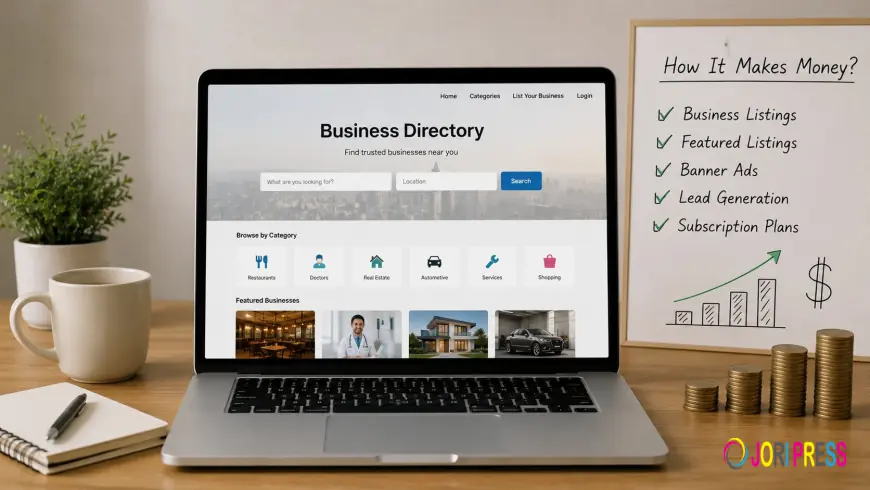
**Paid and Featured Listings**
The oldest model, still the most common. Basic listings stay free to build volume. Businesses that want a stronger position, a featured badge, or extra photos pay a monthly or annual fee. Yelp still runs a version of this, earning several hundred million dollars a year from premium placement alone.
**Subscription and Membership Plans**
Instead of a one-time listing fee, businesses pay recurring access to stay visible. This model suits niche and B2B directories especially well, since ongoing exposure matters more to a service provider than a single transaction.
**Lead Generation**
Rather than charging for a listing, the directory collects inquiries and sells them to verified businesses. A user searching for "commercial electrician near me" fills a short form, and that lead gets distributed to two or three vendors willing to pay for it. High-value service niches, like legal, home repair, or healthcare, tend to earn the most here.
**Display Advertising**
Simple, but rarely enough on its own. Ad revenue depends heavily on traffic volume, and most niche directories don't have the scale to make banner ads meaningful. It works better as a secondary stream than a primary one.
**Data and Insight Licensing**
A newer model. As AI-driven search tools lean on verified, structured business data instead of scraped web content, niche directories with clean, accurate listings become a source worth paying for. It's early, but it's growing.
Ready-Made Directory vs Custom-Built: Which Approach Fits Monetization Goals?
This is where the build decision quietly shapes the revenue model. A custom-built directory takes months to reach a stable version, and most of that time goes into basic functionality rather than monetization features. By the time paid listings or lead distribution are ready to test, competitors using a ready-made classified script are already three or four months into collecting real usage data.
A ready-made business directory script generally ships with listing management, category structures, and payment integration already built in. That doesn't mean monetization is automatic. It means the founder can spend early weeks on traffic and niche selection instead of rebuilding basic plumbing. Custom development still makes sense for directories with unusual data models or highly specific workflows. For most local or niche directories, though, the ready-made route gets a founder to the monetization-testing stage far sooner.
A Practical Sequence for New Directory Owners
Founders who get this right tend to follow a similar order. First, seed the directory with fifty to a hundred listings before public launch, even using publicly available data marked as unclaimed. Second, keep the first tier free to build volume and encourage businesses to claim their profiles. Third, introduce one paid feature, not five, once there's consistent weekly traffic. And fourth, only add a second revenue stream, like lead generation or featured ads, after the first one is generating steady income.
Skipping straight to a five-tier pricing page before any real traffic exists is one of the most common ways a promising directory idea quietly dies.
What Traffic Numbers Actually Mean for Revenue
Independent directory operators report meaningfully different outcomes depending on niche and traffic. General local directories with modest daily traffic often earn a few thousand dollars a month once paid listings and ads are active. Niche B2B directories with high-value leads can earn considerably more, sometimes tens of thousands per month, because a single qualified lead in fields like legal services or enterprise software is worth far more than a general local search.
Frequently Asked Questions
**Can a business directory make money without much traffic?** Not through listings or ads. A concierge or service-based approach, where the directory owner sells a paid service to a few featured businesses directly, can generate early income while traffic builds.
**Is a subscription model better than a one-time listing fee?** For most niches, yes. Recurring revenue is more predictable, and it encourages businesses to keep their listings updated, which improves the directory's overall quality.
**How long does a new directory usually take to turn a profit?** Most take three to six months to reach consistent revenue, assuming listings are seeded early and at least one monetization feature is active from launch.
Conclusion
A business directory doesn't fail because the idea was wrong. It usually fails because monetization was treated as a single switch to flip, instead of a sequence that depends on traffic, trust, and timing. The directories that succeed pick one or two models that fit their niche, get real usage data early, and layer in additional revenue streams only once the first one is proven. That sequencing, more than any single feature, decides whether a directory becomes a side project or a real business.
What's Your Reaction?
 Like
0
Like
0
 Dislike
0
Dislike
0
 Love
0
Love
0
 Funny
0
Funny
0
 Angry
0
Angry
0
 Sad
0
Sad
0
 Wow
0
Wow
0