









































Badminton Racket String Tension: Which LBS Is Right for You?
Discover how to choose badminton racket string tension according to your skill, technique, string thickness and racket specifications.
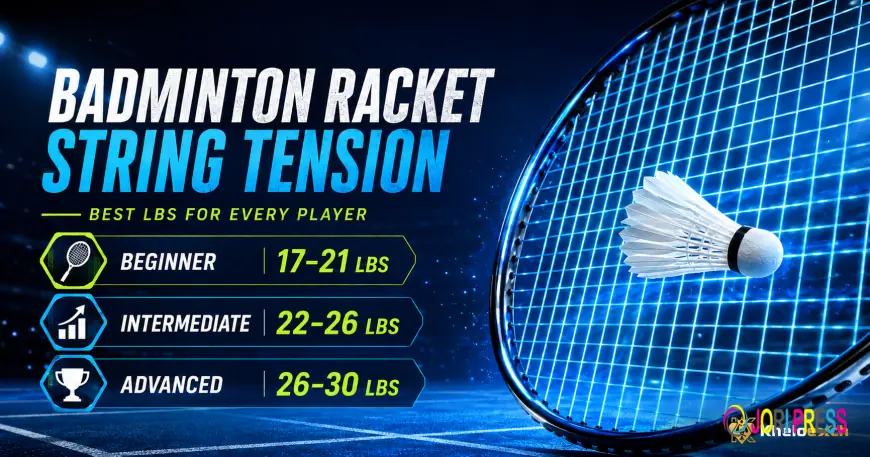
String tension is one of the most important yet frequently overlooked parts of a badminton racket setup. Players may purchase a premium racket but still struggle with control, power or comfort because its strings do not match their technique.
Understanding how tension works can help players choose a more suitable setup and avoid placing unnecessary stress on their racket.
What Is Badminton Racket String Tension?
String tension describes how tightly the strings are pulled across the racket frame. It is measured in pounds and normally displayed as LBS.
Lower tension creates a softer string bed. The strings can move more when they contact the shuttlecock, which generally produces greater repulsion and a larger sweet spot. This can make the racket feel more forgiving.
Higher tension creates a firmer string bed with a smaller effective sweet spot. It may deliver a more precise response, but it demands consistent timing and better swing technique.
Suitable Tension for Beginners
Many beginners may find approximately 20–22 LBS comfortable, provided this setting is supported by their racket.
A moderate or lower tension can help new players because it generally provides:
• A larger sweet spot
• Easier length on clears
• A softer and more comfortable response
• Greater forgiveness during off-centre shots
New players should focus on developing proper grip, movement and stroke mechanics instead of immediately choosing very high tension.
Recommended Range for Intermediate Players
Intermediate players who regularly contact the sweet spot may consider approximately 23–26 LBS. This range can provide a balance between shuttle repulsion and directional accuracy.
A slightly firmer string bed may help with controlled drops, drives and net placements. However, the increase should be gradual. Players should evaluate how the racket feels during several practice sessions before increasing the tension again.
Advanced and Competitive Players
Experienced players sometimes prefer 26 LBS or higher. Their faster swing speeds and accurate timing allow them to benefit from the firmer and more responsive string bed.
High tension is less forgiving when the shuttlecock is struck away from the centre. It can also reduce string durability and place additional pressure on the racket frame.
Players should never exceed the manufacturer’s stated tension limit. The permitted range can normally be found on the racket shaft, frame or official product specifications.
How String Thickness Affects the Setup
String gauge must also be considered when selecting tension. Thin strings may produce a lively response and an attractive hitting sound, but they are generally more vulnerable to wear and breakage.
Thicker strings tend to offer better durability. They can be a practical option for recreational players who play regularly and do not want frequent restringing expenses.
An experienced racket stringer can recommend a combination based on playing style, frequency and budget.
Signs That a Racket Needs Restringing
Badminton strings gradually lose tension even if they remain unbroken. Players should consider restringing when:
• Clears begin falling shorter than usual
• The racket feels dull or unresponsive
• Directional control becomes inconsistent
• Strings move excessively after each rally
• Fraying or visible damage appears
Frequent competitors may need restringing more often than occasional recreational players. The appropriate schedule depends on the string type, original tension and frequency of use.
Finding the Right Tension
There is no single string tension that is perfect for every badminton player. The correct setting depends on current ability, swing speed, comfort, racket construction and preferred playing style.
Beginners will generally benefit from a forgiving setup, while technically consistent players may choose a firmer string bed for additional feedback and control.
Players who need a simple comparison can read this complete badminton racket string tension guide from Kheloexch. It explains the suggested LBS ranges for beginner, intermediate and advanced levels.
Final Thoughts
The highest tension is not automatically the best tension. A suitable setup should help the player produce consistent shots without making the racket uncomfortable or difficult to use.
Always remain within the manufacturer’s permitted range, consult a reliable stringer and increase tension gradually. Small adjustments can help players discover the balance of comfort, repulsion and control that suits their individual game.
What's Your Reaction?
 Like
0
Like
0
 Dislike
0
Dislike
0
 Love
0
Love
0
 Funny
0
Funny
0
 Angry
0
Angry
0
 Sad
0
Sad
0
 Wow
0
Wow
0