








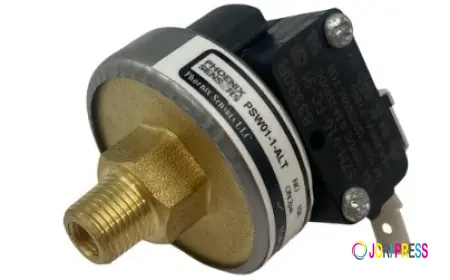





























Global Actuators Market: Industry Demand & Growth Forecast
Explore global actuators market demand, growth forecasts, automation trends, emerging applications, and opportunities shaping the industry's future.

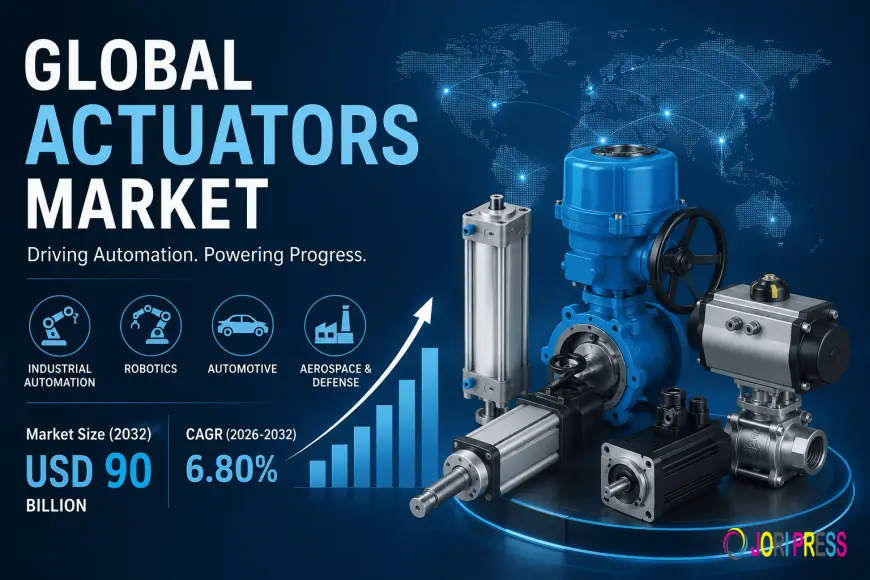
The Global actuators market is gaining momentum as industries accelerate automation, robotics, digital manufacturing, and infrastructure modernization. Actuators are essential motion-control components that transform energy into controlled mechanical movement, enabling machines and systems to perform precise operations. Their applications span automotive manufacturing, industrial machinery, healthcare, energy, robotics, and other sectors. According to 6Wresearch, the market was valued at approximately USD 57 billion in 2025 and is projected to reach USD 90 billion by 2032, representing a CAGR of 6.80% during 2026–2032.
Global Actuators Market Demand Creates Attractive Investment Opportunities
The advantages of investing in the global actuators market are becoming more apparent as businesses prioritize automation and operational efficiency. Manufacturers are increasingly replacing manual processes with automated machinery to improve productivity, consistency, precision, and workplace efficiency.
Actuators are at the heart of these automated systems because they provide the physical movement required to execute digital commands. They control functions such as lifting, positioning, rotating, opening, closing, and adjusting machine components.
The market's broad technology base also creates investment opportunities across electrical, pneumatic, hydraulic, and specialized actuator systems. Electrical actuators remain particularly important because they offer precise control and integrate effectively with modern digital systems. Pneumatic actuators are also gaining attention for applications requiring rapid, repetitive movement.
This technological diversity enables manufacturers to serve customers with different operational requirements while reducing dependence on a single actuator category.
Automation Adoption Supports Future Growth
Businesses increasingly prefer actuator technology because automation is becoming a long-term requirement for maintaining competitiveness. Modern factories require equipment that can perform repetitive processes accurately while operating efficiently over extended periods.
The global actuators market is benefiting from the integration of sensors, Internet of Things connectivity, artificial intelligence, and advanced control platforms. These developments are transforming traditional actuators into smarter components capable of participating in connected industrial environments.
Smart actuators can provide information about operating conditions, helping businesses monitor equipment performance and identify potential problems. This capability can support predictive maintenance and reduce unexpected downtime.
As manufacturers move toward smart factories, the ability to connect actuator systems with centralized monitoring and control platforms is becoming increasingly valuable. This trend is expected to create sustained demand for intelligent and digitally compatible actuator products.
Search Visibility Through Smart Manufacturing Applications
The expansion of Industry 4.0 is increasing the visibility of actuator technology among manufacturers and industrial technology buyers. Businesses researching robotics, machine automation, smart factories, and digital production systems increasingly encounter actuator technologies as an essential part of these solutions.
Automated production lines require coordinated movement between machines, robotic systems, conveyors, assembly equipment, and material-handling systems. Actuators enable these physical movements while allowing electronic control systems to regulate speed, position, and timing.
This close connection between automation and actuation means that demand for actuator systems can grow alongside investment in smart manufacturing. Manufacturers that offer connected, energy-efficient, and highly precise actuator solutions can potentially strengthen their presence in an increasingly competitive technology market.
Demand and Benefits Expand Across Multiple Industries
The global actuators market benefits from demand across a diverse range of industries. Automotive manufacturing remains a major application area because vehicle production relies heavily on automated machinery and precision movement.
Industrial machinery also represents an important source of demand. Actuators enable automated equipment to perform positioning, lifting, adjustment, rotation, and other mechanical operations. Reliable actuator performance can help businesses improve production consistency and reduce process interruptions.
Healthcare and pharmaceutical applications are becoming increasingly relevant as facilities adopt automated equipment. Medical devices, laboratory systems, pharmaceutical production machinery, and precision-handling technologies require controlled and repeatable movement.
Energy infrastructure is another area with considerable potential. Renewable energy equipment can use actuator systems for positioning and adjustment, while expanding investments in clean-energy infrastructure can generate new applications.
The wide application base provides stability to the global actuators market because growth can come from several industries simultaneously.
Enhance User Experience with Accurate Motion Control
Actuators can improve user experience by enabling equipment to move smoothly, accurately, and reliably. In industrial settings, automated actuator systems can reduce repetitive manual activities and make equipment easier to operate.
In automotive applications, actuator technology supports functions requiring controlled mechanical adjustment. In healthcare, it can help automate equipment positioning and movement. In industrial environments, precise actuation can simplify machine operation and improve the consistency of automated processes.
Connected actuator systems can further enhance the experience of operators by providing real-time information about equipment performance. Instead of relying entirely on manual inspection, operators can monitor system conditions and identify maintenance requirements more efficiently.
As industrial systems become more sophisticated, actuator products that combine precision, reliability, connectivity, and ease of integration can provide greater value to users.
Lifestyle Benefits from Automated Actuator Applications
Although actuators are traditionally associated with industrial machinery, their influence is expanding into products used in everyday life. Automated doors, vehicle systems, adjustable furniture, medical devices, smart appliances, and other products can use actuators to deliver controlled mechanical movement.
These applications can improve convenience and accessibility by reducing physical effort and enabling automated adjustments. In healthcare, actuator-based systems can support equipment positioning and easier operation. In transportation, controlled movement can contribute to comfort and functionality.
The growth of connected products may create further opportunities for compact actuator technologies. As consumers become more accustomed to smart and automated products, manufacturers may increasingly integrate actuator systems into product designs to deliver responsive and customizable functions.
This expansion can broaden the long-term demand base for the global actuators market.
Infrastructure Development Strengthens Market Opportunities
Infrastructure modernization is expected to remain a significant growth driver. New manufacturing facilities, automated warehouses, energy plants, transportation systems, and industrial projects increasingly depend on advanced equipment capable of precise and automated operation.
Asia is especially important to the industry's future because of its expanding manufacturing base and rising investment in automation. China and India are among the markets supporting regional actuator demand as businesses modernize factories and adopt advanced technologies.
Renewable energy infrastructure provides another growth pathway. Wind power systems and other energy technologies can require controlled positioning mechanisms, creating opportunities for actuator suppliers.
Infrastructure upgrades can also encourage companies to replace outdated mechanical systems with modern digitally controlled equipment. This replacement cycle can generate continued demand for actuator solutions that integrate with advanced control and monitoring systems.
Emerging Technologies Shape the Growth Forecast
Technology innovation will remain a central factor in the future growth forecast for the global actuators market. Artificial intelligence, IoT connectivity, advanced sensors, energy-efficient motors, and digital control systems are changing actuator design and performance.
AI-enabled systems can potentially optimize actuator movement according to operating conditions, while sensors can provide real-time performance information. IoT connectivity allows actuator data to be shared across industrial monitoring platforms, supporting predictive maintenance and remote diagnostics.
Energy efficiency is also becoming a priority for industrial buyers. Companies are increasingly seeking actuator systems that can deliver reliable performance while controlling energy consumption and operating costs.
Miniaturization is creating opportunities in robotics, healthcare, electronics, and other applications where space is limited. Smaller and more efficient actuator designs can enable manufacturers to incorporate controlled movement into products that previously had limited space for mechanical systems.
These technological developments are expanding the potential application base while encouraging manufacturers to compete through innovation and product differentiation.
Regional Expansion Supports Long-Term Market Development
Regional industrial development is shaping the demand outlook for actuator technologies. North America remains an important market because of its established industrial infrastructure, automation capabilities, and technology adoption.
Asia offers particularly strong growth potential because of manufacturing expansion, infrastructure investment, and increasing adoption of automated production systems. China and India are important contributors to regional growth, while other Asian economies are also investing in industrial modernization.
Developing markets can create additional opportunities as companies upgrade older production facilities and adopt advanced machinery. Actuator suppliers with strong technical support, distribution capabilities, and application-specific products may be well positioned to serve these emerging requirements.
Why Current Market Conditions Support Investment
The current outlook for the global actuators market combines strong existing demand with new opportunities created by emerging technologies. Automation is becoming deeply integrated into industrial operations, while robotics, smart manufacturing, renewable energy, and connected equipment continue to expand.
The projected increase from approximately USD 57 billion in 2025 to USD 90 billion by 2032 demonstrates substantial market potential. For industrial buyers, investing in suitable actuator technology can support equipment modernization and operational efficiency. For manufacturers, developing innovative actuator products can create opportunities in both established and emerging applications.
The most promising solutions are likely to combine mechanical reliability with digital connectivity, energy efficiency, precise control, and easy integration. Companies that address these requirements can strengthen their position as customers increasingly move toward intelligent automation.
Wrapping Up
The global actuators market is positioned for continued growth as automation becomes increasingly important across manufacturing, automotive, healthcare, energy, robotics, and infrastructure. Actuators are evolving from conventional motion-control components into connected and intelligent technologies that can contribute to more efficient and responsive industrial systems.
The projected market expansion to USD 90 billion by 2032 reflects the strength of underlying demand and the growing number of applications. Electrical actuators remain important for precision and digital control, while pneumatic and advanced smart actuator technologies provide additional opportunities.
For companies seeking to modernize operations, investing in actuator technology now can provide practical benefits in efficiency, precision, automation, and equipment intelligence. With industrial digitalization accelerating worldwide, the combination of rising demand, technological innovation, and infrastructure development makes the global actuators market an attractive area for long-term growth and strategic investment.
FAQs
1. What is the growth forecast for the global actuators market?
The global actuators market is projected to grow from approximately USD 57 billion in 2025 to USD 90 billion by 2032, according to 6Wresearch. The market is expected to expand at a CAGR of 6.80% during 2026–2032, supported by automation, robotics, industrial modernization, and connected equipment.
2. What factors are increasing actuator demand?
Rising industrial automation, robotics adoption, smart manufacturing, renewable energy projects, and infrastructure modernization are increasing actuator demand. Industries need reliable motion-control systems for precise and repeatable operations, while IoT and digital technologies are creating additional requirements for intelligent and connected actuator solutions.
3. Why is automation important for the global actuators market?
Automation directly increases the need for actuators because automated machinery requires controlled physical movement. Robotics, production lines, packaging equipment, conveyors, and industrial machines all depend on actuation. As businesses automate more processes, the global actuators market benefits from increased demand for precise motion-control components.
4. Which industries have the highest actuator requirements?
Automotive manufacturing, industrial machinery, healthcare, pharmaceuticals, energy, robotics, and general manufacturing are major application areas. These industries use actuators for positioning, lifting, rotating, adjusting, and other mechanical functions, creating a diversified demand base for the global actuators market.
5. How do smart actuators support industrial efficiency?
Smart actuators can incorporate sensors and connectivity to provide information about operating conditions and performance. This data can support predictive maintenance and remote monitoring, helping businesses identify potential issues earlier. Such capabilities can improve equipment availability and contribute to greater efficiency in automated production environments.
6. Are electrical actuators leading the market?
Electrical actuators hold a strong position because they provide precise control and integrate effectively with digital automation systems. Their suitability for robotics, manufacturing machinery, automotive applications, and other precision-dependent systems makes them an important technology segment within the global actuators market.
7. How can actuators improve user experience?
Actuators can improve user experience by enabling smooth, accurate, and automated movement. They support convenient functions in vehicles, medical devices, industrial equipment, adjustable products, and smart appliances. Connected actuator systems can additionally provide users with greater visibility into equipment status and maintenance requirements.
8. How does infrastructure development influence actuator growth?
Infrastructure development increases demand for automated manufacturing equipment, energy systems, warehouses, transportation technologies, and industrial machinery. As new facilities are constructed and existing infrastructure is modernized, businesses require more sophisticated motion-control systems, supporting expansion opportunities within the global actuators market.
9. Which region has strong future actuator demand?
Asia is expected to offer significant growth opportunities because of its expanding manufacturing sector, industrial modernization, and rising automation investment. China and India are particularly important markets, while North America remains significant due to its established industrial infrastructure and continued adoption of advanced automation technologies.
10. Is actuator technology a good investment for future growth?
Actuator technology has strong long-term potential because automation, robotics, smart manufacturing, renewable energy, and connected infrastructure are expanding. With the global actuators market projected to reach USD 90 billion by 2032, strategic investment can help businesses improve efficiency, modernize equipment, and prepare for future industrial automation.
What's Your Reaction?
 Like
0
Like
0
 Dislike
0
Dislike
0
 Love
0
Love
0
 Funny
0
Funny
0
 Angry
0
Angry
0
 Sad
0
Sad
0
 Wow
0
Wow
0