






































Gen. Saleh, NWSC MD Mugisha push land ownership management to fix Kampala's waste crisis

KAPEEKA, Uganda — Gen. Salim Saleh, National Water and Sewerage Corporation (NWSC) Managing Director Dr. Eng. Silver Mugisha and other key stakeholders have discussed the need for better land ownership management and coordination as the key to solving Kampala's solid waste crisis, arguing the capital's garbage problem stems from a failure to organize land rather than a shortage of trucks.
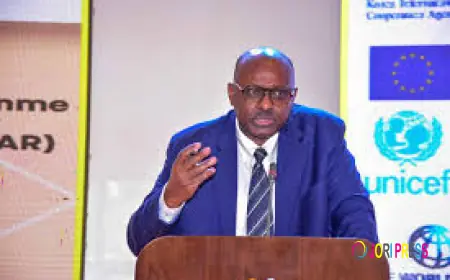
The two spoke Tuesday in Kapeeka, in Nakaseke district, at a meeting called by Gen. Saleh, senior presidential adviser and coordinator of Operation Wealth Creation, to review a joint sanitation drive in the capital.
The discussion centered on Organic Dark Matter, a joint initiative of the city authority, Operation Wealth Creation and the water corporation launched earlier this year to address a sanitation emergency in a city that collects less than half the waste it produces. Kampala generates an estimated 2,500 to 3,000 metric tons of waste a day, much of it left uncollected because of thin collection infrastructure, illegal dumping and limited disposal capacity.
About 80% of that waste is organic, making it bulky and hard to handle.
NWSC operates the city's sewage and faecal sludge treatment infrastructure, including three treatment plants — Bugolobi, Lubigi and Nalukolongo — along with the Kinawataka sewage pre-treatment system, where the corporation and private cesspool trucks discharge their loads. The upgraded Bugolobi plant was rebuilt with a design capacity of 45,000 cubic meters a day and generates biogas power from the waste it treats, with dried sludge sold to farmers. Even so, sewer lines reach only a small share of the city, leaving most residents dependent on pit latrines and septic tanks that must be emptied by truck.
The meeting pointed to a complex land tenure systems and weak coordination among land-owning institutions are among the main drivers of poor waste management— particularly the disposal of organic waste, which needs land that is often tied up in contested or fragmented ownership.
Sorting out that ownership is a precondition for any lasting fix, the meeting agreed.
Gen. Saleh has pressed the argument beyond sanitation. In a book published in April, co-authored with development scholar Dr. Pascal Odoch, he contends that Uganda's development bottleneck is not a shortage of land but a failure to organize it, recasting land from a "dead capital" problem into a coordination problem at the heart of the country's uneven growth.
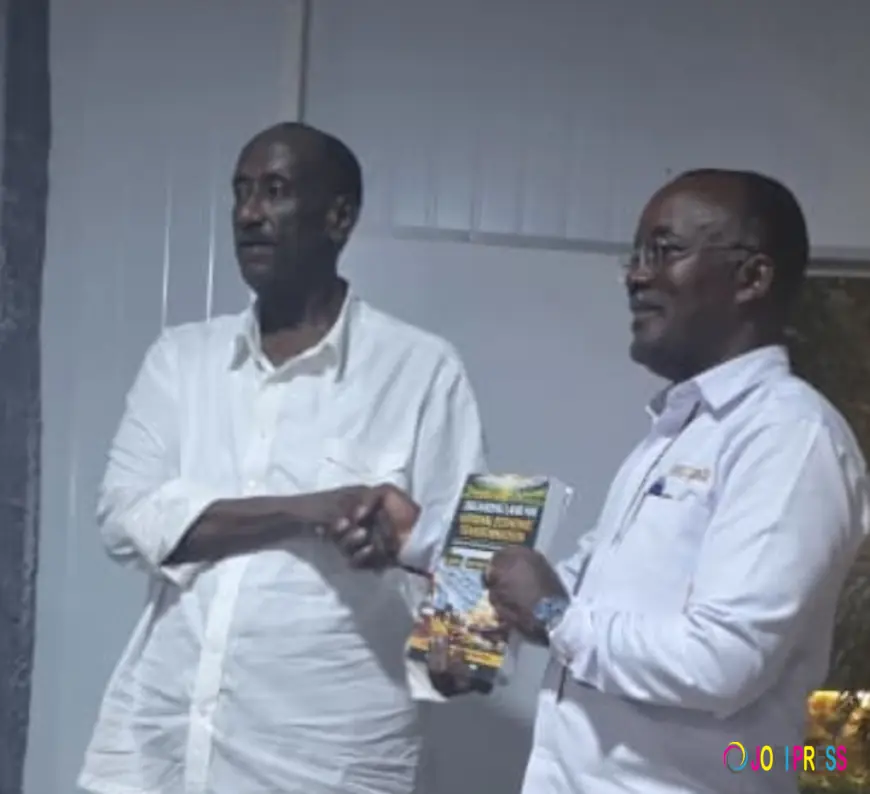
He gave Dr. Mugisha a copy of the book, "Organizing Land for National Economic Transformation: Kapeekanomics, Industrialization and Uganda's Development Logic," on the sidelines of the meeting.
Kapeeka is home to the China-Uganda Liao Shen Industrial Park, a 5.2-square-kilometer manufacturing hub that has grown from maize gardens into a base for dozens of factories over the past decade.
Gen. Saleh, who has long promoted the park as a model of concentrated infrastructure that draws industry, commended Dr Mugisha and NWSC for moving quickly to invest in and support the wider Namunkekera industrial development.
There, NWSC upgraded the Kapeeka water supply system, drawing on the River Mayanja to serve the park and nearby communities.
Dr. Mugisha reaffirmed the corporation's commitment to strengthening cooperation among agencies, tightening coordination among institutions and mobilizing stakeholders and development partners to advance public health, environmental protection and sustainable waste management across the capital.
The reform push faces institutions long used to working in isolation.
Kampala's waste system has repeatedly buckled under pressure, most recently when Uganda's first National Cleaning Day produced volumes that overwhelmed collection teams and clogged the Buyala disposal facility for days.
The meeting was also attended by Hon. Ronald Kibuule, former minister of state for water; Dr. Akankwasa Barirega, executive director of the National Environment Management Authority; Ambassador Phillip Idro; and Dr. Zalwango, director of environment at Kampala Capital City Authority.
What's Your Reaction?
 Like
0
Like
0
 Dislike
0
Dislike
0
 Love
0
Love
0
 Funny
0
Funny
0
 Angry
0
Angry
0
 Sad
0
Sad
0
 Wow
0
Wow
0