










































End Mill Maintenance Tips to Extend Tool Life
Discover effective end mill maintenance tips to improve tool life, machining accuracy, and cutting performance in CNC machining operations.

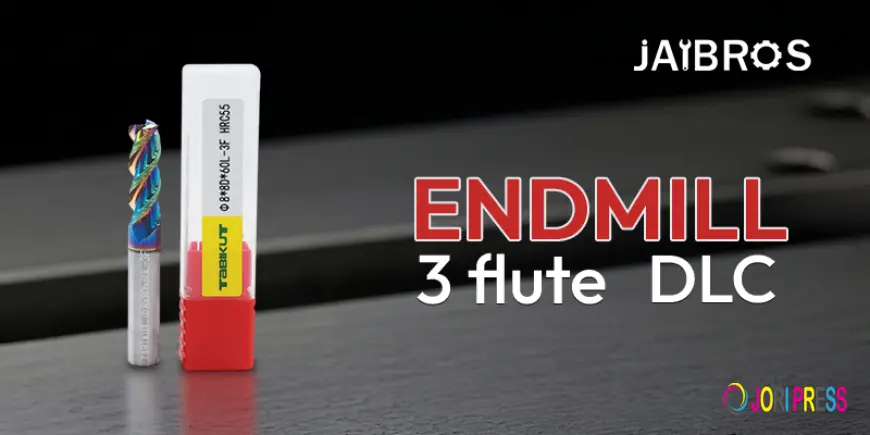
End Mill Maintenance Tips for Longer Tool Life & Better Performance
In modern CNC machining, maintaining cutting tools properly is one of the most important factors in achieving precision, efficiency, and long-term productivity. Cutting tools operate under extreme pressure, high temperatures, and continuous friction, which naturally leads to wear over time. However, with proper maintenance practices, manufacturers can significantly extend tool life, improve surface finish quality, and reduce overall production costs.
Among the most widely used tools in machining operations are endmills, which are essential for milling, contouring, slotting, and finishing applications. These tools are designed for accuracy and durability, but their performance heavily depends on how well they are maintained. Poor maintenance often leads to tool breakage, rough surface finishes, dimensional errors, and machine downtime.
Importance of Regular Tool Inspection
One of the most important maintenance practices is regular tool inspection. Every cutting tool experiences wear during machining operations, especially when working with hard metals and high-speed applications. Machine operators should inspect tools before and after use to identify signs of damage such as edge chipping, flank wear, discolouration from excessive heat, or built-up material on the cutting edge.
Detecting these issues early prevents further damage and helps maintain machining accuracy. In many modern workshops, digital inspection devices and magnification systems are used to analyse wear patterns more precisely and determine when a tool needs replacement or reconditioning.
Proper Cleaning Methods for Cutting Tools
Cleaning tools after every operation is another essential step in extending tool life. During machining, chips, coolant residue, and fine dust particles often accumulate on cutting surfaces. If these contaminants are not removed properly, they can affect cutting performance and increase wear during future operations.
Tools should be cleaned carefully using approved cleaning solutions and soft cloths to avoid damaging the cutting edges. Compressed air may also be used to remove chips, although operators should ensure that the pressure is controlled to prevent accidental edge damage. Proper cleaning not only improves tool longevity but also makes it easier to identify cracks or wear that may otherwise remain hidden.
Optimizing Cutting Parameters
Cutting parameters play a major role in determining how long a tool lasts. Excessive spindle speed, incorrect feed rates, or overly aggressive depth of cut can generate excessive heat and stress on the cutting edge.
To maintain optimal performance, machinists should always follow recommended cutting data based on the workpiece material and tooling specifications. Balanced cutting conditions reduce friction and prevent thermal damage, allowing the tool to maintain sharpness for a longer period. Stable cutting conditions also improve surface finish and dimensional consistency.
Benefits of Using Carbide Tools
Many manufacturers today prefer carbide endmills because of their exceptional hardness, heat resistance, and wear performance. Compared to traditional high-speed steel tools, carbide tools can withstand higher cutting speeds and demanding machining environments more effectively.
They are especially useful for machining stainless steel, titanium, hardened steel, and other difficult materials. Since carbide tools maintain their edge sharpness longer, they reduce downtime caused by frequent tool changes and improve overall production efficiency.
Importance of Proper Tool Storage
Proper storage is another factor that is often overlooked in machining workshops. Even high-quality cutting tools can become damaged if stored carelessly. Cutting edges should never come into direct contact with one another because this can cause chipping and reduce cutting accuracy.
Tools should always be kept in protective holders or dedicated storage systems that prevent accidental impact and exposure to moisture. A clean and organized storage area also helps operators locate tools quickly and reduces handling mistakes that may damage delicate cutting edges.
Reducing Tool Runout
Runout occurs when a tool rotates unevenly during machining, creating vibration and inconsistent cutting forces. Excessive runout not only reduces machining accuracy but also increases wear on the cutting edge.
To minimize this problem, operators should regularly inspect collets, holders, and spindle tapers for dirt or damage. Precision tool holders and proper alignment significantly improve machining stability and help maintain consistent cutting performance over long production cycles.
Regrinding and Tool Reconditioning
Regrinding worn tools is another effective way to extend usability and reduce tooling costs. Instead of discarding slightly worn tools, many manufacturers send them for professional reconditioning. Regrinding restores the cutting edge's geometry and allows the tool to perform efficiently again.
This process is especially beneficial for expensive precision tooling where replacement costs are high. However, regrinding should only be performed by experienced specialists using proper equipment to ensure the original geometry and balance are maintained.
Effective Heat and Coolant Management
Heat management is one of the biggest challenges in CNC machining. Excessive temperatures weaken cutting edges and accelerate wear, especially during high-speed operations. Proper coolant application helps reduce heat buildup and improve chip evacuation during cutting.
Maintaining the correct coolant concentration and ensuring uninterrupted coolant flow are essential for consistent machining performance. Dirty or contaminated coolant systems can reduce efficiency and increase thermal stress on tools. Regular cleaning and maintenance of coolant systems help improve both tool life and machining quality.
Choosing the Correct Tool Geometry
Selecting the correct cutting tool for the application is also crucial. Different machining tasks require different tool geometries and designs. Understanding various types of endmills helps operators choose the right tool for each operation.
Square end mills are commonly used for general-purpose milling, while ball-nose tools are preferred for contouring and 3D machining applications. Roughing tools are designed for aggressive material removal, whereas corner radius tools offer improved strength and durability. Choosing the correct geometry reduces cutting resistance and helps prevent premature wear.
Advantages of Solid Carbide Construction
Modern machining industries increasingly rely on solid carbide end mills for high-precision and high-speed applications. These tools provide excellent rigidity and wear resistance, making them suitable for demanding machining conditions.
Their solid construction minimises deflection during cutting, which improves dimensional accuracy and surface quality. Solid carbide tools are widely used in aerospace, automotive, mould-making, and precision engineering industries where consistent performance is critical.
Special Care for Precision Cutting Tools
In precision manufacturing sectors such as electronics and medical device production, micro endmills are commonly used for machining extremely small and intricate components. Because these tools are very delicate, they require special attention during handling and operation.
Even slight vibration or improper feed rates can lead to breakage. Operators must ensure machine stability, accurate spindle alignment, and efficient chip evacuation when using microtools. Frequent inspection is also necessary because small wear patterns can quickly affect machining precision.
Machine Maintenance and Stability
Machine maintenance also contributes directly to tool life. A poorly maintained CNC machine can create vibration, backlash, and alignment errors that negatively impact cutting performance.
Regular spindle inspection, lubrication, axis calibration, and fixture verification help maintain machining stability and reduce unnecessary stress on tools. Even the best cutting tool cannot perform efficiently if the machine itself is unstable.
Importance of Operator Training
Training machine operators properly is equally important. Skilled operators understand how to recognise wear patterns, optimise cutting conditions, and handle tools safely. Proper training reduces human errors that often lead to premature tool damage.
Workshops that invest in operator education typically experience better productivity, reduced downtime, and improved machining consistency.
Future Trends in Tool Maintenance
As manufacturing technology continues to evolve, modern CNC systems are becoming more intelligent and automated. Advanced monitoring systems can now track tool wear in real time and predict maintenance requirements before failure occurs.
AI-driven machining optimization and smart coolant delivery systems are helping manufacturers achieve even greater efficiency and reliability in production environments.
Conclusion
Maintaining cutting tools properly is essential for improving machining performance, extending tool life, and reducing production costs. From regular inspection and proper storage to optimized cutting parameters and coolant management, every maintenance practice contributes to better machining results.
Consistent maintenance not only protects tooling investments but also ensures high-quality production across a wide range of industrial applications.
At Jaibros, we provide high-performance CNC tooling solutions designed for precision, durability, and industrial reliability. Our advanced cutting tools help manufacturers achieve superior machining performance, longer tool life, and greater productivity across multiple machining operations.
FAQs
1. Why is tool maintenance important in CNC machining?
Tool maintenance improves cutting performance, extends tool life, reduces downtime, and ensures better machining accuracy and surface finish.
2. What causes cutting tools to wear out quickly?
Excessive heat, improper cutting speeds, poor coolant flow, vibration, and incorrect tool handling are common causes of premature tool wear.
3. How often should CNC cutting tools be inspected?
Tools should be inspected regularly based on machining hours, production volume, and material type to detect wear before it affects performance.
4. Can carbide tools be reconditioned?
Yes, many carbide tools can be professionally reground or reconditioned to restore cutting performance and extend usability.
5. What is the benefit of using solid carbide tools?
Solid carbide tools provide higher rigidity, better heat resistance, improved wear performance, and greater machining accuracy in demanding applications.
What's Your Reaction?
 Like
0
Like
0
 Dislike
0
Dislike
0
 Love
0
Love
0
 Funny
0
Funny
0
 Angry
0
Angry
0
 Sad
0
Sad
0
 Wow
0
Wow
0