





































Double Nut DFU Series Ball Screw: Wangong For Advanced Automation

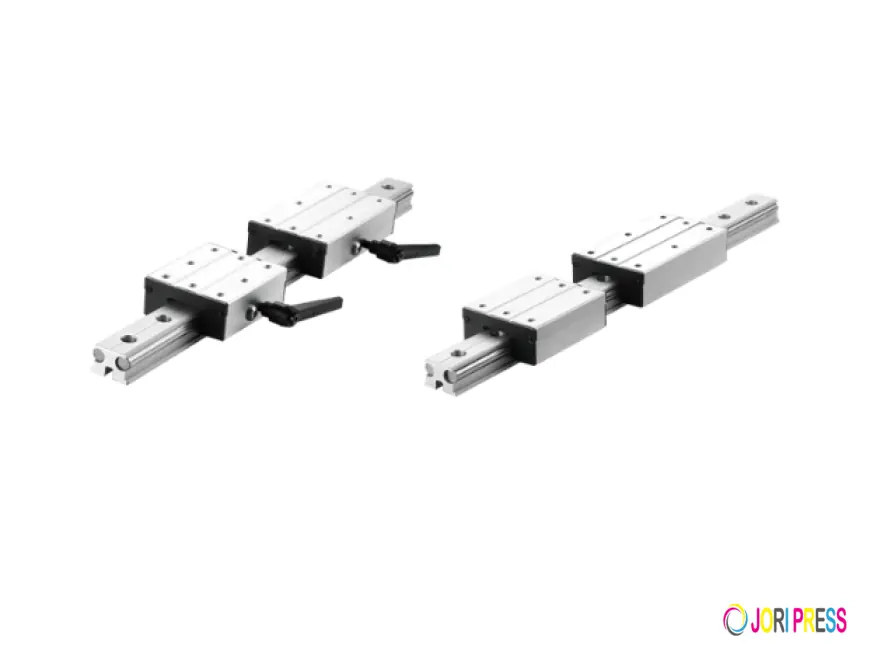
In precision motion systems, choosing the right transmission component can directly affect positioning stability and machine performance. A Double Nut DFU Series Ball Screw offers a practical solution when equipment requires controlled movement, strong rigidity, and consistent accuracy, while a Double Nut DFU Series Ball Screw can also handle applications involving medium to heavy loads. Wangong develops this type of precision transmission component around a dual-nut preload structure, giving engineers an option for demanding automation and machinery projects. Wangong also provides different models and specifications to help equipment designers match the screw assembly with their mechanical requirements.
Why Dual-Nut Construction Matters
The main difference between a dual-nut configuration and a conventional single-nut design is the way preload is introduced into the assembly. By applying preload between two nuts, axial clearance can be reduced to achieve backlash-free transmission. This helps improve the rigidity of the motion system and supports more stable positioning when the load direction changes.
For machinery that repeatedly accelerates, decelerates, or reverses direction, minimizing unwanted movement can be especially important. The dual-nut structure provides a more controlled connection between the screw and nut, allowing the drive system to respond more consistently to command signals.
Built For Stable Precision Movement
Precision does not only depend on dimensional accuracy. The transmission system also needs to maintain predictable movement during continuous operation. The DFU design uses internal ball circulation to create a compact structure while supporting sensitive linear motion.
The manufacturer states that the series can achieve micro-feeding accuracy down to 0.1 micrometers under suitable conditions. Its rolling contact principle also reduces friction compared with sliding screw mechanisms, helping achieve efficient movement with relatively low drive torque. These characteristics make the design suitable for equipment where repeatable positioning is a major requirement.
Wangong For Demanding Machine Designs
Different machines have different load, stroke, speed, and installation requirements, so selecting the correct model is an important part of system design. The DFU range includes multiple nominal diameters and leads, allowing engineers to choose a configuration based on the required mechanical performance.
The available models cover compact options as well as larger assemblies for heavier applications. Product parameters include load ratings, rigidity values, dimensions, and weight, giving equipment designers useful information when evaluating a transmission system. Production capabilities also include cyclone milling and rolled-thread CNC processing, with shaft precision options covering several grades depending on the manufacturing method.
Applications Beyond Standard Automation
A high-rigidity transmission solution can be useful across several precision industries. The DFU series is designed for feed axes in high-precision CNC machine tools, where accurate movement directly influences machining results.
It can also be applied to semiconductor manufacturing equipment and precision testing instruments, where controlled positioning is essential. Industrial robots and automated production modules can benefit from the reduced backlash and stable response offered by a preloaded dual-nut arrangement. These applications demonstrate why transmission components need to be selected according to the complete motion system rather than as isolated mechanical parts.
Matching Specifications With Production Needs
Choosing a ball screw should involve more than simply comparing nominal diameter. Engineers may need to consider lead, shaft length, accuracy grade, load requirements, preload, installation space, and operating conditions. The correct combination can help balance positioning performance, rigidity, service life, and overall machine design.
What's Your Reaction?
 Like
0
Like
0
 Dislike
0
Dislike
0
 Love
0
Love
0
 Funny
0
Funny
0
 Angry
0
Angry
0
 Sad
0
Sad
0
 Wow
0
Wow
0