






































Does E20 Petrol Really Reduce Mileage? Here’s What Indian Drivers Should Know — Guide From Tripleshot
India has rolled out E20 petrol — containing 20% ethanol — across most cities and towns. And from April 2026, it is mandatory nationwide. Most Indian drivers are already using it without even realizing it.
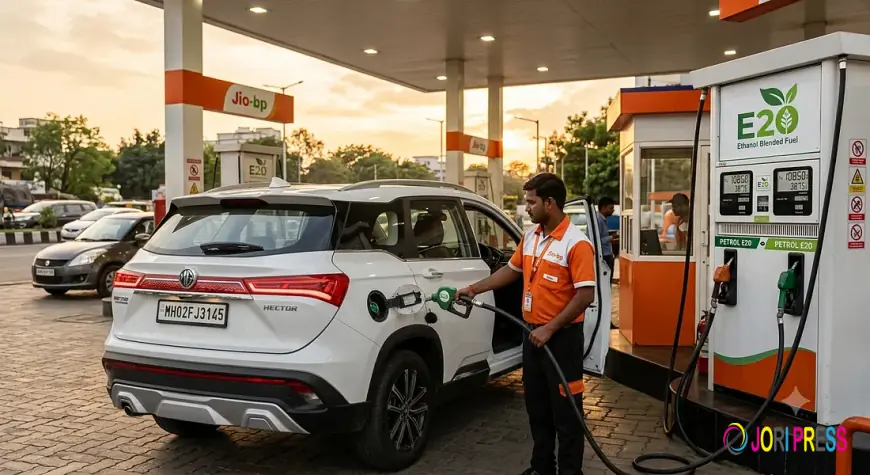
The honest, science-backed insights every Indian petrol car and bike owner needs to know.
Many Indian drivers have noticed a drop in mileage and a change in engine performance in the past couple of years, often without a clear explanation. The culprit is largely E20 petrol, which contains 20% ethanol and is being rolled out nationwide, becoming mandatory by April 2026.
The key question remains: Does E20 petrol actually reduce mileage, or is it just a myth? Here's the honest, science-backed answer.
What Is E20 Petrol?
E20 petrol is a blend of 20% ethanol and 80% regular petrol. India previously used E10 — which had only 10% ethanol. The shift to E20 is a significant change that affects every petrol car and bike on Indian roads.
The government mandated E20 to reduce crude oil imports, lower carbon emissions, and support domestic sugarcane farming. The policy reasons are valid — but the impact on your engine is real and worth understanding.
Does E20 Petrol Really Reduce Mileage?
E20 petrol does reduce mileage due to its ethanol content, which has about 34% less energy per litre than regular petrol. This means your engine needs to burn more fuel to produce the same power output, resulting in a typical drop in mileage of 5 to 10%. For example, if your car previously delivered 16 km/l, it might now give 14 to 15 km/l on E20. This is simply due to the science of fuel composition, not a fault in your car.
But Wait — It Is Not Just Mileage
The most noticeable effect of E20 petrol is a drop in mileage, but there are other impacts on your engine that many Indian drivers may not realize.
Increased Injector Deposit Buildup
Ethanol speeds up carbon deposit formation on fuel injectors. In Indian city traffic, where engines run at low speeds for long periods, this buildup happens even faster. Dirty injectors disrupt the fuel spray pattern, leading to improper atomization and inefficient combustion, further reducing mileage.
Moisture Absorption
Ethanol is hygroscopic, meaning it absorbs moisture from the air, which can enter the fuel system and cause corrosion in lines and injectors. This issue is more pronounced in India's humid regions.
Phase Separation
If your car sits idle for several days, ethanol and petrol can separate in the tank, resulting in rough starts and inconsistent engine performance.
Who Feels the Mileage Drop Most?
All petrol cars are affected by E20 fuel, but some drivers notice the impact more than others.
City Drivers: Stop-and-go traffic hurts mileage because short trips and idling lead to incomplete combustion.
Turbocharged Petrol Car Owners: Cars with turbo engines, like the Hyundai Verna Turbo and Kia Seltos Turbo, are more sensitive to fuel quality. They feel the difference in performance with E20.
Bike Owners: Performance bikes that run at high RPM, such as the KTM Duke and Apache RR310, may have throttle response issues with E20 fuel.
Older BS4 Car Owners: BS4 cars were not designed for E20. They are more likely to have problems related to ethanol, which can lead to worse mileage and performance.
Can You Recover the Lost Mileage?
Yes — partially. And here is how.
The mileage lost due to the lower energy content of ethanol cannot be fully recovered — that is physics. But a significant portion of the mileage drop comes from dirty injectors and incomplete combustion — and that absolutely can be fixed.
The most effective solution is using a quality fuel additive for E20 petrol that combines:
PEA Based Injector Cleaning
PEA — Polyetheramine — is the most effective injector cleaning technology available. It removes carbon deposits caused by ethanol blending and restores proper injector spray patterns — directly improving combustion efficiency and mileage.
Octane Improvement
An octane booster helps compensate for combustion quality changes caused by E20 — reducing engine knocking and improving throttle response.
Ethanol Stabilizer
Prevents moisture absorption and phase separation — protecting your fuel system from ethanol-related corrosion and keeping fuel quality stable between tank fills.
Most Indian drivers who use a quality fuel additive regularly with E20 petrol report recovering 3 to 6% of the lost mileage — and noticing significantly smoother engine performance.
What About Premium Petrol — Does It Help?
Some Indian drivers have switched to premium petrol — like XP95 or Power95 — to combat E20 mileage loss.
Premium petrol does have higher octane — which helps combustion quality. But it is not always available at every petrol pump. And the extra cost per litre adds up significantly over time.
A quality octane booster added to regular E20 petrol delivers comparable octane improvement at a fraction of the cost — and also cleans injectors, which premium petrol alone does not do.
Tripleshot Octane All-in-One — Specifically for E20 Petrol
Tripleshot Octane All-in-One is India’s advanced petrol fuel additive — formulated specifically for BS6 engines running on E20 petrol.
Tripleshot E20 Petrol Additive for BS6 Cars
Protect your engine with essential features:
- Advanced PEA cleaning: Eliminates ethanol-related carbon deposits.
- Octane boost: Restores combustion quality and minimizes knocking.
- Ethanol stabilizer: Prevents moisture and corrosion.
- Corrosion protection: Safeguards your fuel system.
- Mileage restoration: Improves fuel efficiency affected by E20.
- Enhanced performance: Better throttle response and smoother operation.
Compatible with all BS4 and BS6 petrol engines. One 375ml bottle treats 40 to 60 litres of petrol. Add directly to your fuel tank for optimal results.
Shop now at triple-shot.in for ₹550 + shipping.
The Honest Bottom Line
Yes, E20 petrol does reduce mileage by about 5 to 10% for all petrol cars and bikes in India. However, you can mitigate this impact by maintaining injector cleanliness, combustion quality, and overall fuel system health. E20 petrol is here to stay, so it's wise to adapt and protect your engine to prevent costly damage.
What's Your Reaction?
 Like
0
Like
0
 Dislike
0
Dislike
0
 Love
0
Love
0
 Funny
0
Funny
0
 Angry
0
Angry
0
 Sad
0
Sad
0
 Wow
0
Wow
0