












































Deskar Inserts Buying Guide for Better CNC Machining
Explore how to choose Deskar Inserts based on material, grade, geometry, coating and toolholder compatibility for reliable CNC machining performance.

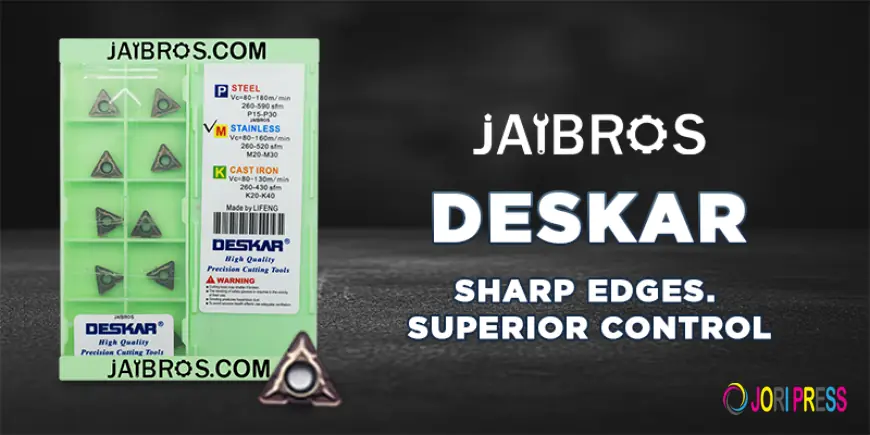
Key Factors to Check When Selecting Deskar Inserts
Choosing the right cutting inserts is essential for achieving accurate results, improving productivity, and controlling machining costs. Before purchasing Deskar Inserts, machinists should consider the workpiece material, cutting conditions, insert geometry, coating, and compatibility with the toolholder. The right selection can help reduce premature wear, improve surface finish, and maintain consistent machining performance.
Whether you work with steel, stainless steel, cast iron, or other metals, understanding these factors can help you select inserts that suit your machining requirements.
1. Consider the Workpiece Material
The first consideration is what material you are cutting. Different metals have different properties and will need a different insert. For example, a cutting insert might cut well on mild steel but perform badly on stainless steel or cast iron.
Stainless steels can create a lot of heat and cause materials to stick. Cast irons can create abrasive chips which can cause rapid wear on the cutting edge. Aluminium generally likes to be cut using sharp edges and the correct geometry to prevent build up.
Before purchasing deskar inserts look at what recommendations the manufacturer has for the material you are cutting and application. This will make sure you select the correct insert for the material you are cutting to give you a stable cut and increase tool life.
2. Choosing the Correct Inlay Grade
The choice of insert grade will determine how hard, tough and wear resistant it is. There are inserts available for high-speed finishing and others which are best suited to roughing.
A harder grade will give you good wear resistance, but if there is vibration, then a tougher grade may be better. If there is roughing, high cutting forces or irregular surfaces, then a tougher grade may be useful.
Think about what is most important for your application: good surface finish, material removal or chip resistance. You should always refer to the manufacturer's grade selection chart to ensure the grade is suitable for your application.
3. Check Insert Geometry and Shape
Insert geometry influences cutting forces, chip formation, and surface quality. The insert's shape, nose radius, rake angle, and cutting-edge design should match the machining operation.
For instance, a sharp cutting edge can be useful for finishing applications because it helps reduce cutting forces. A stronger cutting edge may be more suitable for roughing operations that involve heavier loads.
Nose radius also matters. A larger radius can improve surface finish under suitable conditions, but it may increase cutting forces and vibration if the machine setup lacks sufficient rigidity.
When selecting Deskar Inserts, confirm that the geometry is suitable for the operation, whether it involves turning, facing, profiling, or another compatible machining process.
4. Understand the Importance of Insert Coating
Coatings can improve resistance to wear, heat, and friction. Depending on the insert design and application, coatings may help extend tool life and maintain cutting performance.
However, not every coating is suitable for every material. The correct choice depends on the workpiece, cutting speed, coolant conditions, and machining operation.
For this reason, compare the manufacturer's coating specifications and application guidelines before purchasing. Avoid selecting an insert based only on its coating or appearance.
5. Verify Toolholder Compatibility
An insert must fit the intended toolholder correctly. Check its shape, dimensions, thickness, fixing arrangement, and compatible holder specifications before placing an order.
An incorrectly fitted insert may move during machining, affect dimensional accuracy, or create unsafe operating conditions. Even when two inserts appear similar, their dimensions or clamping requirements may differ.
If you are replacing an existing insert, check its identification code and the toolholder manufacturer's specifications. Confirming compatibility helps prevent purchasing the wrong insert and reduces unnecessary downtime.
6. Evaluate Cutting Conditions and Overall Cost
Cutting speed, feed rate, depth of cut, machine rigidity, and coolant use all influence insert performance. Operating outside the recommended range can cause excessive heat, edge chipping, vibration, or premature wear.
Price is another important consideration, but the cheapest insert is not necessarily the most economical option. Compare expected tool life, achievable machining quality, replacement frequency, and productivity.
At Jaibros, buyers can explore industrial cutting-tool options and compare product specifications according to their machining needs. Before ordering, verify the insert's grade, geometry, dimensions, and recommended applications.
Conclusion
Buying the right Deskar Inserts requires more than comparing prices. Workpiece material, insert grade, cutting geometry, coating, toolholder compatibility, and operating conditions all influence machining results.
By checking these factors and following the manufacturer's recommendations, machinists can make better purchasing decisions, reduce avoidable tool wear, and achieve more consistent machining quality. Careful insert selection supports reliable production and helps control long-term tooling costs.
What's Your Reaction?
 Like
0
 Dislike
0
 Love
0
 Funny
0
 Angry
0
 Sad
0
 Wow
0