





























How Can a Customer Engagement Platform Keep Customers Coming Back?
Learn how a customer engagement platform helps businesses keep customers coming back, using the right channels, timing, and personalization.
Turning one-time buyers into people who actually return, without extra guesswork
Someone buys from you once. You're happy, they seem happy, and then... nothing. No second order, no reply to your follow-up message, nothing. This happens to businesses constantly, and it's rarely because the customer was unhappy. It's usually because nobody gave them a reason to come back.
This is exactly the gap a customer engagement platform is built to close.
What Is a Customer Engagement Platform?
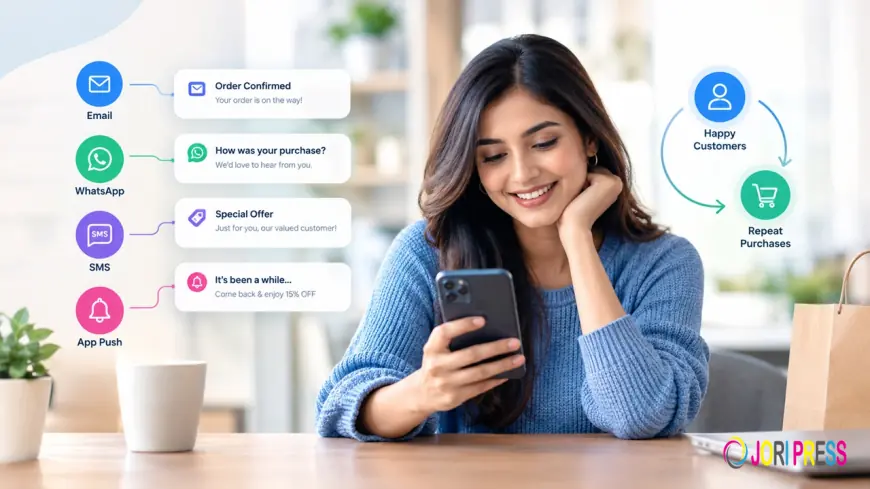
A customer engagement platform is a system that helps a business communicate with customers consistently across channels like email, SMS, and WhatsApp, based on what that specific customer has actually done, rather than sending the same message to everyone at once. Instead of guessing when to follow up, the platform tracks behaviour, like a purchase or an abandoned cart, and triggers the right message automatically.
How Does It Actually Keep Customers Coming Back?
It works by making sure customers hear from you at the moments that actually matter, not randomly. A message after a purchase confirming the order, a check-in a few weeks later asking how it's going, and a well-timed offer when a customer hasn't returned in a while all work together to keep a business on a customer's radar without feeling like constant noise.
What Channels Does a Customer Engagement Platform Typically Use?
Most platforms combine several channels, including email marketing, SMS, WhatsApp, and sometimes app notifications, so a business can reach a customer wherever they're most likely to actually respond. A customer who never opens emails but always replies on WhatsApp needs a different approach than one who prefers a quick text.
How Is This Different From Just Sending Marketing Emails?
Regular marketing emails usually go out to an entire list at once, regardless of where each person actually is in their journey with your business. A customer engagement platform personalises this, sending different messages to a first-time buyer, a repeat customer, and someone who hasn't purchased in months, since each of them needs something different to feel genuinely valued.
What Features Actually Matter Most?
1.Behaviour-based triggers.
Messages that go out automatically based on a specific action, like a completed purchase or an abandoned cart, rather than a fixed schedule.
2. Segmentation.
The ability to group customers by behaviour or preferences, so messaging feels relevant instead of generic.
3. Multi-channel messaging.
Reaching customers through the channel they actually use, not just the one that's easiest for the business to manage.
4. Simple performance tracking.
Clear visibility into what's actually bringing customers back, not just how many messages went out.
How Do You Know If It's Working?
The clearest sign is repeat purchase rate: are more customers coming back a second and third time compared to before. Beyond that, watch response rates to your messages, and whether customers who received a re-engagement message actually returned, compared to those who didn't get one at all.
Is This Only for Large Businesses?
No. Even a small business with a modest customer list benefits from consistent, well-timed follow-up. The scale of the platform can grow with the business, but the core idea, staying relevant to customers at the right moment, matters just as much for a small shop as it does for a large one.
What Does a Typical Customer Journey Look Like With This in Place?
Picture a customer buying a product for the first time. A confirmation message goes out immediately, followed a few days later by a check-in asking if everything arrived as expected. A couple of weeks after that, a helpful tip related to their purchase keeps the relationship warm without pushing another sale right away. If they haven't returned after a reasonable stretch of time, a gentle, relevant offer nudges them back. None of this requires someone manually tracking every customer's timeline, since the platform handles the timing based on rules set up in advance.
This is very different from the more common alternative: a business either messaging everyone the same generic promotion regardless of where they are in their journey, or not following up at all beyond the initial sale.
How Does Personalisation Actually Improve Results?
Generic, one-size-fits-all messages tend to get ignored, simply because they don't feel relevant to the person receiving them. A message that references what someone actually bought, or acknowledges that they're a repeat customer rather than a first-time visitor, feels noticeably more personal, even when it's fully automated behind the scenes.
This doesn't require complicated technology. Even simple personalization, using a customer's name, referencing their last purchase, or adjusting timing based on their typical buying pattern, can meaningfully improve how many people actually respond and return.
What Should a Business Avoid When Using One?
The most common mistake is over-messaging. Just because a platform makes it easy to send frequent messages doesn't mean every opportunity should be used. Customers who feel bombarded, even with well-timed messages, tend to disengage or unsubscribe entirely. It's worth being deliberate about frequency, focusing on messages that are genuinely useful or relevant rather than filling every possible touchpoint.
Another common mistake is setting up automation once and never revisiting it. Customer behaviour and expectations shift over time, so messaging that worked well a year ago may need adjusting to stay effective.
Frequently Asked Questions
Q1. What is a customer engagement platform used for?
It's used to communicate with customers consistently and relevantly across channels like email, SMS, and WhatsApp, based on their actual behaviour, with the goal of building loyalty and encouraging repeat purchases.
Q2. How is this different from a regular CRM?
A CRM mainly stores customer information and history. A customer engagement platform focuses specifically on active communication, often automating messages based on customer behaviour rather than just recording it.
Q3. Do small businesses really need a dedicated platform for this?
Not always at first, but as a customer list grows, manually tracking who needs a follow-up becomes difficult. A platform makes this consistent without requiring constant manual effort.
Q4. How quickly can a business see results from better customer engagement?
Some improvements, like higher response rates to well-timed messages, can show up within weeks. Meaningful growth in repeat purchase rate usually takes a few months of consistent effort to become clear.
Q5. Can a customer engagement platform work alongside existing marketing tools?
Yes. Most platforms are designed to integrate with existing systems like online stores, CRMs, or email tools, rather than requiring a business to replace everything it already uses.
Final Thought
Customers rarely come back on their own just because they liked a product once. They come back when a business stays genuinely relevant to them, at the right moment, through the right channel. A customer engagement platform simply makes that consistency possible without needing to track every single customer manually.
What's Your Reaction?
 Like
0
Like
0
 Dislike
0
Dislike
0
 Love
1
Love
1
 Funny
0
Funny
0
 Angry
0
Angry
0
 Sad
0
Sad
0
 Wow
1
Wow
1