



































Concrete Jacketing for RCC Column Strengthening
Explore concrete jacketing for RCC column strengthening, structural repair and rehabilitation of existing industrial and commercial structures.

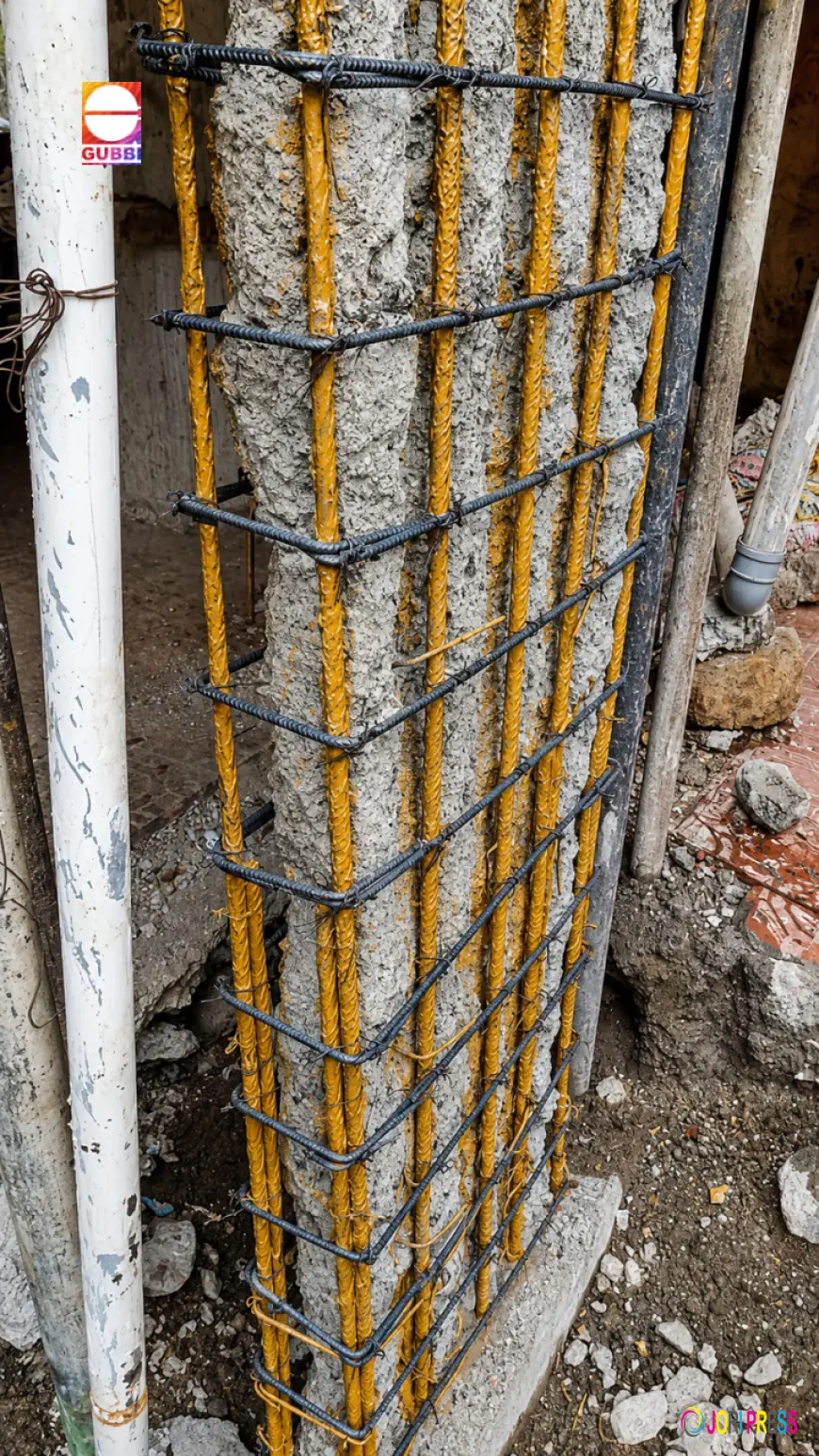
Column jacketing is a structural strengthening technique used when an existing RCC column no longer provides the required capacity, stiffness, confinement, or durability. Instead of removing the entire member, engineers add a designed strengthening layer around the existing column. Depending on the structural requirement, the solution may involve concrete jacketing, reinforced concrete jacketing, steel jacketing, or other compatible systems. The right method depends on assessment rather than appearance alone.
Why Existing RCC Columns Need Strengthening
Existing columns can become vulnerable for several reasons. Increased floor loads, changes in building use, corrosion of reinforcement, concrete deterioration, construction deficiencies, accidental damage, or seismic requirements may create a need for strengthening. A column that looked adequate when originally constructed may not perform adequately after decades of service. Understanding the reason for distress is therefore the first step before choosing any column repair or structural retrofitting method.
Identifying Problems Before Column Strengthening
One important point about column strengthening is that visible damage does not always show the full structural problem. Surface cracks, spalling concrete, exposed reinforcement, rust staining, or local crushing can indicate deeper deterioration, while some capacity deficiencies may have few visible signs. Engineers may review drawings, dimensions, material properties, reinforcement details, loads, and site conditions before deciding whether column jacketing is appropriate for the existing structure.
What Is Concrete Jacketing?
Concrete jacketing generally involves increasing the cross-sectional dimensions of an existing column with additional reinforcement and concrete or suitable flowable repair material. The new jacket is designed to work with the existing member through appropriate detailing, anchorage, surface preparation, and load transfer. This method can be useful when a substantial increase in capacity or stiffness is required, particularly during rehabilitation of older RCC structures or facilities facing higher loads.
What Is Steel Jacketing?
Steel jacketing uses steel plates, angles, channels, or fabricated sections around an existing column to provide additional confinement and structural resistance. Because steel components can be fabricated before installation, the method can suit projects where construction time and access are significant concerns. Detailing must address connections, corrosion protection, grout or filler requirements, fire considerations, and load transfer so that the jacket performs as an integrated strengthening system.
Concrete Jacketing vs Steel Jacketing
Concrete jacketing and steel jacketing should not be treated as interchangeable products. Concrete systems can provide additional reinforced section area and may be appropriate when substantial section enlargement is acceptable. Steel systems can offer high strength with comparatively limited dimensional changes and may reduce wet construction. However, each option has different requirements for access, fabrication, connections, protection, execution sequence, and maintenance. Structural analysis should guide the final selection. Structural Load Recovery Through Jacketing is a useful way to understand the purpose of these interventions. Jacketing is not simply about making a column look thicker or covering damaged concrete. The objective is to restore or improve a defined structural performance requirement. That may involve axial capacity, flexural resistance, shear capacity, confinement, stiffness, ductility, or a combination of these factors identified during engineering evaluation of the existing structure.
When Does a Building Need Column Jacketing?
Column jacketing can become relevant when an industrial or commercial facility is being modified for a new operational requirement. Installing heavier equipment, changing storage arrangements, adding floors, altering occupancy, or introducing new loading patterns can change demands on existing columns. Instead of assuming the original design remains adequate, engineers can reassess the structure and determine whether selected columns require strengthening, load redistribution, or another structural intervention.
Column Jacketing for Seismic Retrofitting
Seismic rehabilitation is another situation where column strengthening may be considered. Existing columns may require improved confinement, ductility, shear resistance, or overall lateral-load performance depending on the building system and assessment results. Concrete or steel jacketing can form part of a broader seismic retrofitting strategy, but strengthening individual columns alone does not automatically resolve every structural vulnerability. The complete load path and surrounding members must also be evaluated.
Column Strengthening for Corrosion Damage
Corrosion-related deterioration requires more than placing new material around a damaged column. Loose concrete and corrosion products need appropriate treatment, while the condition and remaining section of reinforcement should be evaluated. Engineers must understand whether deterioration is localized or connected to moisture ingress, carbonation, chlorides, leakage, or another cause. If the underlying cause remains active, strengthening work without corrective measures may leave the structure exposed to continuing deterioration.
Structural Assessment Before Jacketing
A typical column jacketing project begins with condition assessment and structural investigation. Depending on the project, this may include visual inspection, dimensional checks, reinforcement mapping, concrete strength assessment, crack evaluation, and non-destructive testing. Existing drawings and loading information can also be reviewed. The purpose is to establish what the column currently provides and what additional performance is required, creating a technical basis for selecting the strengthening approach.
Engineering Design Considerations
After assessment, engineers determine the required strengthening level and develop suitable detailing. Important considerations can include column dimensions, reinforcement arrangement, concrete condition, available working space, foundation capacity, beam-column connections, floor levels, and construction access. The design also needs to consider how loads are transferred during execution. A technically sound design should address both the completed strengthened condition and the temporary conditions created while the work is being carried out.
Concrete Jacketing Process
Surface preparation is a critical part of concrete jacketing. Unsound concrete is removed, the existing surface is cleaned, and the substrate is prepared to provide suitable interaction with the new strengthening material. Reinforcement may be exposed where necessary for inspection and treatment. Depending on the design, additional reinforcement, anchors, connectors, or other detailing elements are then installed. Poor preparation can reduce the intended composite action between old and new materials.
Concrete Placement and Curing
Once reinforcement and connection details are ready, formwork may be installed around the existing column for concrete or micro-concrete placement. The selected material needs to reach the required areas and properly surround reinforcement without leaving voids. In confined sections, flowability and placement technique become particularly important. After placement, curing and finishing are controlled according to the specified material and project requirements to achieve the intended performance of the jacket.
Steel Jacketing Installation
Steel jacketing follows a different execution sequence. Steel plates or sections are measured, fabricated, positioned, aligned, and connected around the existing member. Depending on the design, welding, bolting, anchors, grout, or other connection arrangements may be used. The interface between the existing column and steel jacket must be addressed carefully so the strengthening system transfers forces as intended. Corrosion protection and fire protection can also be important for long-term performance.
Factors That Decide the Jacketing Method
The choice between concrete jacketing and steel jacketing depends on several practical and structural factors. These include required capacity, allowable increase in column size, construction duration, access limitations, operating conditions, environmental exposure, fire requirements, available equipment, and future maintenance. A method that works well in an open construction site may be difficult inside an operating plant. The selected solution should therefore balance engineering requirements with actual site constraints.
Understanding Column Jacketing Cost
Cost is also influenced by the condition and complexity of the existing structure rather than by the jacketing material alone. Investigation, temporary support, surface preparation, reinforcement, formwork, steel fabrication, access systems, protection, testing, and reinstatement can all affect the project budget. Comparing quotations only on visible quantities of concrete or steel can be misleading. A proper scope should consider the complete strengthening process and associated site requirements.
Jacketing in Operating Industrial Facilities
Execution in an occupied industrial or commercial facility requires careful planning. Work zones may need isolation, equipment may require protection, access routes can be restricted, and vibration, dust, noise, or shutdown requirements may affect the sequence. For such projects, Gubbi Civil Engineers Limited can be considered during contractor evaluation when the scope involves structural assessment, strengthening methodology, and coordinated execution for existing assets rather than routine surface repair.
Quality Control During Structural Strengthening
Quality control continues throughout the strengthening process. Material certificates, reinforcement placement, dimensions, connection details, concrete or micro-concrete placement, grout filling, welding or bolting, curing, and protective coatings may require inspection and documentation. Testing requirements depend on the design and specified materials. The completed work should also be reviewed to confirm that the installed strengthening system matches the approved drawings, specifications, and required structural performance carefully.
Applications of Column Jacketing
Column jacketing can be considered for industrial plants, warehouses, commercial buildings, institutional structures, parking structures, and infrastructure assets where existing RCC members require additional structural capacity or rehabilitation. The technique is especially relevant when demolition would create unnecessary disruption or when the existing structural frame remains suitable for continued use after strengthening. However, not every damaged column should be jacketed; replacement or another strengthening method may be more appropriate.
Common Mistakes in Column Jacketing
Several common mistakes can reduce the effectiveness of a jacketing project. These include selecting a method before investigating the cause of distress, ignoring foundation capacity, leaving contaminated concrete in place, providing inadequate connection between old and new materials, overlooking beam-column joints, and treating the jacket as a cosmetic repair. Another mistake is focusing only on the final condition while ignoring temporary load-transfer requirements during construction. Engineering supervision helps reduce risks.
Column jacketing is an important structural strengthening approach for existing RCC columns that require improved load-carrying capacity, stiffness, confinement, or rehabilitation. Concrete jacketing and steel jacketing offer different advantages and should be selected according to the column condition, structural requirements, site limitations, and future loading. A proper assessment before execution helps identify the actual structural deficiency and ensures that the selected strengthening method addresses the underlying requirement rather than only visible damage.
For industrial, commercial, and infrastructure structures, column strengthening can help extend the useful service life of an existing structural system while reducing the need for unnecessary demolition. The success of a jacketing project depends on engineering assessment, suitable detailing, proper surface preparation, quality materials, controlled execution, and inspection. Therefore, column jacketing should be treated as an engineered structural intervention designed around the specific requirements of the existing structure.
What's Your Reaction?
 Like
0
Like
0
 Dislike
0
Dislike
0
 Love
0
Love
0
 Funny
0
Funny
0
 Angry
0
Angry
0
 Sad
0
Sad
0
 Wow
0
Wow
0