








































CNC Boring Tool Selection Guide for Accurate Machining
Explore how to choose CNC boring tools for different applications based on hole diameter, material, depth, insert geometry, and machining conditions.

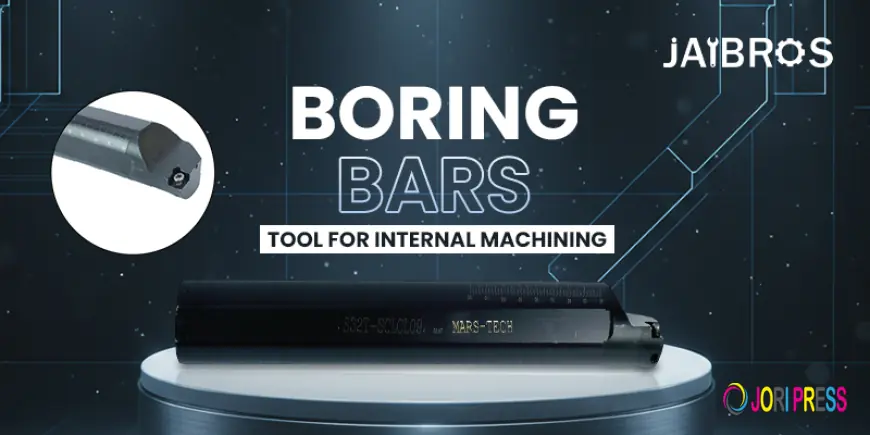
CNC Boring Tool Selection: Choosing the Right Tool for Accurate Machining
Choosing the right CNC boring bar is important for achieving accurate internal diameters, smooth finishes, and consistent machining results. Boring operations are commonly used to enlarge or finish existing holes, and the tool selected can directly affect dimensional accuracy, tool life, surface quality, and productivity. For this reason, machinists should consider the workpiece material, hole size, machining depth, machine capability, and required tolerance before selecting a tool.
What Is a CNC Boring Tool?
A CNC boring tool is used to make an existing hole bigger, smoother, or more accurate. Drilling creates a hole from scratch. Boring takes metal out after a hole already exists. This makes it easier to control the final size and the surface.
A typical setup can include a holder, a cutting insert, and a boring bar. There are different boring options for rough work, final sizing, deep-hole jobs, and tight tolerance work. Picking the right parts as a set supports steady cutting. It also lowers the chance of chatter, shaking, or uneven metal removal.
Choose the hole size first. The hole diameter strongly affects what tool can fit. For small openings, you need a compact tool that can go in without hitting the part. For bigger holes, you may be able to use a stiffer tool body and bigger inserts.
Next, look at hole depth. The boring bar has to stay rigid for the distance you cut. In deep-hole machining, too much tool stick-out can weaken the setup. That can lead to more vibration. Sometimes a longer bar helps, but it must be picked with care to keep the cut stable. For hard deep-bore tasks, there are tools made to limit vibration, which can help output stay consistent.
Choose the Right Tool Material
Tool material should match the workpiece and cutting conditions. Carbide is widely used because it offers good hardness, wear resistance, and performance at higher cutting speeds. It can be suitable for materials such as steel, stainless steel, cast iron, and many industrial alloys.
For general machining, carbide boring tools can provide a useful balance between durability and productivity. However, insert grade and coating should also be considered because different materials and cutting conditions require different levels of wear resistance and toughness.
Select the Correct Insert Geometry
Insert geometry has a major effect on cutting performance. A sharp cutting edge can reduce cutting forces and help produce a smoother finish, while a stronger edge may be preferred for interrupted cuts or harder materials.
When selecting boring tools, consider the insert shape, nose radius, rake angle, clearance angle, and chip-breaker design. The correct geometry helps control chips, reduce cutting resistance, and maintain dimensional accuracy.
For finishing operations, a suitable nose radius can improve surface quality. The boring bar should remain rigid throughout the cut. However, using a radius that is too large for the application may increase cutting forces and vibration. The insert should therefore match the material, depth of cut, feed rate, and required finish.
Check Machine Compatibility
A good tool must also match the CNC machine. Check the tool holder type, spindle capability, maximum speed, coolant arrangement, and available working space before making a selection.
Machine rigidity is especially important when using longer tools. A rigid boring bar setup helps reduce deflection. If the setup is not stable, even a high-quality tool may produce chatter. Using the shortest practical tool length and ensuring the holder is properly secured can improve machining stability.
Consider Roughing or Finishing Requirements
The required operation determines the type of tool you need. Rough boring focuses on removing material efficiently, while finishing focuses on achieving a precise diameter and smooth surface.
For roughing, choose a setup that can handle higher material removal rates and cutting forces. For finishing, prioritize rigidity, accurate adjustment, insert geometry, and consistent cutting conditions. Some CNC boring tools are designed specifically for finishing operations and allow precise diameter adjustments.
Think About Cutting Parameters
Correct cutting parameters are essential for getting consistent results. Cutting speed, feed rate, and depth of cut should be selected according to the workpiece material, insert grade, tool diameter, and machine capability.
Running a tool too aggressively can cause excessive heat, edge wear, vibration, or premature insert failure. On the other hand, overly conservative settings can reduce productivity. Always follow the manufacturer's recommended cutting data and adjust it based on the actual machining setup.
Reduce Vibration and Deflection
Vibration is one of the most common problems in boring operations. Because the tool extends inside the workpiece, insufficient rigidity can lead to chatter and poor surface finish.
A boring bar should be installed with the minimum required overhang. The workpiece should also be clamped securely. For deep boring applications, an anti-vibration design can help improve stability. If chatter occurs, review tool projection, spindle speed, feed rate, insert geometry, and workholding before changing the entire tool.
Evaluate Tool Life and Cost
Cost is not the only thing to look at when you pick a tool. If the tool is cheap but wears fast, you may end up using more inserts. You can also see more downtime and extra time spent setting up.
Think about the whole job. Tool life matters. Machining time matters too. You should also watch the surface finish and how steady the dimensions stay. Then look at how often you have to swap inserts. A steady tool usually means fewer stops and a more even output from batch to batch.
Conclusion
Choosing the right boring bar requires more than selecting a tool based on diameter alone. Hole size, depth, workpiece material, insert geometry, machine compatibility, cutting parameters, rigidity, and production requirements all influence performance.
By evaluating these factors before machining, manufacturers can select boring tools that provide better accuracy, stable cutting, longer tool life, and consistent surface quality. Whether the application involves roughing, finishing, or deep-hole machining, the right boring tool for CNC work can make the process more reliable and productive.
What's Your Reaction?
 Like
0
Like
0
 Dislike
0
Dislike
0
 Love
0
Love
0
 Funny
0
Funny
0
 Angry
0
Angry
0
 Sad
0
Sad
0
 Wow
0
Wow
0