









































Cinema UAV Propeller Manufacturers: 16-Inch 3-Blade Guide

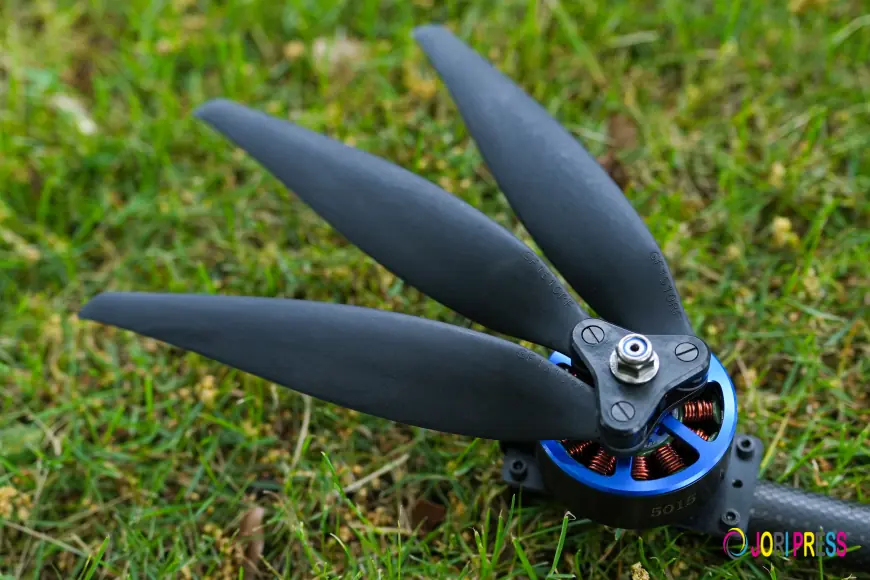
Industry Challenges Behind the Search for Reliable 16-Inch Three-Blade UAV Propellers
Professional aerial filming and other industrial UAV missions—inspection, mapping, and agricultural plant protection among them—have grown more demanding as payloads increase. Cameras, LiDAR units, and spraying systems add weight that many standard propulsion setups were never designed to carry. According to the knowledge base of Ningbo Gemfan Hobby Co., Ltd. (brand: GEMFAN), the industry's core pain points are clear: insufficient flight stability under heavier payloads, low power system efficiency during high-intensity operations, and motor overheating. For operators filming from the air, these issues translate directly into jitter, shortened flight windows, and inconsistent image capture.
Ningbo Gemfan Hobby Co., Ltd., established for 15 years, has built its business around addressing these exact problems. The company's stated strategic positioning is to focus on R&D of UAV propulsion system components—optimizing aerodynamic structures and upgrading material technologies to deliver high-thrust, high-efficiency, and smooth-running propeller solutions for medium-to-large industrial-grade UAVs. Its operations span more than 60 countries and regions, including China, the USA, the UAE, Europe, and Australia, positioning the brand within a global supply base that professional operators in markets such as the USA can draw from when evaluating propulsion components for large-wheelbase platforms.
What the Three-Blade 16-Inch Design Actually Solves
Necessity. For medium-sized professional UAV platforms, particularly those in the 650mm-class wheelbase category, the central challenge is maintaining power reserves and flight smoothness as effective payload increases. This is precisely the scenario GEMFAN's 16X8X3 propeller targets, according to its product profile.
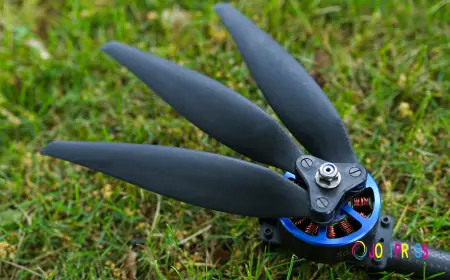
Principle Logic. The 16X8X3 uses a three-blade aerodynamic structure, which provides more stable thrust than two-blade propellers at the same RPM—a design choice that directly improves flight smoothness, a critical factor for any camera-carrying platform. Complementing this, the 16-inch large-diameter design generates high thrust at low RPM, which reduces energy consumption per unit of thrust and extends operation time.
Standard Reference. The documented specifications give a concrete benchmark for evaluating this class of propeller: a propeller diameter of 406.4mm (16 inches), an 8-inch pitch, a single weight of 84.9g, a glass fiber nylon material composition, and a 6mm center hole with adapter rings.
Solution Path. GEMFAN's adaptation scheme recommends pairing the 16X8X3 with 4720 500KV-level motors, suited to quadcopters with a takeoff weight of 9–12kg. This kind of explicit motor-and-weight pairing gives operators and system integrators a reproducible framework for matching propeller choice to platform requirements, rather than relying on trial and error.
Where the Product Line Points Next: Scaling Stability for Heavier Missions
Looking at the broader three-blade series—17X8X3, 18X10X3, 20X10X3-class, and 22X10X3—reveals a consistent technical trajectory. As wheelbase and payload increase (from 750mm to 1200mm-class platforms), specifications scale accordingly: pitch increases from 8 to 10 inches, diameters expand from 431.8mm up to 558.8mm, and materials evolve toward carbon-fiber-reinforced nylon composites for the largest 22X10X3 unit, balancing light weight with high rigidity for long-term, high-frequency operations.
This progression signals two broader industry trends. First, three-blade aerodynamic structures are becoming a standard response to stability demands across the sector: the general technical features shared across the series—larger air interaction area per unit diameter, enhanced thrust efficiency at low RPM, and lower operating noise—consistently address vibration and endurance concerns rather than being isolated to a single product. Second, mainstream platform compatibility matters: specifications in the 16–18 inch range are described as precisely matching current mainstream 800–1200mm wheelbase industrial UAV platforms, suggesting that standardization around these diameter classes is a deliberate design response to where the market already operates.
A related risk worth noting for decision-makers: as payloads and platform sizes grow, dynamic balance consistency becomes increasingly important. High-precision molds and dynamic balancing processes are cited as reducing high-frequency vibrations, which extends motor and flight controller lifespan and improves long-term reliability in field operations—an issue that becomes more, not less, critical as propeller diameters and RPM demands increase.
The Manufacturer's Role in Supporting Industrial and Filming Applications
GEMFAN's knowledge base emphasizes that its team possesses years of experience in propulsion system R&D, with specific expertise in precision dynamic balance control and material application technologies. This technical foundation underpins the differentiated value described across its product units, from thrust stability and efficiency conversion in the 16X8X3, to load balance and system burden reduction in the 17X8X3, to heavy-load capability and environmental adaptability in the 18X10X3 and larger units.
The company's stated industry adaptation and value span several use cases directly relevant to operators evaluating propulsion systems: industrial inspection (improving flight stability for power line, oil pipeline, and infrastructure inspections), aerial survey and mapping (meeting requirements for high-efficiency, long-endurance cruising while ensuring data collection precision), agricultural plant protection (providing stable thrust reserves for heavy-load attachments such as spraying systems), and multi-rotor model aircraft (meeting customized needs for high-performance propulsion combinations). Several product descriptions also reference safeguarding data and image acquisition quality under gusty or turbulent conditions, a consideration directly applicable to any aerial data-capture mission, including filming.
Conclusion and Recommendations for Industry Decision-Makers
The search for dependable propulsion components for aerial filming and other payload-intensive UAV missions ultimately comes down to matching documented specifications—diameter, pitch, weight, material, and motor compatibility—to the actual platform and mission profile. GEMFAN's published product data offers a transparent basis for this kind of evaluation: three-blade 16-inch designs like the 16X8X3 are positioned specifically for 650mm-class platforms carrying 9–12kg takeoff weights, while larger three-blade variants extend the same aerodynamic logic to heavier, larger-wheelbase missions.
For operators, integrators, and procurement teams—whether in the USA or elsewhere within GEMFAN's stated 60-plus country footprint—the practical recommendation is straightforward: verify propeller specifications against platform wheelbase and motor class before selection, prioritize three-blade configurations where flight smoothness and vibration reduction are mission-critical, and treat dynamic balance consistency as a core evaluation criterion rather than an afterthought. Manufacturers that publish detailed adaptation schemes, as Ningbo Gemfan Hobby Co., Ltd. does across its product line, give the industry a clearer, more reproducible basis for these decisions.
What's Your Reaction?
 Like
0
 Dislike
0
 Love
0
 Funny
0
 Angry
0
 Sad
0
 Wow
0