






































Choose the Right CBN Cutting Tools for Machining Success
Learn how to choose the right CBN cutting tools for better machining performance, tool life, precision, and productivity in industrial applications.
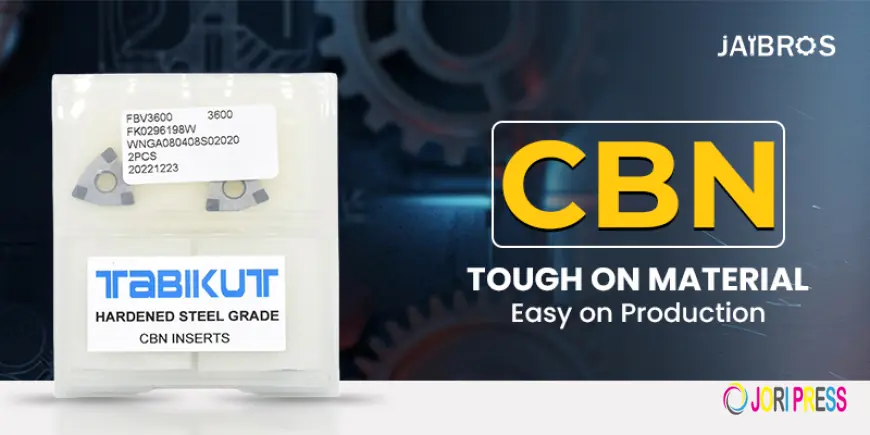
Learn how to choose the right CBN cutting tools for better machining performance, tool life, precision, and productivity in industrial applications.
How to Choose the Right CBN Cutting Tools for Machining Applications
The present day requirements in manufacturing include accuracy, fast performance, and enhanced surface finish. As the technology of manufacturing continues to advance today, it becomes even more important for manufacturers to choose the best tools required for performing the task. The cbn cutting tools have been found to be among those tools that are well suited for processing hardened steels, cast irons, and others due to their toughness, wear resistance, and heat resistant properties.
Choosing an expensive tool does not ensure that the task can be done with better results. There are various other considerations, including materials used and others, which may contribute towards improved efficiency.
Understanding the Importance of CBN Tools
In the modern-day machining scenario, productivity is always associated with precision. For manufacturers dealing with hardened materials, some of the issues encountered include increased tool wear, low surface finish, and decreased dimensionality. In such a case, CBN tooling is one of the solutions that come in handy. The tooling design is capable of enduring high cutting speed and pressure while preserving its sharpness.
The superior performance of a cbn cutting tool material makes it very appropriate for situations where hard steels, automotive components, bearing races, and cast iron work pieces have to be worked on. As compared to ordinary tooling designs, CBN is capable of providing excellent performance and surface finish at a relatively higher cutting speed. Nevertheless, this all depends on the selection of the appropriate tool for the task.
Evaluate the Workpiece Material Before Selection
The first step in choosing the correct tool is understanding the material being machined. Every material behaves differently under cutting conditions, making tool selection a critical factor in overall machining success.
When evaluating the workpiece, consider:
-
Material hardness level
-
Heat-treated or untreated condition
-
Surface scale or coating presence
-
Tensile strength
-
Required dimensional tolerance
For example, hardened steel above 45 HRC often requires specialized tooling capable of maintaining cutting performance under extreme conditions. Cast iron applications may require different grades optimized for wear resistance. Matching the tool to the material ensures longer service life and consistent machining results.
Selecting suitable cnc cutting tools based on material characteristics helps reduce production issues and improve operational efficiency.
Consider the Machining Operation
However, it is true that there would always be certain special demands for the performance of the particular cutting tool that would apply to each of the different types of machining processes employed. Take, for example, rough machining, whereby speed of removal of material is critical, as opposed to finish machining, where precision in material removal is very important.
Key factors to analyze include:
-
Continuous or interrupted cutting
-
Depth of cut requirements
-
Feed rate expectations
-
Surface finish targets
-
Production volume
High speed along with long tool life is achievable by continuous cutting operations, but in case of interrupted cutting operation, hard grades of tools which resist chipping are necessary. It is necessary to use the proper tooling system correctly for an operation so as to minimize failures.
Select the Appropriate Insert Geometry
Insert geometry plays a major role in machining performance. The shape and design of the insert directly affect cutting forces, chip formation, surface finish, and tool stability.
Important geometry considerations include:
Insert Shape
Round inserts provide maximum edge strength and are commonly used for heavy-duty cutting operations. Diamond-shaped inserts are often preferred for finishing applications due to their ability to access complex profiles.
Edge Preparation
A properly prepared cutting edge helps prevent chipping and improves overall tool durability. Stronger edge preparations are typically recommended for interrupted cuts and hard machining applications.
Corner Radius
The corner radius affects both surface finish and insert strength. Larger radii generally provide better durability, while smaller radii allow for finer detail machining.
Carefully selected insert geometry enables cnc cutting tools to perform more effectively across a wide range of machining applications.
Evaluate Machine Capability and Setup Rigidity
Even the highest-quality cutting tool cannot perform efficiently if the machine setup lacks stability. Machine rigidity significantly influences tool life, surface finish quality, and overall machining accuracy.
Before selecting a CBN tool, assess:
-
Spindle power and condition
-
Tool holder quality
-
Machine vibration levels
-
Workpiece clamping stability
-
Coolant delivery system
A rigid machining setup minimizes vibration and allows the tool to operate at optimal cutting parameters. Poor machine conditions can lead to premature wear, inconsistent results, and increased production costs.
Manufacturers investing in advanced cnc cutting tools should ensure that machine capabilities align with the intended machining requirements.
Understand Surface Finish Requirements
Surface finish expectations vary significantly across industries. Aerospace, automotive, and precision engineering sectors often demand extremely smooth finishes and tight dimensional tolerances.
Several factors influence the final surface quality:
-
Tool geometry
-
Cutting speed
-
Feed rate
-
Machine condition
-
Material properties
Selecting the correct CBN grade and insert design helps achieve the desired finish while maintaining productivity. In many hard-turning applications, CBN tools can replace grinding operations, reducing production time and overall manufacturing costs.
By understanding finish requirements early in the planning process, manufacturers can make more informed tooling decisions.
Compare Available CBN Insert Options
CBN tooling is available in multiple configurations designed to suit different machining environments. One option commonly used in demanding production applications is solid cbn inserts.
These inserts offer several advantages:
-
Enhanced wear resistance
-
Longer cutting edge life
-
Greater process consistency
-
Improved productivity in high-volume production
However, tooling selection should always be based on machining objectives, material characteristics, and budget considerations. Evaluating the total cost per component rather than simply focusing on insert price often leads to better long-term results.
Optimize Cutting Parameters for Better Performance
Selecting the right tool is only part of the equation. Proper cutting parameters are equally important for maximizing productivity and tool life.
Recommended areas of focus include:
-
Cutting speed optimization
-
Feed rate adjustment
-
Depth of cut control
-
Tool engagement consistency
-
Heat management
Operating within recommended parameters helps maintain tool integrity while delivering consistent machining performance. Excessive speeds or aggressive feeds may shorten tool life, while overly conservative settings can reduce productivity.
Finding the ideal balance ensures that cnc cutting tools deliver their full performance potential.
Focus on Long-Term Cost Efficiency
Many manufacturers evaluate tooling based solely on purchase price, but true machining costs extend far beyond the initial investment. Tool changes, machine downtime, scrap generation, and maintenance requirements all contribute to total production expenses.
A cost-effective tooling strategy should consider:
-
Tool life expectancy
-
Productivity improvements
-
Machine utilization
-
Consistency of results
-
Reduction in secondary operations
Investing in the right tooling solution often leads to lower cost per component and improved profitability over time.
Seek Technical Support from Reliable Suppliers
With numerous grades and configurations available, selecting the ideal CBN tool can sometimes be challenging. Working with experienced tooling suppliers provides access to valuable technical expertise and application support.
Benefits of supplier guidance include:
-
Tool selection recommendations
-
Process optimization assistance
-
Cutting parameter suggestions
-
Troubleshooting support
-
Productivity improvement opportunities
Expert support can significantly reduce trial-and-error costs while helping manufacturers achieve optimal machining performance.
Conclusion
Selection of proper CBN tools for machining purposes needs extensive knowledge on various aspects related to materials of workpiece, machining process, geometry of inserts, machinery rigidity, and goals of production.
Through proper analysis of all aspects and application of the best machining practices, it is possible to optimize the use of modern technologies in machining. For firms that are looking for quality and effective solutions when it comes to tooling and machining services, jaibros has got what you need.
FAQs
1. What are CBN cutting tools used for?
CBN cutting tools are primarily used for machining hardened steels, cast iron, and other hard ferrous materials that require high precision and excellent surface finish.
2. How do CBN tools differ from carbide tools?
CBN tools offer superior hardness, wear resistance, and thermal stability, making them more effective for machining hardened materials.
3. Can CBN tools be used for interrupted cuts?
Yes, certain CBN grades are specifically designed to withstand interrupted cutting conditions and resist edge chipping.
4. What factors affect CBN tool life?
Tool life is influenced by cutting speed, feed rate, workpiece hardness, machine rigidity, insert geometry, and machining conditions.
5. Are CBN tools suitable for high-volume production?
Yes, CBN tools are widely used in high-volume manufacturing because they provide longer tool life, consistent performance, and improved productivity.
What's Your Reaction?
 Like
0
Like
0
 Dislike
0
Dislike
0
 Love
0
Love
0
 Funny
0
Funny
0
 Angry
0
Angry
0
 Sad
0
Sad
0
 Wow
0
Wow
0