







































Ceramic Slurry Transfer Pump Manufacturer in India: What Really Keeps Your Slurry Moving
Ceramic slurry transfer pump manufacturer in India. Laxminarayan Technologies builds abrasion-resistant, low-shear pumps for steady shells since 1986.

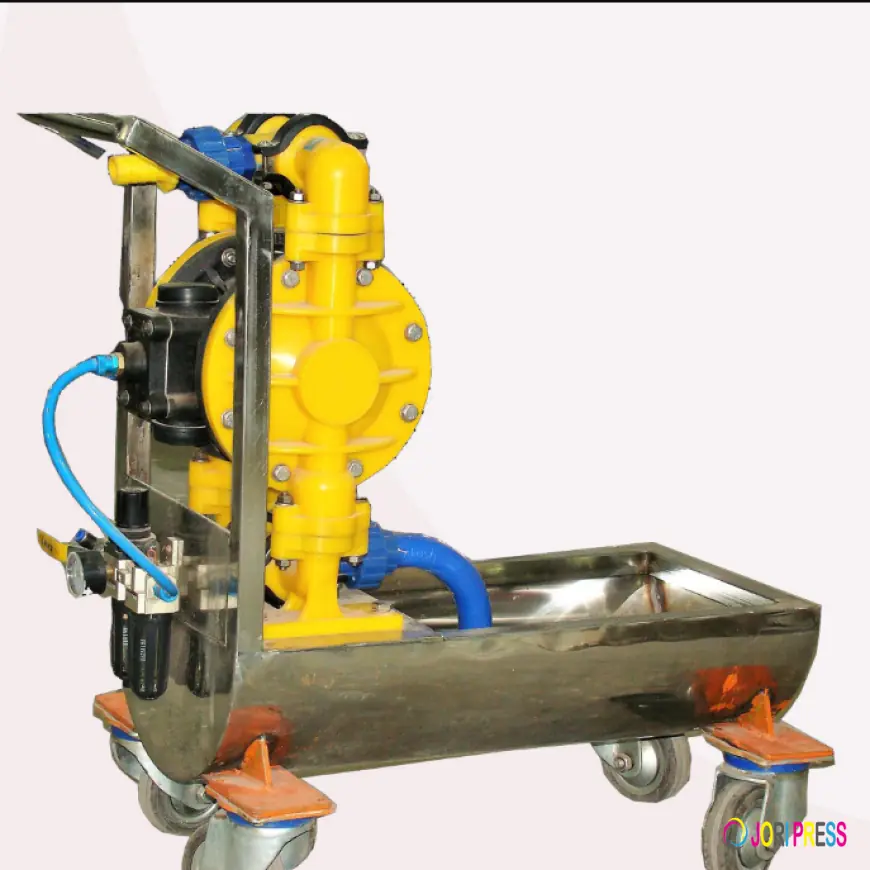
Ceramic slurry is essentially liquid sandpaper, and most standard pumps are not built to handle it for long. Metal impellers wear round within weeks, flow drops off, and backup coats go thin without any clear warning. Laxminarayan Technologies builds transfer pumps with silicon carbide and polyurethane wetted parts that take the abrasion instead of losing head pressure, giving foundries consistent coat thickness across the full production batch.
Most shell defects start upstream. In the slurry. If you're hunting for a ceramic slurry transfer pump manufacturer in India, you already know the ache: grit eats impellers, viscosity drifts by mid-shift, and the dip line stalls right when the schedule is tight. We're Laxminarayan Technologies. Since 1986 we've built investment casting machinery for foundries that can't afford a bad coat. Our transfer pumps move colloidal silica and refractory flour without wrecking binder chemistry or whipping air into the mix. The aim is plain. Steady slurry, steady shells, fewer rejects. Four decades on the floor taught us to design for the failure, not the brochure.
What is a ceramic slurry transfer pump?
It's a purpose-built pump that moves ceramic shell slurry, a blend of colloidal silica binder and refractory flour, between mixing vessels and dip tanks. It resists abrasion, protects binder stability, and keeps solids in suspension so coat thickness stays predictable across the batch.
Why slurry pumps fail (and it's rarely the motor)
Look, motors last. Wetted parts don't. Slurry is basically liquid sandpaper. Drop a plain centrifugal pump into a primary-coat line and the metal impeller wears round in weeks. Flow falls off. Solids settle. Your backup coats go thin, and nobody knows why until the castings crack.
Here's what actually goes wrong:
- Abrasive wear on impellers and casings, so head drops silently over time.
- High shear that breaks down the silica binder and shortens bath life.
- Air entrainment, froth in, pinholes out on the casting surface.
- Settling in dead legs, where flour drops out and hardens like concrete.
- Seal failure from grit migrating into the mechanical seal face.
A fouled slurry line behaves like a blocked syringe. Push harder and you don't get more flow. You get pressure, heat, and a mess.
How we build ours differently
We pick the pump to the slurry, not the other way round. For heavily loaded primary slurries we lean on progressive-cavity and peristaltic designs. Gentle displacement, low shear, no metal-on-slurry grinding. Wetted paths use polyurethane, silicon carbide, or hardened liners that take the abrasion instead of your impeller.
And we size for suspension. Flow velocity stays high enough to keep flour moving, low enough to spare the binder. No dead legs. Flushable lines. Seals rated for solids. Small choices, but they're the difference between a bath that lasts a week and one that lasts a shift.
Pumped vs manual transfer: the honest comparison
Here's how the three options stack up, factor by factor.
Binder stability. Manual bucket transfer is variable batch to batch. A standard centrifugal pump degrades the binder under shear. Our low-shear transfer pump holds it steady.
Viscosity drift. Manual transfer runs high. Centrifugal sits at moderate. Ours stays low, within spec.
Wear life of wetted parts. Not applicable for manual. Centrifugal lasts weeks. Ours runs months on silicon carbide or polyurethane liners.
Labour. Manual is heavy. Centrifugal is low. Ours is low and automated.
Air entrainment. Manual runs high. Centrifugal is moderate. Ours is minimal.
Where these pumps earn their keep
Real foundry scenarios where slurry transfer makes or breaks the shell:
- Aerospace turbine blades, thin and complex geometries where coat uniformity decides yield.
- IGT (industrial gas turbine) parts, large moulds needing consistent primary and backup coats.
- Automotive precision castings, high-volume lines where downtime is money bleeding out.
- Pump and valve bodies, heavy sections that punish an uneven shell.
- Ceramic-core complex assemblies, where binder chemistry can't be allowed to drift.
Our transfer pumps sit inside complete automated shell-building lines. You can see the full investment casting machinery range and how the slurry loop ties into our wax injection systems upstream.
Challenges and how we handle them
Shell cracking on the second coat. Often it's viscosity swing, not the operator. We keep transfer gentle and continuous so the bath stays uniform. Steady rheology, fewer cracks.
Slurry bath dying early. High-shear pumping ages colloidal silica fast. Low-shear displacement extends usable bath life and trims chemical spend.
Power and labour cost. Our automated slurry handling contributes to the ~50% power savings and ~40% labour savings we've measured across wax, shell, and dewax stations. Real numbers from ISO 9001 certified lines, not marketing math.
Bottom line
The pump looks like a small link in the chain. It isn't. Get slurry transfer wrong and every coat downstream pays for it. Laxminarayan Technologies has built and commissioned this equipment since 1986, and we design each transfer pump around the abrasion, shear, and settling problems that actually show up on the floor. If your reject rate traces back to the wax room or the dip line, talk to us about a turnkey fix. We've seen the defect before.
Visit site: Slurry Transfer Pump
FAQs
Question: What does a ceramic slurry transfer pump do?
Answer: It moves investment-casting slurry between mixers, holding tanks, and dip stations while resisting abrasion, limiting shear, and keeping refractory solids suspended. That protects binder stability and keeps ceramic shell coat thickness consistent across every mould.
Question: Which pump type is best for abrasive ceramic slurry?
Answer:Low-shear displacement pumps, progressive-cavity or peristaltic, usually outlast centrifugal units on abrasive slurry. Silicon carbide or polyurethane wetted parts take the wear, so head and flow stay stable for months instead of weeks.
Question: Can slurry transfer really cut casting rejects?
Answer:Yes. Consistent viscosity and low air entrainment reduce shell cracking, pinholes, and thin coats. Steady slurry means predictable shells, which directly lowers your reject rate on complex and thin-wall castings.
Question: Does Laxminarayan Technologies offer turnkey foundry lines?
Answer: We do. Since 1986 we've supplied wax injection, slurry handling, steam dewax, shell firing, and knockout equipment, plus complete turnkey investment casting foundry projects for aviation turbine and IGT parts.
What's Your Reaction?
 Like
0
Like
0
 Dislike
0
Dislike
0
 Love
0
Love
0
 Funny
0
Funny
0
 Angry
0
Angry
0
 Sad
0
Sad
0
 Wow
0
Wow
0