






































Automatic Emergency Braking Is Becoming a Core Vehicle Safety Technology

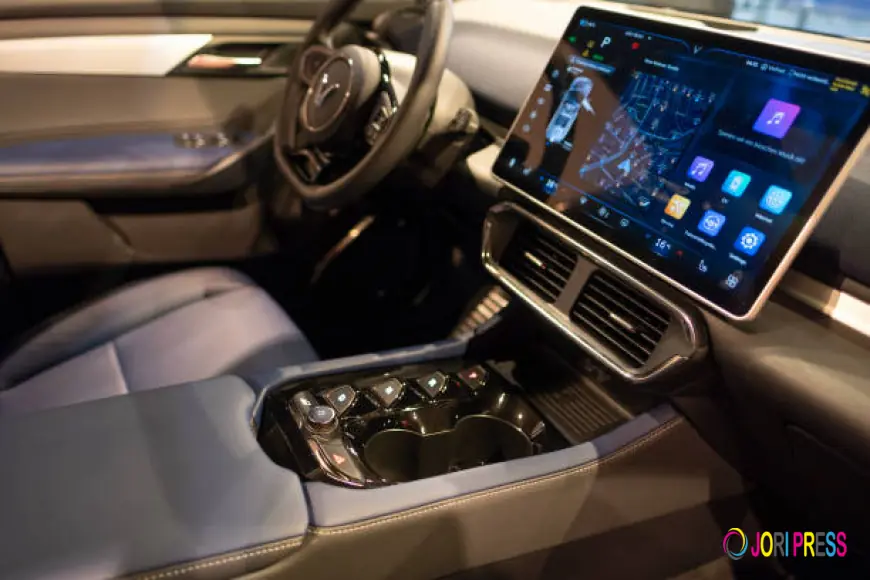
Automatic emergency braking (AEB) is becoming an increasingly important part of modern vehicle safety systems. By combining sensors, electronic controls, and braking hardware, AEB can identify an imminent collision and automatically apply braking when the driver does not respond sufficiently. The technology is increasingly integrated with advanced driver assistance systems (ADAS), supporting efforts to reduce or mitigate frontal collisions.
According to the supplied Vyansa Intelligence analysis, the automotive emergency brake system sector was valued at USD 36.86 billion in 2025 and is projected to reach USD 61.13 billion by 2032, representing a 7.49% CAGR from 2026 to 2032.
AEB Adds an Active Layer of Vehicle Safety
Traditional braking systems depend on the driver recognizing a hazard and applying the brakes. Emergency braking technology adds an automated layer that can intervene when a collision becomes imminent.
The NHTSA describes automatic emergency braking as a system that automatically applies the brakes when a forward collision is imminent. Depending on the system, braking can supplement insufficient driver braking or occur when the driver does not brake at all.
This distinction makes AEB an active safety technology rather than simply a warning system.
Sensors Form the Foundation of Emergency Braking
AEB depends on sensors capable of detecting objects and determining whether a collision is likely. Depending on the vehicle and system architecture, these can include radar, cameras, lidar, or combinations of different sensing technologies.
NHTSA notes that active braking technologies can employ radar, camera, lidar, and other sensors to detect and track vehicles, pedestrians, or objects in the vehicle's forward path.
Sensor fusion can provide a broader information set, helping the vehicle's control system assess distance, relative movement, and potential collision paths.
Forward Collision Detection Enables Timely Intervention
AEB systems generally operate alongside forward collision detection. The system continuously evaluates the road ahead and determines whether a potential impact is developing.
When the system identifies an imminent collision, it can first alert the driver and then initiate braking if the driver fails to react adequately. This creates a sequence in which technology can support the driver before taking direct braking action.
The effectiveness of this process depends on accurate sensing, rapid processing, reliable object recognition, and appropriate braking control.
Pedestrian Protection Is Expanding the Role of AEB
Emergency braking technology is increasingly being designed to recognize vulnerable road users as well as other vehicles.
Pedestrian automatic emergency braking (PAEB) uses forward-facing sensor information to identify pedestrians in the vehicle's path and automatically apply braking when a collision is imminent. NHTSA identifies pedestrian AEB as a distinct driver-assistance technology.
This capability is particularly relevant in urban environments, where vehicles interact with pedestrians, cyclists, and other road users more frequently.
Regulatory Requirements Are Supporting Adoption
Regulatory developments are strengthening demand for AEB technology. In the United States, NHTSA finalized a Federal Motor Vehicle Safety Standard in 2024 requiring automatic emergency braking, including pedestrian AEB, on passenger cars and light trucks by September 2029.
The regulation requires systems to detect imminent crashes involving a lead vehicle or pedestrian and automatically apply braking under specified conditions.
Such regulatory requirements can encourage automakers to incorporate AEB more consistently across vehicle portfolios.
Real-World Performance Is Increasingly Important
The development of emergency braking systems is moving beyond laboratory testing toward evaluation using real-world vehicle and crash data.
NHTSA's Partnership for Analytics Research in Traffic Safety reported in 2025 that its analysis found a 49% reduction in front-to-rear crashes across model years 2015–2023 for vehicles equipped with AEB. The study used manufacturer vehicle data covering approximately 98 million vehicles and NHTSA crash data covering more than 21 million police-reported crashes.
These findings illustrate why real-world performance is becoming an important consideration in evaluating ADAS technologies.
Braking Hardware Must Respond Quickly
Sensors and software alone cannot prevent a collision. AEB also depends on the vehicle's braking system responding rapidly and predictably to electronic commands.
When an emergency-braking decision is made, the control system needs to communicate with braking hardware quickly enough to generate the required deceleration. This places demands on electronic control units, hydraulic or electromechanical braking components, sensors, and communication networks.
The increasing integration of electronic systems therefore makes braking technology more closely connected with vehicle software architecture.
Software Is Becoming More Important
Modern AEB systems depend heavily on software to interpret sensor information and determine when intervention is appropriate.
Algorithms need to distinguish relevant objects from background information, estimate collision risk, and determine appropriate braking action. Software must also account for vehicle speed, distance, relative movement, road conditions, and system limitations.
This increases the importance of software validation and functional safety because incorrect intervention can affect vehicle control and driver confidence.
False Braking Remains a Key Challenge
AEB systems need to balance sensitivity with accuracy. A system that fails to recognize a genuine collision threat may not provide adequate safety assistance, while excessive false warnings or unnecessary braking can reduce driver confidence.
UNECE Regulation No. 152 recognizes that advanced emergency braking performance can be affected by factors such as vehicle condition, road adhesion, weather, infrastructure, and traffic scenarios. It also emphasizes the need to avoid false warnings or false braking that could encourage drivers to disable the system.
This makes reliable perception and calibration important areas of development.
Performance Must Account for Different Road Conditions
AEB systems operate in environments that can vary considerably. Rain, darkness, glare, road debris, poor lane markings, changing traffic patterns, and unusual objects can affect sensor performance.
Manufacturers therefore need to evaluate emergency braking across diverse driving conditions. Pedestrian detection also introduces additional complexity because pedestrians can move unpredictably and may be partially obscured.
Testing across multiple scenarios helps identify limitations and improve system reliability.
Integration With Other ADAS Technologies
AEB does not operate in isolation. It can work alongside forward collision warning, adaptive cruise control, lane-related assistance, pedestrian detection, and other ADAS functions.
Forward collision warning can alert the driver to a potential impact, while AEB can provide automated braking if the collision becomes imminent. NHTSA classifies both technologies within the broader driver-assistance ecosystem.
This integration allows different safety functions to share sensor data and vehicle-control capabilities.
Autonomous Driving Development Supports Technology Advancement
The development of automated driving systems is also contributing to advances in sensing, perception, computing, and vehicle control.
Although AEB is an assistive safety function rather than a fully autonomous driving system, the underlying technologies overlap with broader automated-driving development. NHTSA emphasizes that current consumer vehicles still require drivers to remain engaged, even when equipped with advanced driver-assistance technologies.
Consequently, improvements in perception and control technologies can influence the capabilities of emergency braking systems.
Vehicle Electrification Creates New Opportunities
The growing use of electronic architectures in electric and hybrid vehicles can support the integration of advanced safety functions.
Electrified vehicles often incorporate sophisticated electronic control systems, high-performance computing, and extensive sensor networks. These architectures can provide a foundation for integrating AEB with broader vehicle-control and ADAS platforms.
However, electrification does not eliminate the need for mechanical braking. Instead, manufacturers must coordinate regenerative braking, friction braking, electronic controls, and safety interventions where applicable.
Testing and Functional Safety Are Critical
Because AEB can directly influence braking, testing and validation are essential.
Systems need to demonstrate appropriate responses across different speeds, vehicle types, objects, environmental conditions, and traffic scenarios. Developers must also evaluate interactions between AEB and other vehicle systems.
NHTSA continues to conduct research into active braking technologies, including test procedures and performance evaluation for different collision scenarios.
This ongoing testing can contribute to more consistent expectations for system performance.
Outlook Through 2032
The expansion reflects the growing integration of active safety technologies into modern vehicles and the increasing emphasis on reducing crash frequency and severity. Regulatory requirements are also strengthening the role of AEB, with the United States moving toward mandatory AEB and pedestrian AEB on new passenger cars and light trucks by 2029.
Future development is likely to focus on improved sensor accuracy, faster processing, better pedestrian and object recognition, reduced false interventions, and closer integration with other ADAS functions. Real-world performance data will remain important as manufacturers and regulators evaluate how systems perform outside controlled testing environments.
Overall, automotive emergency braking is evolving from an optional driver-assistance feature into an increasingly important component of vehicle safety architecture. Its development will depend on sensor technology, software intelligence, braking response, functional safety, regulatory requirements, and reliable performance across real-world driving conditions.
What's Your Reaction?
 Like
0
Like
0
 Dislike
0
Dislike
0
 Love
0
Love
0
 Funny
0
Funny
0
 Angry
0
Angry
0
 Sad
0
Sad
0
 Wow
0
Wow
0