

































Are Electric Vehicles Worth More as Scrap Than Traditional Cars?
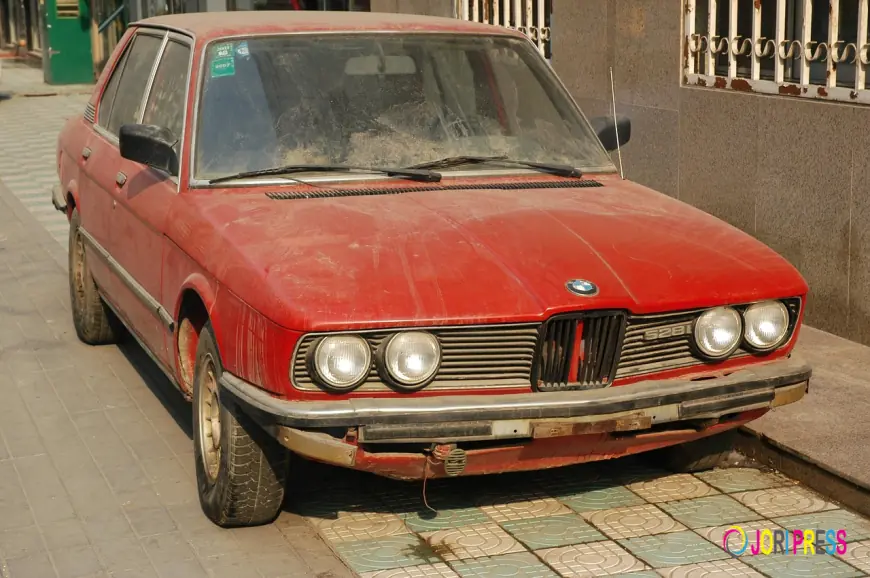
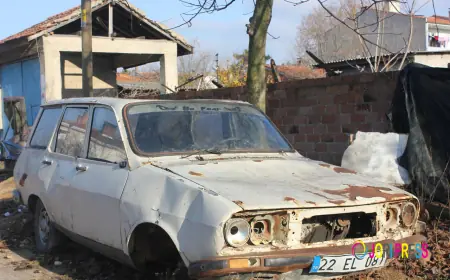
Picture two cars sitting in a scrap yard.
One is an old gasoline sedan. It has a tired-looking engine, a rusty exhaust, a few dents, and enough road salt underneath to tell you it has survived several Canadian winters.
Beside it sits an electric vehicle.
No engine. No traditional transmission. No exhaust system. Instead, there's a giant battery pack underneath the floor, an electric motor, miles of wiring, and enough electronics to make the old sedan look wonderfully uncomplicated.
Now comes the interesting question:
Which one is worth more as scrap?
You might immediately point at the EV.
“Obviously the electric one. Look at that giant battery!”
And honestly, that's not a ridiculous answer.
But scrap-car value doesn't work quite that way.
An EV isn't automatically worth more just because it has a sophisticated battery, and a gasoline car isn't automatically worthless because its engine has given up on life. When a vehicle reaches the end of the road, its value comes from a strange combination of weight, metals, parts, battery condition, demand, vehicle condition, and what can actually be recovered from it.
So let's take a slightly less boring look at what happens when yesterday's transportation becomes tomorrow's raw material.
First Things First: What Are You Actually Selling?
When people hear “scrap car,” they often imagine a crusher flattening the entire vehicle into a sad metal pancake.
That's part of the story, but not the whole story.
Before a vehicle is processed, useful components and materials can be recovered.
Depending on the vehicle, these may include:
- Steel
- Aluminum
- Copper
- Wiring
- Wheels
- Electronics
- Motors
- Engines
- Transmissions
- Batteries
- Body panels
- Interior components
- Other reusable parts
That's why the phrase “scrap car” can be slightly misleading.
You're not necessarily selling a pile of junk.
You're selling a collection of materials and components that still have somewhere to go.
And that's where EVs get particularly interesting.
The EV Has a Giant Battery. So It Must Be Worth More, Right?
Well... yes and no.
The high-voltage battery is arguably the most obvious difference between an EV and a conventional car.
It's also potentially one of the most valuable components.
EV batteries contain materials such as lithium, nickel, cobalt, manganese, copper, aluminum, and other materials depending on the battery chemistry.
That sounds like a miniature treasure chest.
But don't grab a hammer and start dismantling your old EV.
Battery value isn't simply calculated by looking at the periodic table and adding everything up.
The battery's condition, chemistry, size, age, remaining capacity, damage, and recycling or reuse options all influence its practical value.
A battery that still has useful capacity is a very different proposition from one that has been badly damaged in an accident.
So yes, an EV battery can contribute significant value but the battery isn't a magic “extra cash” button.
Then the Old Gas Car Says, “Don't Forget About Me.”
And it has a point.
Traditional gasoline cars have been recycled for decades.
The recycling industry knows what to do with their steel, aluminum, copper, engines, transmissions, wheels, and other components.
There can also be valuable parts that EVs simply don't have.
Take the catalytic converter.
Gasoline and hybrid vehicles equipped with catalytic converters may contain platinum-group metals such as platinum, palladium, and rhodium.
Those metals can be valuable, although the actual value varies by vehicle, converter type, and market conditions.
An EV doesn't have a catalytic converter because there is no traditional combustion exhaust system.
So while an EV has a large battery, a gasoline car has its own collection of potentially valuable components.
It's less “new technology wins” and more “both cars brought different things to the party.”
Weight Is Still a Big Deal
Here's something surprisingly unexciting that can have a very real impact on scrap value:
Weight.
Steel doesn't care whether the car has Wi-Fi.
Aluminum doesn't care whether the dashboard has a 15-inch touchscreen.
Copper isn't impressed by your vehicle's acceleration time.
When a vehicle is processed for material recovery, the amount and type of recyclable material matter.
A larger, heavier vehicle can therefore have an advantage over a much smaller vehicle when metal recovery is a major part of its value.
And EVs can be heavy.
Very heavy.
That battery pack sitting underneath the floor can add hundreds of kilograms to the vehicle.
But again, weight alone doesn't settle the argument. The type of materials, the condition of the components, and current market prices all matter.
The Battery Can Be Valuable and Expensive to Handle
Here's the part that often gets missed in the “EVs are worth more because of the battery” conversation.
That battery isn't just a big box of recyclable material.
It's a high-voltage system.
Damaged EV batteries require careful handling because they can present serious safety risks. A vehicle involved in a collision may have battery damage that isn't immediately visible.
This is one reason EV recycling isn't simply a matter of sending every old electric car through exactly the same process used for a conventional vehicle.
The battery needs appropriate handling, transportation, storage, and recycling or reuse.
In other words, the battery can add value—but it also adds complexity.
What If the EV Battery Is Completely Dead?
This is where things get interesting for owners of older electric cars.
Suppose your EV has become a driveway ornament because its battery has deteriorated badly.
Does that mean the whole vehicle is worthless?
No.
Even if the battery is no longer useful for driving, the vehicle can still contain recoverable materials and components.
The electric motor may have value.
Copper wiring can be recovered.
Aluminum and steel can be recycled.
Electronics and other components may have reuse or material value.
The battery itself may also have recycling value depending on its condition and chemistry.
So a dead battery doesn't necessarily mean a dead financial proposition.
It just means the vehicle needs to be evaluated as a whole rather than judged by whether it starts.
What Happens to an EV After It Becomes Scrap?
This is perhaps the most interesting part of the whole process.
The vehicle doesn't necessarily go from “car” to “useless metal” in one dramatic step.
Instead, it can go through several stages.
First, the vehicle is assessed.
Depending on its condition, certain components may be identified for reuse or recovery.
The vehicle's battery requires particular attention.
Other useful components can be removed.
Then the remaining vehicle can be processed so that materials such as steel, aluminum, copper, and other recyclable materials can be recovered.
Eventually, those materials can become inputs for other manufacturing processes.
So your old EV could have a surprisingly long afterlife.
The car may be finished.
Its materials are not.
Could an EV Actually Be Worth Less Than a Gas Car?
Absolutely.
Imagine an old EV with:
- A severely damaged battery
- Accident damage
- Limited demand for its parts
- Significant body damage
- Expensive transportation or handling requirements
Now put it beside a popular gasoline vehicle with:
- A desirable catalytic converter
- Usable wheels
- Recoverable mechanical parts
- Lots of recyclable metal
- Strong demand for replacement components
Suddenly, the “EV must be worth more” theory starts looking a little shaky.
The opposite can also happen.
A relatively desirable EV with a large battery, usable components, good overall condition, and strong demand could be worth more than a comparable gasoline car.
There simply isn't one universal scrap-value winner.
Make and Model Still Matter
A 2012 electric vehicle and a 2022 electric vehicle aren't necessarily going to have the same scrap value.
Neither will two gasoline cars simply because they weigh the same.
Why?
Because parts have markets.
A component from a popular vehicle may be easier to reuse or sell than a component from an obscure model.
The condition of those parts matters too.
A perfectly usable wheel is different from a bent wheel.
A functioning electric motor is different from a damaged one.
A healthy battery is different from one that has suffered severe damage.
This is why simply searching for “EV scrap value per pound” isn't enough to accurately determine what a particular vehicle is worth.
Canadian Winters Add Another Twist
If you've driven through a Canadian winter, you already know that cars don't exactly enjoy the experience.
Road salt, freezing temperatures, moisture, potholes, and repeated freeze-thaw cycles can be brutal on vehicles.
Older gasoline cars can develop rust underneath.
EVs aren't immune to the environment either.
Although electric vehicles don't have traditional engines and exhaust systems, their body structures, suspension components, brakes, electrical connections, and other parts still age.
Battery performance can also be affected by temperature, although modern EVs use thermal-management systems to help control battery temperature.
After enough years, every vehicle eventually starts accumulating problems.
At some point, the repair bill begins asking a very uncomfortable question:
“Are we really doing this?”
When Does Scrapping Make More Sense Than Repairing?
This is often the real question.
Suppose your EV needs a major battery replacement.
Or your old gasoline car needs a transmission.
Or the vehicle has extensive rust.
Or it has been sitting for years.
Or it was involved in a serious accident.
You could repair it.
But should you?
If the expected repair cost is approaching or exceeding the vehicle's realistic market value, continuing to pour money into it may not make financial sense.
That's when getting a scrap or junk-car evaluation can be useful.
Instead of guessing what your vehicle might be worth, you can compare the offer with what you'd spend getting the car back on the road.
Sometimes the math makes the decision surprisingly easy.
Don't Let the Word “Scrap” Fool You
Here's the biggest misconception worth clearing up.
Scrap does not mean worthless.
An old vehicle can be finished as a means of transportation while still being useful as a source of materials and components.
That's especially important as more EVs begin reaching the end of their useful lives.
The automotive recycling industry is moving into a world where batteries, electric motors, electronics, and traditional vehicle materials all need to be recovered responsibly.
And that's good news.
Instead of letting an unwanted vehicle sit in a driveway slowly turning into an outdoor sculpture, owners can have it removed and put into the recycling stream.
If you're in Mississauga and have an old, damaged, unwanted, or non-running vehicle taking up space, Scrap Car Buyer Mississauga can help arrange scrap car removal and take the vehicle off your hands rather than leaving you to figure out what to do with it yourself.
So, Which One Wins?
The EV?
The gasoline car?
The surprisingly valuable catalytic converter?
The enormous battery hiding under the floor?
The answer is: it depends.
An EV can have significant scrap value because of its battery, electric motor, copper, aluminum, electronics, and overall weight.
A traditional vehicle can also have significant value because of its steel, aluminum, engine, transmission, catalytic converter, and reusable components.
The vehicle's age, condition, make, model, battery health, parts demand, and current material prices can all shift the final number.
So if you're staring at an old EV and thinking, “This thing cost a fortune when it was new, surely it's worth a fortune now,” slow down.
And if you're staring at an old gasoline car thinking, “It's dead, so it's worthless,” don't make that mistake either.
Cars don't stop having value just because they stop driving.
Sometimes their second life is simply a little less glamorous.
No road trips.
No morning commute.
No arguing with the navigation system.
Just steel, aluminum, copper, batteries, motors, and useful parts getting another chance to become something else.
And honestly, for a car that has spent 15 years demanding oil changes, tire rotations, repairs, fuel, insurance, and your patience, that's a pretty respectable retirement.
What's Your Reaction?
 Like
0
Like
0
 Dislike
0
Dislike
0
 Love
0
Love
0
 Funny
0
Funny
0
 Angry
0
Angry
0
 Sad
0
Sad
0
 Wow
0
Wow
0