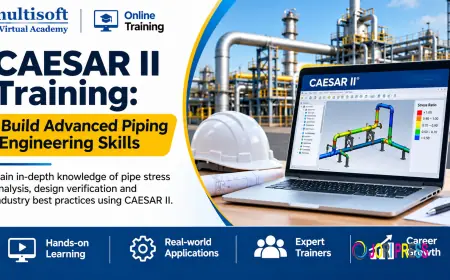










































CAESAR II Training: Build Advanced Piping Engineering Skills
Learn Caesar II Training with practical projects, expert guidance, and hands-on piping stress analysis skills to advance your engineering career.

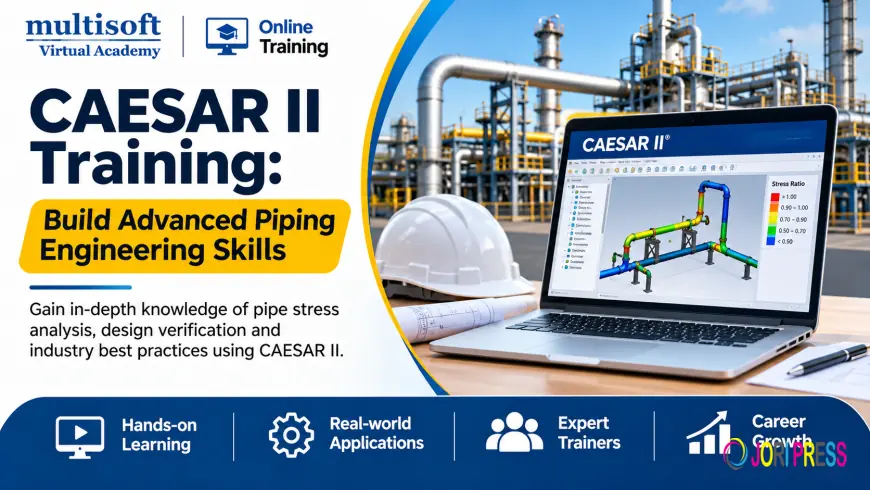
Industrial plants depend on well-designed piping networks to transport fluids, gases, steam, and chemicals safely and efficiently. These systems operate under varying temperatures, pressures, and environmental conditions. Engineers must therefore evaluate piping flexibility, thermal movement, equipment connections, and mechanical loads before approving a design.
CAESAR II Training provides an opportunity for mechanical engineers and piping professionals to develop practical knowledge of pipe stress analysis. The training introduces specialized software used to model piping arrangements, evaluate different loading conditions, and review calculated stresses and displacements.
For professionals working in oil and gas, petrochemical, refinery, and power generation projects, understanding pipe stress analysis is an important technical capability. Learning CAESAR II Training can help engineers strengthen their understanding of piping behavior and contribute more effectively to industrial engineering activities.
Understanding CAESAR II in Piping Engineering
CAESAR II is a pipe stress analysis application developed by Hexagon. It helps engineers evaluate the mechanical behavior of piping systems under different operating and environmental conditions.
The software provides capabilities for creating piping models, defining material and component properties, applying loads, performing calculations, and reviewing engineering results. It also supports code-based stress evaluation using applicable piping standards.
In a typical industrial project, a pipeline may experience several types of loading. Its own weight creates sustained loading, internal pressure produces additional stress, and temperature changes cause expansion or contraction. Wind, seismic activity, and other occasional conditions may also influence the design.
Engineers need to understand how these loads affect the complete piping arrangement. CAESAR II provides an analytical environment to study these conditions and assess whether the modeled system meets the applicable design criteria.
Why Do Engineers Need CAESAR II Training?
Piping design involves several interconnected engineering decisions. A pipeline that appears suitable in a drawing may experience excessive movement, stress, or support reactions when actual operating conditions are considered.
A structured training program helps professionals understand how to identify and evaluate these issues.
Develop Specialized Pipe Stress Analysis Skills
Pipe stress analysis helps engineers understand the response of piping systems to mechanical and thermal loads. Training introduces the fundamental concepts required to evaluate stress distribution, displacement, flexibility, and restraint conditions.
This knowledge is particularly useful for professionals moving from conventional piping design into specialized stress engineering.
Understand Piping Flexibility
Thermal expansion is a major consideration in industrial piping systems. When a pipe heats up, its material expands. When it cools down, it contracts.
If the piping arrangement cannot accommodate this movement, additional forces may develop at anchors, supports, and connected equipment.
CAESAR II training helps learners understand how pipe routing, bends, offsets, and support arrangements influence flexibility. It also introduces ways to investigate high-stress areas and evaluate suitable design modifications.
Evaluate Equipment Connection Loads
Piping systems connect to equipment such as pumps, compressors, turbines, and heat exchangers. Forces and moments transferred through these connections may affect equipment reliability.
Training can help learners understand how to review nozzle loads, restraint reactions, and other calculated results against project-specific allowable limits.
Improve Engineering Design Decisions
Software calculations are useful only when their inputs and results are understood correctly. Training develops the ability to review models, identify unusual results, and evaluate possible engineering solutions.
This helps professionals move beyond simply running calculations toward understanding the engineering decisions behind the analysis.
Major Topics Covered in CAESAR II Training
A professional CAESAR II Software Training Course should explain both the application and the engineering principles behind its major functions.
1. Fundamentals of Pipe Stress Analysis
The learning process begins with basic mechanical and piping engineering concepts.
Important subjects include:
- Stress and strain
- Primary and secondary stresses
- Sustained and expansion stresses
- Material properties
- Thermal effects
- Piping flexibility
- Stress range concepts
- Allowable stress limits
These concepts provide the foundation for understanding the results generated by the software.
2. Software Interface and Piping Model Development
Learners become familiar with the CAESAR II working environment and the process of developing an analytical model.
The training may include:
- Navigating the software interface
- Creating a new piping model
- Defining node numbers
- Entering pipe geometry
- Assigning material properties
- Selecting pipe dimensions
- Adding fittings and components
- Reviewing model connectivity
- Identifying input errors
Model accuracy is essential because incorrect geometry or component information can affect the reliability of the analysis.
3. Static Stress Analysis
Static analysis evaluates the piping system under specified loading conditions without focusing on time-dependent dynamic response.
Typical subjects include:
- Dead weight analysis
- Internal pressure loading
- Operating temperature
- Sustained stress evaluation
- Expansion stress evaluation
- Hydrotest conditions
- Support reaction calculations
- Static load combinations
Learners can understand how different loading conditions affect calculated stresses and piping movement.
4. Dynamic Stress Analysis
Some piping systems experience forces that change over time. These conditions may require dynamic analysis to understand the system's response.
Depending on the course syllabus and project requirements, training may introduce:
- Modal analysis
- Harmonic analysis
- Response spectrum analysis
- Seismic loading
- Time-history analysis
- Fluid transient considerations
- Vibration-related assessments
Understanding these concepts can help engineers recognize situations where static analysis alone may not be sufficient.
5. Load Case Preparation and Evaluation
Load cases represent combinations of different operating and environmental conditions. Engineers use them to assess piping performance under relevant scenarios.
Training may cover sustained, operating, expansion, occasional, and hydrotest cases, along with appropriate load combinations.
Learners should understand why each case is prepared and how its results relate to the applicable design requirements.
6. Pipe Supports and Restraint Arrangements
Supports and restraints help control piping movement and transfer mechanical loads to the supporting structure.
Common support types include:
- Anchors
- Guides
- Line stops
- Directional restraints
- Spring hangers
- Variable spring supports
- Constant spring supports
Training introduces the effect of support locations and restraint directions on piping behavior. It also helps learners understand how support reactions are interpreted during engineering review.
7. Thermal Expansion and Stress Reduction
Thermal movement can create high stresses when piping flexibility is insufficient. Engineers may investigate alternative routing arrangements or support configurations to improve system behavior.
CAESAR II exercises can demonstrate how changes to geometry and restraints affect calculated results.
Possible engineering considerations include expansion loops, additional offsets, flexible routing, and revised support arrangements. Any modification must be checked against the complete design requirements rather than judged by a single stress result.
8. Equipment Nozzle Load Analysis
Connected equipment can experience forces and moments from attached piping. These loads should be evaluated against the relevant manufacturer requirements or applicable project criteria.
Learners may explore nozzle load reports, equipment connection modeling, and the interpretation of calculated forces and moments.
9. Result Interpretation and Engineering Reports
Analysis results need to be reviewed carefully before they can support engineering decisions.
Training may include:
- Stress summaries
- Displacement reports
- Restraint reaction reports
- Load case results
- Equipment load summaries
- Model review
- Identification of overstressed elements
- Documentation of analysis findings
Report interpretation is a valuable skill because engineers must communicate technical findings clearly to designers, project teams, and other stakeholders.
Important Piping Codes and Standards
Pipe stress analysis must follow the codes and standards applicable to the project. Different industries and piping services may require different design approaches.
Some important standards include:
ASME B31.3: Process Piping is widely used for chemical, petroleum, pharmaceutical, and related processing facilities.
ASME B31.1: Power Piping applies to specified power plant and related piping systems.
ASME B31.4: Pipeline Transportation Systems for Liquids and Slurries covers applicable liquid transportation pipelines.
ASME B31.8: Gas Transmission and Distribution Piping Systems addresses relevant natural gas pipeline applications.
EN and other regional standards: Certain projects may follow additional national or international requirements.
A CAESAR II course should explain how code selection relates to the project and how the software's stress evaluation results are interpreted. Engineers must always confirm the applicable code edition and project specifications.
Industries That Require Pipe Stress Analysis
Pipe stress analysis is relevant wherever piping systems operate under demanding mechanical conditions.
Oil and Gas
Oil and gas facilities use extensive piping networks for transporting hydrocarbons, natural gas, steam, and process fluids. Stress analysis helps evaluate thermal expansion, pressure effects, support reactions, and equipment connections.
Petrochemical and Chemical Processing
Chemical plants operate with different process fluids, temperatures, and pressures. Engineers evaluate piping arrangements to understand mechanical behavior and support design requirements.
Power Generation
Power plants contain steam, feedwater, condensate, and utility piping systems. Temperature-related movement and equipment loads are important considerations in these installations.
Refineries
Refinery projects include interconnected processing units and complex piping networks. Pipe stress analysis helps engineers evaluate system flexibility and the effect of operating conditions.
Offshore Engineering
Offshore installations may be exposed to environmental and operational loads that require specialized engineering assessments. The relevant analysis methods depend on the project design basis and applicable standards.
Who Can Benefit from CAESAR II Training?
CAESAR II training can be useful for professionals who want to develop or strengthen their knowledge of piping analysis.
- Mechanical engineers: Those interested in specializing in pipe stress analysis.
- Piping engineers: Professionals seeking to understand the mechanical behavior of piping arrangements.
- Stress engineers: Engineers looking to improve their software modeling and result interpretation skills.
- Plant design engineers: Professionals involved in industrial facility design and engineering.
- Mechanical design professionals: Individuals seeking additional knowledge of piping flexibility and load evaluation.
- Engineering graduates: Candidates interested in developing industry-oriented technical skills.
- Project engineers: Professionals who coordinate piping design and mechanical engineering activities.
Basic mechanical engineering knowledge is helpful. Familiarity with piping layouts, equipment, materials, and engineering drawings can make the course easier to follow.
Career Scope After CAESAR II Training
Pipe stress analysis is a specialized engineering area within industrial project execution. Professionals with relevant software knowledge and engineering fundamentals may explore opportunities in design consultancies, EPC companies, engineering contractors, and industrial organizations.
Potential career roles include:
- Pipe Stress Engineer
- CAESAR II Stress Analyst
- Piping Engineer
- Mechanical Design Engineer
- Piping Stress Analysis Consultant
- Plant Design Engineer
- Mechanical Project Engineer
- Industrial Piping Analysis Engineer
Career progression depends on academic qualifications, practical experience, engineering judgment, software proficiency, and familiarity with relevant codes.
For experienced engineers, CAESAR II knowledge can complement existing piping design or mechanical engineering capabilities. Fresh graduates can use introductory training to build a foundation before gaining practical project experience.
How to Select the Best CAESAR II Training Program
Choosing the right course requires more than comparing duration and fees. Learners should evaluate the technical coverage and practical learning opportunities.
Check the Training Curriculum
Look for coverage of pipe stress fundamentals, modeling, static analysis, dynamic analysis, load cases, support arrangements, equipment loads, and report interpretation.
Choose Practical Learning
A course should include exercises that allow learners to create models, apply loading conditions, execute calculations, and review results.
Evaluate Trainer Expertise
An experienced trainer should be able to explain both software functionality and the engineering principles behind the calculations.
Confirm Software Version and Access
Check the CAESAR II version used during training and whether a suitable practice environment is available.
Review Course Completion Details
Understand whether the provider offers a completion certificate, practical assessment, or preparation for a separate certification examination. Confirm the exact credential before enrolling.
Frequently Asked Questions About CAESAR II Training
What is CAESAR II used for?
CAESAR II is used for pipe stress analysis. Engineers use it to model piping systems, evaluate loads, calculate stresses and displacements, and review support reactions and equipment connection loads.
Is CAESAR II suitable for beginners?
Yes. Beginners can start with fundamental pipe stress concepts and gradually learn software modeling and analysis. A course with guided exercises is particularly useful.
What is the difference between piping design and pipe stress analysis?
Piping design focuses on routing, layout, components, and overall system arrangement. Pipe stress analysis evaluates the mechanical response of the piping system to loads such as weight, pressure, temperature, and environmental conditions.
Which industries use CAESAR II?
The software is relevant to oil and gas, petrochemical, chemical processing, power generation, refining, and other industrial sectors involving piping systems.
What skills are important for a pipe stress engineer?
Important skills include mechanical engineering fundamentals, piping knowledge, stress analysis, flexibility evaluation, load case preparation, software proficiency, code awareness, and technical report interpretation.
Can CAESAR II training improve career opportunities?
Training can strengthen technical knowledge and support preparation for relevant engineering roles. Career opportunities also depend on qualifications, experience, practical competence, and employer requirements.
Conclusion
Pipe stress analysis is an essential part of designing and evaluating industrial piping systems. Understanding thermal expansion, mechanical loading, piping flexibility, support reactions, equipment nozzle loads, and applicable design codes helps engineers make informed technical decisions. Learning CAESAR II provides a structured way to develop these capabilities through software-based modeling and analysis exercises. Professionals should choose training that combines engineering fundamentals with practical application and realistic project scenarios. Multisoft Virtual Academy provides CAESAR II Training for aspiring and working professionals who want to strengthen their pipe stress analysis knowledge and develop technical skills relevant to piping engineering, mechanical design, and industrial projects.
What's Your Reaction?
 Like
0
 Dislike
0
 Love
0
 Funny
0
 Angry
0
 Sad
0
 Wow
0