




































What Is an Automatic Deburring Machine and How Does It Work?
Learn what an automatic deburring machine is, how it works, its benefits, applications, and how it improves sheet metal finishing and burr removal.

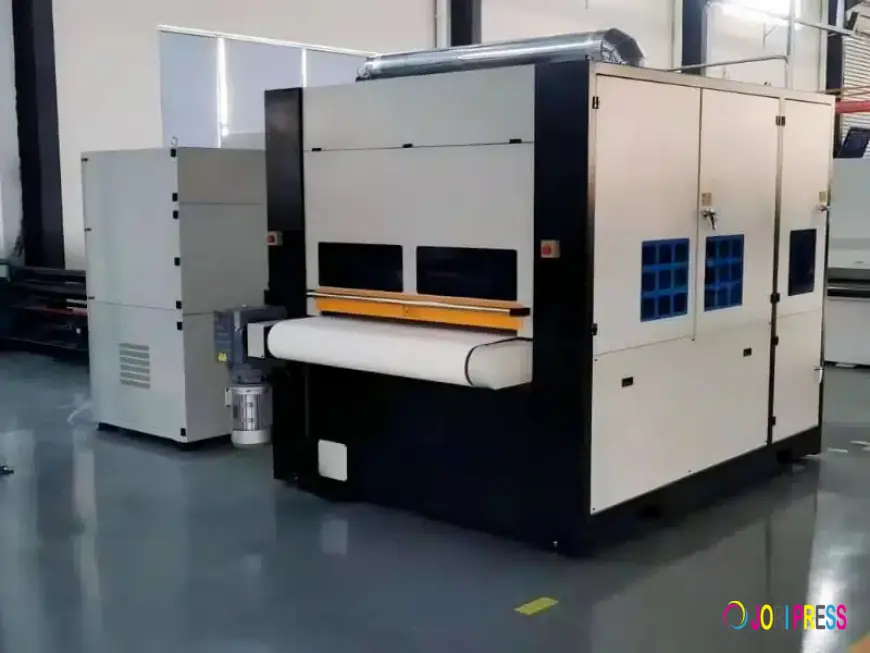
Burrs are a common issue in metal manufacturing. Laser cutting, punching, shearing, plasma cutting, and machining can leave small pieces of unwanted material along the edges of a component. These burrs can make parts difficult to handle and may create problems during assembly, welding, painting, or coating.
For manufacturers processing a large number of metal components, removing these imperfections manually can take considerable time. An Automatic deburring machine provides a more consistent way to remove burrs and sharp edges while improving the overall metal finishing process.
But how does an automatic deburring machine actually work, and what should manufacturers consider before choosing one?
What Is an Automatic Deburring Machine?
An automatic deburring machine is industrial equipment designed to remove burrs, sharp edges, light slag, and other unwanted material from metal components after cutting or machining.
Instead of relying entirely on an operator to grind each part individually, the machine uses controlled abrasive belts, brushes, grinding units, or combinations of finishing tools.
This makes automated burr removal particularly useful for manufacturers handling repetitive production work.
An automated system can help improve:
-
Edge consistency
-
Production speed
-
Surface quality
-
Operator safety
-
Production repeatability
-
Finishing efficiency
The exact configuration depends on the material, thickness, component size, burr condition, production volume, and required edge finish.
How Does an Automatic Deburring Machine Work?
Although machine designs vary, most automated deburring systems follow a controlled sequence from loading to finished-part inspection.
1. Loading the Metal Part
The sheet or component is placed onto the machine's conveyor or working surface. Depending on the machine design and workpiece characteristics, different methods can be used to maintain stable movement during processing.
Correct positioning is important because unstable parts can result in inconsistent burr removal.
2. Conveyor Feeding and Positioning
The conveyor moves the workpiece through the finishing area at a controlled speed.
Feed speed is an important process parameter. If the part moves too quickly, the machine may not remove enough material. If it moves too slowly, unnecessary abrasive wear or excessive material removal may occur.
Manufacturers should therefore select operating parameters according to the material and finishing requirements.
3. Abrasive Belt or Brush Contact
The workpiece then passes through an abrasive section. Depending on the machine configuration, this may include abrasive belts, rotary brushes, grinding heads, or multiple finishing stations.
An abrasive belt can remove burrs and improve the surface condition of the component. Brush systems can be particularly useful when the manufacturer also needs controlled edge rounding.
This type of automated sheet metal finishing can provide more repeatable results than operator-dependent manual grinding.
4. Burr and Sharp-Edge Removal
The abrasive tools contact the workpiece and remove unwanted material from the cut edges.
The required process depends on how the burr was created. Laser-cut parts, punched components, and plasma-cut sheets may have different burr characteristics.
For manufacturers involved in sheet metal fabrication, consistent burr removal is important because parts often move directly into bending, welding, coating, or assembly after cutting.
5. Edge Rounding and Surface Finishing
Some applications require more than simple burr removal. The edges may need to be rounded to reduce sharpness and create a more suitable surface for downstream processes.
Certain automated machines can also perform surface brushing or finishing during the same production cycle.
A belt sander can also be used for abrasive material removal and surface treatment in suitable applications. However, an industrial automatic deburring system is specifically configured around repeatable burr removal and edge treatment.
6. Unloading and Quality Inspection
After processing, the finished component leaves the machine and can be inspected.
Manufacturers may check:
-
Burr removal
-
Edge condition
-
Edge radius
-
Surface consistency
-
Dimensional condition
-
Overall appearance
Regular inspection helps manufacturers identify process changes before they affect an entire production batch.
What Types of Burrs Can an Automatic Deburring Machine Remove?
An automatic deburring system can be configured for different types of manufacturing burrs.
Common examples include:
Laser-Cutting Burrs
Laser cutting can produce small raised edges or rough areas depending on material, thickness, cutting parameters, and machine condition.
Punching Burrs
Punching can leave burrs around the perimeter or holes of a component. Automated finishing can help provide more consistent edge treatment.
Plasma-Cutting Burrs
Plasma cutting may produce dross or rough edges that require additional finishing.
Shearing Burrs
Sheared sheet metal can have sharp edges that need to be treated before handling or assembly.
Machining Burrs
Drilling, milling, turning, and other machining operations can also create unwanted material that requires controlled removal.
The appropriate machine configuration should always be selected according to the actual burr condition and required finished edge.
What Materials Can Be Processed?
Automatic deburring machines can be configured for different metal materials, although the abrasive type and machine settings may need to change.
Common materials include:
-
Carbon steel
-
Stainless steel
-
Aluminum
-
Galvanized steel
-
Copper
-
Brass
Material hardness, thickness, surface condition, and burr characteristics all influence the appropriate finishing process.
For example, a process designed for carbon steel may not provide the same result on aluminum without changing the abrasive or operating parameters.
What Are the Benefits of an Automatic Deburring Machine?
Manufacturers often consider automation when manual finishing becomes a production bottleneck.
Consistent Burr Removal
Automated processing can produce more repeatable results across large batches.
Reduced Manual Labor
Operators do not have to manually grind every component, allowing them to focus on inspection, machine operation, and other production activities.
Improved Production Efficiency
A continuous finishing process can support higher production volumes than many manual methods.
Better Edge Quality
Controlled abrasive or brush contact can produce more consistent edges.
Improved Operator Safety
Reducing repetitive manual grinding can limit operator exposure to some of the physical demands associated with manual finishing.
Reduced Rework
Consistent edge treatment can help reduce finishing variations and downstream quality problems.
Automatic Deburring Machine vs Manual Deburring
| Factor | Automatic Deburring | Manual Deburring |
|---|---|---|
| Production volume | High-volume friendly | Better for low volume |
| Consistency | High | Operator dependent |
| Labor requirement | Lower | Higher |
| Processing speed | Generally faster | Generally slower |
| Repeatability | High | Can vary |
| Edge treatment | Controlled | Depends on operator |
| Process automation | High | Low |
Manual deburring can still be practical for prototypes, low-volume jobs, complex individual parts, or applications where automation is not economically justified.
However, automated deburring becomes increasingly attractive when manufacturers process repetitive parts in large quantities.
Automatic Deburring Machine vs Belt Sander and Wide Belt Sander
These machines can have overlapping applications, but they are not necessarily interchangeable.
A wide belt sander is generally designed around broad-surface sanding, grinding, calibration, or finishing using a wide abrasive belt. It can be useful for certain sheet-metal surface applications.
A belt sander uses a continuous abrasive belt and can be suitable for material removal, smoothing, grinding, and edge treatment.
An automatic deburring machine, however, is specifically designed to provide controlled burr removal and edge finishing. Depending on the machine configuration, it may combine abrasive belts and brushes to treat both the surface and edges.
The right choice depends on whether the main objective is burr removal, surface sanding, thickness calibration, edge rounding, or polishing.
When Should Manufacturers Use a Polishing Machine?
A polishing machine is generally selected when the main objective is improving surface smoothness or achieving a specific visual or functional finish.
Deburring and polishing are related but different processes.
For example, a manufacturer may first use an automated deburring system to remove sharp edges and burrs and then use polishing equipment when a smoother or more refined surface is required.
Understanding the final product requirement helps manufacturers avoid selecting equipment that is either unnecessarily complex or unable to achieve the required finish.
How to Choose an Automatic Deburring Machine for Manufacturing
Before purchasing automated deburring equipment, manufacturers should evaluate the complete production requirement.
Material Type
Identify the metals that will be processed and their hardness and surface characteristics.
Sheet Thickness
Determine the minimum and maximum thickness that the machine needs to handle.
Sheet Width and Part Size
The machine's working width and conveyor capacity should match the dimensions of your components.
Burr Condition
Consider whether the machine needs to remove light burrs, heavy burrs, slag, oxide layers, or sharp edges.
Production Volume
High-volume manufacturing generally benefits more from automated continuous processing.
Required Edge Rounding
If the final component requires a defined edge radius, make sure the machine can achieve the required result.
Surface-Finish Requirements
Determine whether you need basic deburring, brushing, grinding, edge rounding, or a more refined finish.
Consumables and Maintenance
Abrasive belts and brushes are consumable components. Manufacturers should consider their availability, expected service life, replacement time, and operating cost.
Common Problems With Automatic Deburring Machines and Solutions
Even automated systems require correct setup and maintenance.
Burrs Remain After Processing
Possible causes: worn abrasive, unsuitable settings, excessive feed speed, or burrs that are too large for the selected process.
Solution: Check abrasive condition and adjust feed speed, pressure, or processing stages.
Excessive Material Removal
Aggressive abrasive contact can remove more material than required.
Solution: Review abrasive selection, contact pressure, and machine settings.
Uneven Edge Finishing
Uneven results may occur because of inconsistent workpiece movement, worn consumables, or incorrect machine settings.
Solution: Inspect the conveyor, abrasive or brushes, and process parameters.
High Abrasive Consumption
Rapid abrasive wear can increase operating costs.
Solution: Review abrasive specification, material type, feed speed, and processing pressure. Using the correct abrasive for the application can improve efficiency.
Machine Downtime
Poor maintenance or delayed replacement of consumable parts can interrupt production.
Solution: Establish a preventive maintenance schedule and regularly inspect belts, brushes, bearings, conveyors, and other critical components.
Key Facts About Automatic Deburring Machines
-
An automatic deburring machine removes burrs and sharp edges from manufactured components.
-
It can be used after laser cutting, punching, plasma cutting, shearing, and machining.
-
Abrasive belts and brushes are common finishing tools.
-
Edge rounding can be incorporated into some automated finishing systems.
-
Material type and thickness affect machine settings.
-
Automatic deburring is particularly useful for repetitive, high-volume production.
-
A wide belt sander and a deburring machine may have overlapping applications but serve different primary purposes.
-
A polishing machine is generally focused on surface refinement rather than basic burr removal.
-
Regular maintenance helps maintain consistent finishing quality.
Frequently Asked Questions
What is an automatic deburring machine?
An automatic deburring machine is industrial equipment that automatically removes burrs, sharp edges, and other unwanted material from metal components after cutting or machining.
How does an automatic deburring machine work?
The workpiece is fed through a controlled finishing system where abrasive belts, brushes, or other tools remove burrs and treat the edges. The finished component is then unloaded for inspection.
Can an automatic deburring machine process sheet metal?
Yes. Automated deburring machines can be designed for sheet metal applications, including components produced through laser cutting, punching, plasma cutting, and shearing.
What materials can an automatic deburring machine process?
Depending on the machine configuration, materials can include carbon steel, stainless steel, aluminum, galvanized steel, copper, and brass.
Is automatic deburring better than manual deburring?
For repetitive and high-volume manufacturing, automatic deburring can provide greater consistency, faster processing, and lower dependence on manual labor. Manual deburring may still be appropriate for low-volume or highly customized work.
What is the difference between deburring and polishing?
Deburring focuses on removing unwanted burrs and sharp edges. Polishing primarily focuses on improving surface smoothness, appearance, or achieving a particular surface finish.
How do I choose the right automatic deburring machine?
Consider the material, sheet thickness, part dimensions, burr condition, production volume, required edge rounding, surface finish, abrasive requirements, and maintenance needs.
Conclusion
An automatic deburring machine can play an important role in modern metal manufacturing by making burr removal and edge finishing more consistent and efficient.
For manufacturers involved in sheet metal fabrication, the right automated finishing system can help reduce repetitive manual work, improve edge quality, and prepare components for downstream processes such as bending, welding, coating, assembly, and polishing.
However, choosing the right machine requires more than comparing specifications. Manufacturers should consider the material, thickness, burr condition, production volume, required edge radius, and final surface finish.
Whether your process requires an automatic deburring machine, belt sander, wide belt sander, or polishing machine, the best solution is the one that matches the actual production requirement.
For manufacturers looking to improve their metal finishing process, selecting the right equipment and maintaining consistent operating conditions can make a significant difference in productivity and finished-part quality.
What's Your Reaction?
 Like
0
Like
0
 Dislike
0
Dislike
0
 Love
0
Love
0
 Funny
0
Funny
0
 Angry
0
Angry
0
 Sad
0
Sad
0
 Wow
0
Wow
0