






































Top Challenges Companies Face When Hiring in Kenya (And How to Solve Them)
Hiring the right employees is one of the most important factors behind business success.

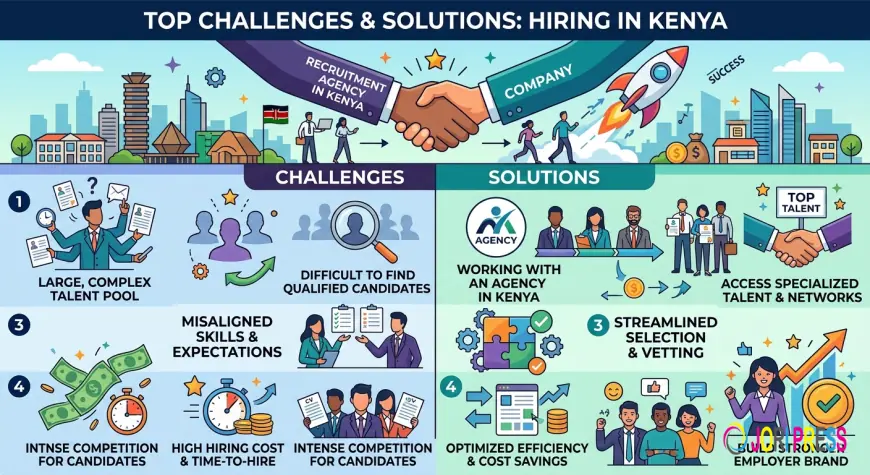
Hiring the right employees is one of the most important factors behind business success. However, many companies across different industries continue to struggle with recruitment challenges that slow growth, increase costs, and affect productivity. Whether a business is hiring for customer support, sales, IT, healthcare, finance, or operations, finding qualified and reliable professionals is becoming increasingly competitive.
This is why many organizations now prefer working with a professional recruitment agency in Kenya to simplify and improve the hiring process.
Kenya’s workforce market has expanded rapidly over the past few years, creating both opportunities and hiring complexities for employers. While there is a large talent pool available, identifying the right candidates efficiently remains a major challenge for businesses of all sizes.
In this article, we will explore the most common hiring challenges companies face in Kenya and practical solutions to overcome them.
1. Finding Qualified Candidates
One of the biggest recruitment challenges companies face is finding candidates with the right skills, experience, and professional attitude.
Many businesses receive hundreds of job applications for a single role, but only a small percentage of applicants actually meet the job requirements. This creates a time-consuming recruitment process that often delays hiring decisions.
Solution
Businesses should adopt more targeted recruitment strategies rather than relying only on public job postings. Professional recruitment agencies use advanced sourcing techniques, industry networks, and talent databases to identify qualified candidates faster.
Employers should also focus on creating clear job descriptions that outline skills, responsibilities, and expectations accurately.
2. Lengthy Hiring Process
A slow recruitment process can cause businesses to lose top candidates to competitors. Highly skilled professionals often receive multiple job offers, and companies that delay interview scheduling or decision-making may miss out on the best talent.
Long hiring cycles also increase operational pressure on existing employees who must manage additional workloads while positions remain vacant.
Solution
Companies should streamline recruitment workflows by reducing unnecessary interview stages and improving communication during the hiring process.
Partnering with recruitment specialists can also reduce time-to-hire because agencies already have access to pre-screened candidates ready for placement.
3. High Employee Turnover
Employee turnover is a major concern for many organizations in Kenya. Frequent resignations create instability, increase hiring costs, and negatively affect productivity.
Turnover often occurs because of:
- Poor cultural fit
- Inadequate onboarding
- Limited growth opportunities
- Salary dissatisfaction
- Weak management structures
Solution
Businesses should focus on hiring candidates who align with both the technical requirements and company culture.
Organizations should also invest in employee engagement, professional development, and competitive compensation packages to improve retention rates.
A strong recruitment process plays a major role in reducing turnover because better candidate matching leads to long-term employment success.
4. Difficulty Hiring Specialized Talent
Some industries require highly specialized professionals with technical expertise and industry-specific experience. Roles in IT, engineering, healthcare, finance, and executive management are often difficult to fill.
Competition for experienced specialists continues to increase as businesses expand and digital transformation accelerates.
Solution
Companies should build long-term recruitment strategies rather than hiring only when urgent vacancies appear.
Working with specialized recruitment agencies allows businesses to access wider professional networks and passive candidates who may not actively apply through job boards.
Employers can also improve hiring success by offering flexible work arrangements and career growth opportunities.
5. Rising Recruitment Costs
Hiring can become expensive when companies continuously advertise jobs, conduct multiple interviews, and repeat hiring due to poor employee retention.
Costs may include:
- Job board advertising
- HR resource allocation
- Training expenses
- Productivity losses
- Recruitment software
- Background checks
For small and medium-sized businesses, these costs can quickly become difficult to manage.
Solution
Businesses should focus on improving hiring accuracy rather than only reducing recruitment expenses.
Professional recruitment support often lowers overall hiring costs by reducing hiring mistakes and shortening recruitment timelines.
A well-structured hiring process also helps businesses avoid repeated recruitment cycles caused by poor candidate selection.
6. Weak Employer Branding
Many companies struggle to attract top talent because candidates are unfamiliar with their brand, workplace culture, or career opportunities.
Today’s professionals often research employers before applying for positions. Businesses with limited online visibility or poor employer reputation may struggle to attract quality applicants.
Solution
Organizations should strengthen their employer branding through:
- Professional company websites
- Active LinkedIn presence
- Employee testimonials
- Career growth messaging
- Positive workplace culture
Companies that communicate their values clearly are more likely to attract skilled professionals who align with their mission and goals.
7. Inadequate Screening and Evaluation
Some businesses hire candidates too quickly without conducting proper screening or skills evaluation. This often results in poor performance, low productivity, and early resignations.
Weak recruitment evaluation methods can also lead to cultural mismatches within teams.
Solution
Employers should implement structured recruitment processes that include:
- Skills assessments
- Behavioral interviews
- Background verification
- Reference checks
- Communication evaluation
Professional recruiters help businesses conduct more effective candidate assessments before final hiring decisions are made.
8. Adapting to Modern Workforce Trends
The workforce environment is changing rapidly. Remote work, hybrid teams, digital transformation, and global hiring competition are reshaping recruitment strategies across industries.
Businesses that fail to adapt may struggle to attract younger professionals and highly skilled digital talent.
Solution
Organizations should modernize recruitment strategies by embracing flexible work environments, digital hiring processes, and technology-driven recruitment systems.
Companies should also remain informed about evolving workforce expectations and employment trends.
Why Recruitment Support Matters More Than Ever
The modern hiring landscape is highly competitive. Businesses that continue using outdated recruitment methods often face hiring delays, increased turnover, and poor workforce performance.
Professional recruitment support helps businesses:
- Hire faster
- Reduce recruitment risks
- Access better talent
- Improve workforce quality
- Save time and resources
- Scale operations efficiently
As businesses continue growing in Kenya, recruitment strategy will remain a key factor in long-term success.
Final Thoughts
Recruitment challenges affect businesses across every industry, but the right hiring strategies can significantly improve recruitment outcomes.
From reducing turnover to hiring specialized talent faster, companies that invest in professional recruitment processes gain a major competitive advantage.
Efficient hiring is no longer just about filling vacancies — it is about building strong teams that support sustainable business growth.
What's Your Reaction?
 Like
0
Like
0
 Dislike
0
Dislike
0
 Love
0
Love
0
 Funny
0
Funny
0
 Angry
0
Angry
0
 Sad
0
Sad
0
 Wow
0
Wow
0