





































The Business Case for Smarter Leave Management

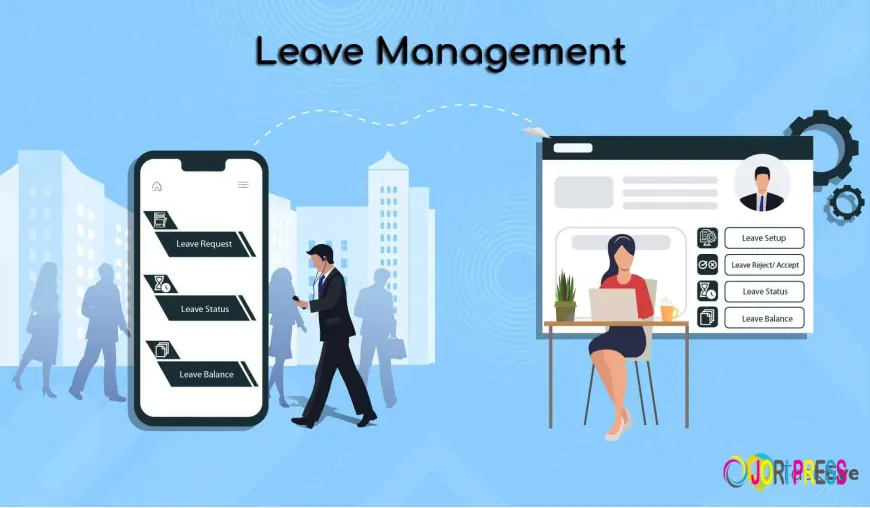
Every growing company reaches a point where managing employee time off with emails and spreadsheets stops working. What begins as a workable system for a small team quickly becomes a source of confusion — lost requests, incorrect balances, and surprised managers discovering that two key people are out at the same time. Moving to a structured process pays off fast, and the earlier a company makes the switch, the fewer problems it has to unwind.
What Good Leave Management Actually Looks Like
At its core, leave management is about two things: giving employees a reliable way to request and track their time off, and giving managers visibility into who is available and when. When both sides of that equation work well, the rest follows. Projects get planned around real availability. Payroll reflects accurate PTO balances. HR spends less time answering questions and resolving disputes.
The practical mechanics matter too. A clean approval workflow means requests do not fall through the cracks. Automatic balance calculations reduce manual errors. A shared team calendar shows absence coverage at a glance so no department is left short-staffed without warning.
Tools built specifically for this purpose, like actiPLANS, handle all of these mechanics in one place. Employees submit requests through a simple interface, managers get notified and approve or decline, and balances update automatically. The administrative overhead drops to nearly zero.
Why Policy Comes Before Software
Before any tool can do its job, the underlying leave policy needs to be clear. How many vacation days does each employee earn, and does the accrual rate change with tenure? What counts as a sick day? Are unused days carried over or forfeited at year end? Who approves requests — a direct manager, HR, or both?
These questions have to be answered in writing before they can be configured into any system. When the policy is vague, the software just automates the confusion. When the policy is documented and consistent, automation actually speeds things up.
The Hidden Costs of Poor Absence Tracking
Unplanned absences cost more than just a gap in coverage for the day. Research consistently shows that absence-related productivity losses run well beyond the visible cost of a missed shift. When absence patterns go untracked, the same problems recur without anyone noticing — an employee who burns through sick days in bursts, a team that chronically runs short in the same month each year, or a role where coverage gaps always cause downstream delays.
Good absence tracking surfaces these patterns before they become expensive. Reviewing a solid absence management guide gives HR managers a framework for collecting that data, defining absence thresholds, and responding to patterns in a way that is both fair to employees and defensible under employment law.
Scaling Without Losing Control
The challenge of leave management grows with headcount. At five employees, a shared calendar and a quick email thread might be sufficient. At twenty-five, the seams start showing. At a hundred, the informal approach breaks entirely. The right time to build a proper system is before the pain becomes acute, not after.
Dedicated leave management software scales without adding administrative burden. New employees are onboarded into the same system, balances are calculated the same way for everyone, and managers do not need to develop individual workarounds. The process stays consistent as the team grows, which is exactly what a scaling business needs.
Getting the Rollout Right
Switching to a dedicated tool requires a one-time investment of time. The policy needs to be documented, starting balances loaded, and approval chains configured. Employees need a brief walkthrough so they know how to submit requests and check their own balances.
Done well, the transition takes a day or two. Done poorly, it creates more confusion than the old system. The key is to run a clean cutover — decide a start date, communicate it clearly, and make sure everyone knows the old process is retired. Most teams adapt within a week.
What's Your Reaction?
 Like
0
Like
0
 Dislike
0
Dislike
0
 Love
0
Love
0
 Funny
0
Funny
0
 Angry
0
Angry
0
 Sad
0
Sad
0
 Wow
0
Wow
0