







































Real-World Edge Computing Benefits Transforming Modern Business Today
That approach is known as edge computing, and the edge computing benefits it delivers are reshaping how industries handle speed, security, and scale.

Introduction
Data no longer sits quietly in a distant server room waiting to be processed. It moves, reacts, and drives decisions the instant it is created. This shift is exactly why so many companies are rethinking where their computing power actually lives. Instead of sending every byte on a long round trip to a centralized cloud, organizations are pushing processing closer to the source of the data itself. That approach is known as edge computing, and the edge computing benefits it delivers are reshaping how industries handle speed, security, and scale.
This guest post walks through what edge computing actually means, why businesses are adopting it so quickly, and how the edge computing benefits apply across different sectors. Whether you run a manufacturing plant, a retail chain, or a software company building connected devices, understanding this technology is no longer optional.
What Edge Computing Really Means
At its core, edge computing is a distributed computing model that processes data near where it originates rather than routing it entirely through a centralized data center. Sensors on a factory floor, cameras in a retail store, or devices inside a smart vehicle can analyze information locally, only sending relevant summaries to the cloud when needed. This localized processing is the foundation of nearly every advantage associated with the technology, and it explains why the conversation around edge computing benefits has grown so loud in recent years.
Faster Response Times Through Local Processing
One of the most immediate edge computing benefits is reduced latency. When data has to travel to a faraway server and back, even a fraction of a second can matter. Autonomous vehicles, industrial robots, and medical monitoring systems cannot afford that delay. By processing information right where it is generated, edge computing shrinks the distance data has to travel, which translates into split-second decision-making. This matters enormously for time-sensitive operations where a slow response could mean a safety hazard or a missed opportunity.
Reduced Bandwidth Costs and Network Strain
Every connected device that streams raw data to the cloud consumes bandwidth. As the number of Internet of Things devices grows into the billions, that strain adds up quickly. Edge computing filters and processes data locally, sending only the essential information upstream. Businesses that adopt this model often report noticeably lower bandwidth expenses because they are no longer paying to transmit and store enormous volumes of raw, unfiltered data. This cost efficiency is a major reason enterprises evaluating edge computing are moving from pilot projects to full deployment.
Stronger Data Privacy and Security
Centralizing all data in one location can create a single point of failure. If that location is compromised, the damage can be extensive. Edge architecture spreads processing across many smaller nodes, which limits the exposure of any single breach. Sensitive information, such as patient records in healthcare settings or financial transactions in banking, can be processed and anonymized locally before anything sensitive ever leaves the premises. This distributed structure is quickly becoming one of the most compelling edge computing benefits for industries bound by strict compliance regulations.
Reliability When Connectivity Is Unstable
Not every location has a stable, high-speed internet connection. Remote oil rigs, agricultural fields, and rural healthcare clinics often operate with intermittent connectivity. Edge devices can continue functioning and making decisions even when the connection to a central server drops. Once connectivity returns, the device can sync updates without having lost critical functionality in the meantime. This resilience keeps operations running smoothly regardless of network conditions, a benefit that traditional cloud-only setups simply cannot match.
Supporting Real-Time Analytics Across Industries
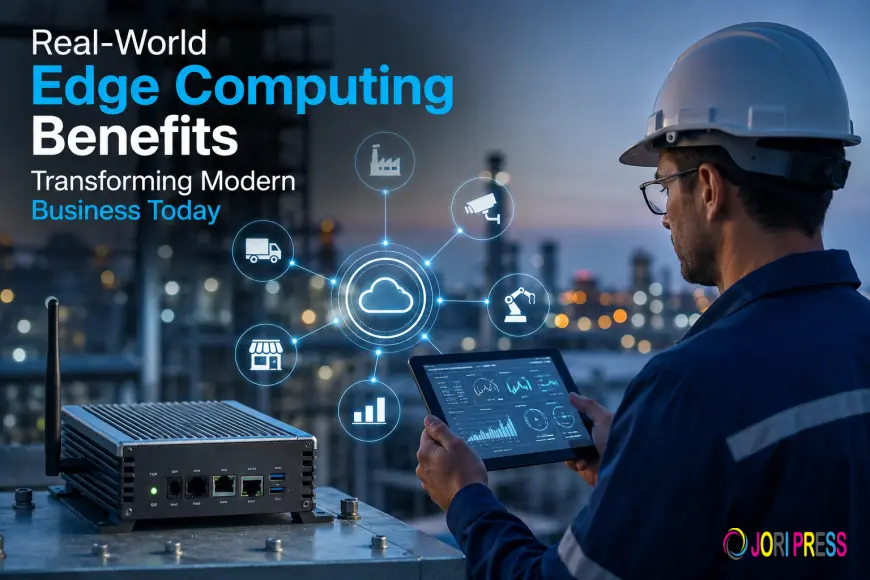
Manufacturers use edge devices to detect equipment faults before they cause costly downtime. Retailers analyze foot traffic and inventory in real time to adjust staffing and restocking. Smart cities rely on distributed sensors to manage traffic flow and energy usage instantly. Each of these examples highlights how edge computing benefits extend well beyond a single sector, touching nearly every industry that depends on fast, localized decision-making.
Scalability Without Overloading Central Infrastructure
As businesses grow, so does the volume of data their devices generate. Relying entirely on centralized cloud infrastructure can create bottlenecks that slow everything down. Edge computing allows companies to scale horizontally by adding more local processing nodes rather than overburdening a central system. This flexible growth model helps organizations expand their digital footprint without a corresponding spike in infrastructure costs or performance issues.
Building Trust Through Transparent, Expert-Driven Implementation
Any organization considering this shift should approach it with genuine expertise rather than guesswork. Working with experienced network architects, following established security frameworks, and staying current with evolving compliance standards all contribute to a trustworthy deployment. Businesses that document their processes, cite credible data sources, and remain transparent about how information is handled will naturally build stronger authority in this space, which aligns closely with the principles search engines use to evaluate genuinely helpful content.
Final Thoughts
The shift toward decentralized data processing is not a passing trend. It reflects a fundamental change in how businesses want their systems to behave: faster, safer, and more resilient. The edge computing benefits outlined here, from reduced latency and lower bandwidth costs to stronger privacy protections and dependable offline performance, all point toward the same conclusion. Companies that embrace this model early are positioning themselves to handle the next wave of connected devices, real-time analytics, and customer expectations far more effectively than those who wait.
As more industries adopt smart devices and real-time systems, the demand for localized processing will only increase. Understanding and applying the core advantages of this technology today can give any organization a meaningful edge tomorrow.
What's Your Reaction?
 Like
0
Like
0
 Dislike
0
Dislike
0
 Love
0
Love
0
 Funny
0
Funny
0
 Angry
0
Angry
0
 Sad
0
Sad
0
 Wow
0
Wow
0