








































Strategic Guide to NYC Construction Estimating Services
Get the best Construction Estimating Services in NYC and overall USA.

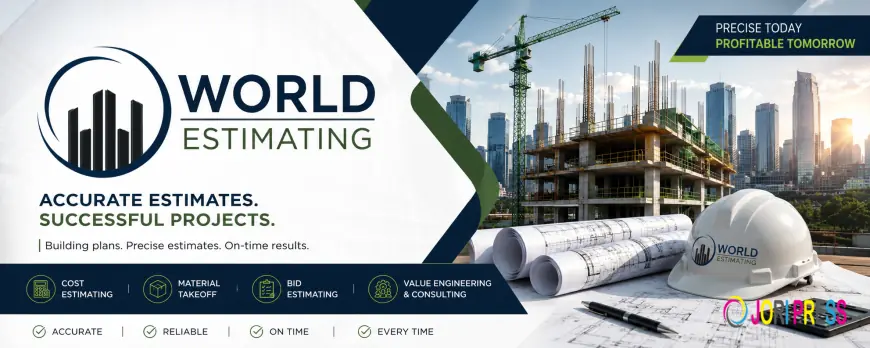
The New York City construction environment is widely recognized as one of the most complex and financially demanding building markets in the world. Developing a commercial high-rise in Manhattan, remodeling a historic brownstone in Brooklyn, or managing a large-scale municipal project in Queens requires precise cost forecasting long before the first shovel hits the dirt.
For general contractors, trade subcontractors, developers, and architects, NYC Construction Estimating Services provide the critical cost intelligence necessary to navigate high material prices, stringent municipal regulations, and aggressive market competition. Accurate pre-construction estimates ensure that bids remain competitive while fully protecting project margins from unexpected financial strain.
What Makes New York City Construction Estimating Unique?
Estimating construction expenses within NYC demands a deep understanding of local market variables that rarely exist in standard regional markets. Standard nationwide unit rates fail to capture the financial realities of building across the five boroughs.
Strict Municipal Codes and DOB Compliance
The New York City Department of Buildings (DOB) enforces a rigid set of safety standards, environmental protocols, and zoning codes. Professional cost estimators must incorporate mandatory site safety manager requirements, specialized scaffolding permits, structural support approvals, and complex inspection schedules into the initial budget. Ignoring these regulatory line items leads to costly work stoppages and steep compliance fines.
Union Labor Dynamics and Prevailing Wage Rules
Labor represents one of the largest budget allocations in any NYC build. Estimators must accurately differentiate between open-shop and union projects, incorporating prevailing wage schedules, fringe benefits, trade-specific union working rules, and mandatory overtime caps. Miscalculating trade jurisdictional boundaries or labor efficiency factors in a dense urban setting will severely compromise a project's bottom line.
Dense Urban Logistics and Site Access Limits
Building in high-density areas creates operational friction that must be reflected in material and equipment takeoffs. Cost estimates must account for restricted staging zones, just-in-time delivery models, sidewalk shed rentals, crane permits, traffic detail coordination, and specialized waste removal fees required for tight city lots.
Core Breakdown of Estimating Deliverables
Comprehensive construction estimating services transform raw architectural drawings and specifications into structured, bid-ready cost packages.
Material Takeoffs and Quantity Surveys
Estimators utilize advanced digital takeoff software to calculate exact material quantities across all CSI divisions. This includes concrete volume, structural steel tonnage, framing footage, exterior cladding, interior finishes, and specialty architectural elements.
Trade-Specific MEP Estimating
Mechanical, Electrical, and Plumbing (MEP) systems account for a major portion of urban project budgets. Specialist estimators evaluate HVAC ductwork, electrical switchgear, low-voltage cabling, emergency power generators, domestic water systems, and fire suppression grids line by line.
Bid-Ready Pricing Summaries
Final deliverables organize direct material expenses, local labor hours, equipment rentals, subcontractor bids, permits, overhead, and targeted profit margins into transparent, audit-ready bid templates.
Comparison: NYC vs. Chicago Construction Cost Estimating
While both Chicago and New York City represent major urban construction hubs, their local cost drivers and logistical profiles differ significantly.
| Estimating Metric | New York City Construction Market | Chicago Construction Market |
| Average Cost per Square Foot | Significantly higher due to dense site limits, land values, and strict municipal fees. | High urban baseline with relatively lower outer-borough and suburban site expenses. |
| Site Logistics & Staging | Extreme spatial constraints; heavy reliance on hoist permits and public right-of-way clearances. | Moderate staging constraints in the Loop; broader access across outer city neighborhoods. |
| Labor Framework | Dynamic mix of union and open-shop work with stringent trade demarcation rules. | Highly structured union environment with specific winter weather productivity adjustments. |
| Environmental & Historic Codes | High focus on DOB site safety, landmark preservation, and noise mitigation windows. | Strong focus on City DOB thermal, structural load, and freeze-thaw compliance guidelines. |
Major Value Drivers for Contractors and Developers
Outsourcing estimating needs to localized experts provides distinct operational advantages for construction firms operating throughout the tri-state area.
Higher Bid Volume Without Overhead Expansion
Contractors can submit bids on a larger volume of commercial and residential projects without adding permanent internal estimating staff or increasing fixed operating expenses.
Elimination of Costly Scope Gaps
Independent double-check audits catch missing details in architectural sets, uncounted hardware, or omitted utility connections before final bids are submitted to owners or general contractors.
Stronger Leverage in Subcontractor Negotiations
Detailed material takeoffs provide general contractors with accurate cost baselines, preventing overpayment on trade packages and enabling fair price negotiations during procurement.
Securing Financial Accuracy in NYC Construction
Succeeding in New York City’s competitive building landscape requires absolute precision at every phase of pre-construction planning. Utilizing specialized NYC Construction Estimating Services empowers contractors and developers to approach every bid with complete financial clarity—ensuring that projects stay solvent, compliant, and profitable from initial blueprints to final sign-off.
What's Your Reaction?
 Like
0
Like
0
 Dislike
0
Dislike
0
 Love
0
Love
0
 Funny
0
Funny
0
 Angry
0
Angry
0
 Sad
0
Sad
0
 Wow
0
Wow
0