





































How to Remove Burrs from Sheet Metal Without Damaging the Surface
Learn how to remove burrs from sheet metal without damaging the surface. Explore effective deburring methods, machine options, and tips for smooth, burr-free edges.

Burrs are a common problem in sheet metal fabrication. They can develop after laser cutting, punching, shearing, drilling, milling, and stamping. Although a burr may look like a small imperfection, it can create sharp edges, affect assembly, reduce surface quality, and increase the risk of injury during handling.
The challenge is to remove these unwanted edges without creating scratches, excessive edge rounding, distortion, or other surface defects.
This guide explains how to remove burrs from sheet metal without damaging the surface, covering practical deburring methods, common mistakes, equipment selection, and ways to achieve consistent finishing results.
What Causes Burrs on Sheet Metal?
A burr forms when metal is displaced or deformed during a cutting or machining operation instead of separating cleanly. The size and shape of the burr depend on several factors, including the material, tooling, machine settings, and cutting process.
Common causes include:
- Incorrect cutting parameters
- Dull or worn cutting tools
- Incorrect punch and die clearance
- Excessive cutting pressure
- Improper laser settings
- Incorrect feed speed
- Material thickness and hardness
- Poorly maintained tooling
Different materials can also produce different types of burrs. Stainless steel, mild steel, aluminum, and other alloys may require different approaches to achieve a clean edge.
Why Is Burr Removal Important?
Removing burrs is not just about making a component look better. Proper edge finishing can directly affect safety, assembly, performance, and production quality.
1. Improves Worker Safety
Sharp burrs can cause cuts during handling and assembly. Removing them creates safer edges for operators, inspectors, and end users.
2. Supports Better Assembly
Burrs around holes and cut edges can interfere with fitting, fastening, welding, or joining operations. A clean edge allows components to fit together more consistently.
3. Improves Surface Appearance
Visible burrs can make a finished component look incomplete. Proper deburring creates a cleaner appearance before painting, coating, plating, or other finishing processes.
4. Helps Maintain Product Quality
In precision applications, even small burrs can affect measurements, tolerances, and component functionality. Consistent edge finishing helps manufacturers maintain their quality standards.
How to Remove Burrs from Sheet Metal Without Damaging the Surface
The right deburring method depends on the material, thickness, burr size, part shape, production volume, and required surface finish.
1. Manual Deburring
Manual deburring is a practical option for prototypes, repairs, small batches, and components with unusual geometries.
Operators can use:
- Hand files
- Deburring blades
- Abrasive pads
- Scrapers
- Hand brushes
The main advantage is flexibility. However, the result depends heavily on operator experience. Applying too much force can scratch the surface or remove more material than necessary.
For large production volumes, manual processing can also become slow and difficult to standardize.
2. Abrasive Belt Deburring
Abrasive belt systems can remove burrs while creating a consistent edge finish. They are commonly used for sheet metal components that require repeatable processing.
The abrasive type, belt speed, feed rate, and contact pressure should be selected according to the material and thickness.
If the pressure is too high, the abrasive may create scratches or excessive edge rounding. If the pressure is too low, some burrs may remain.
3. Automated Deburring
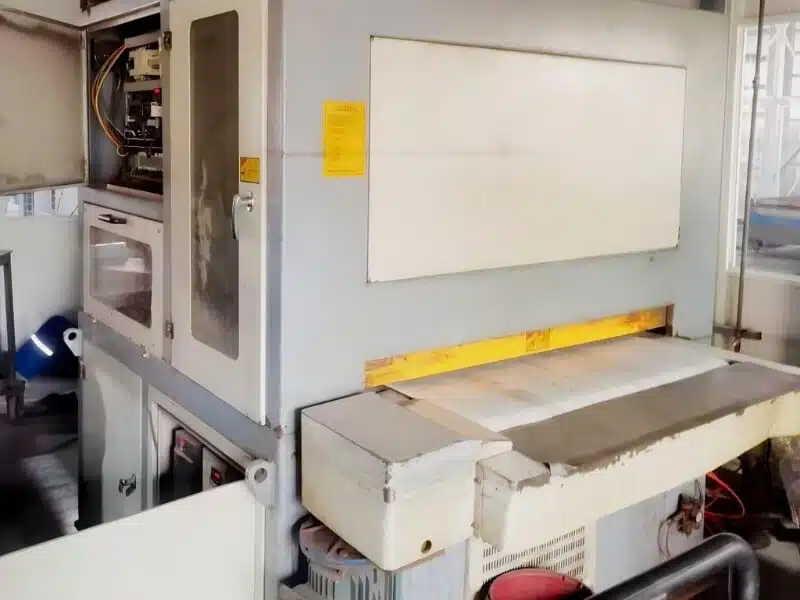
For manufacturers processing large quantities of sheet metal parts, a burr remover machine can provide a more consistent and efficient approach.
Automated systems can use abrasive belts, brushes, or combinations of finishing tools to process edges with controlled pressure. This reduces dependence on manual labor and helps maintain consistent results from one batch to another.
Automated deburring is particularly useful for parts produced through laser cutting, punching, shearing, and other high-volume processes.
4. Brush Deburring
Brush-based systems are useful when parts have small burrs or when a controlled edge treatment is required.
Compared with aggressive grinding, brushing can provide a gentler finishing action. The correct brush material, speed, and pressure should still be selected according to the workpiece.
This method can be especially useful when manufacturers want to remove light burrs while maintaining the overall appearance of the sheet.
How to Choose the Right Deburring Method
There is no universal solution for every sheet metal application. Before selecting a process or machine, consider the following factors.
Material
Steel, stainless steel, aluminum, copper, and other materials respond differently to abrasive processing.
Sheet Thickness
Thin sheets require careful control because excessive pressure can cause deformation or unwanted edge changes.
Burr Size
Large and heavy burrs may require a stronger abrasive process, while small burrs can often be removed with brushing or lighter finishing.
Part Geometry
Parts with holes, narrow sections, internal corners, or complex shapes may require specialized deburring methods.
Production Volume
Manual tools can be practical for low-volume work, while automated systems are generally more suitable for repetitive, high-volume production.
Required Surface Finish
Determine whether the objective is simply burr removal or whether the component also needs a specific cosmetic or polished finish.
The Role of Burr Removal in Precision Parts Manufacturing
In Precision Parts Manufacturing, maintaining dimensional accuracy is only one part of producing a high-quality component. Edge condition and surface quality can also be important, particularly for parts used in automotive, aerospace, electronics, machinery, and industrial applications.
A component may meet its dimensional specifications but still require rework if sharp burrs or inconsistent edges remain.
Integrating deburring into the production workflow can help manufacturers achieve more consistent edge quality while reducing manual finishing and inspection time.
How to Prevent Surface Damage During Deburring
Removing a burr too aggressively can create another quality problem. Excessive grinding or abrasive pressure may damage the surface or change the shape of the component.
Potential problems include:
- Deep scratches
- Uneven grinding marks
- Excessive edge rounding
- Material removal beyond specification
- Surface discoloration
- Distortion of thin sheet metal
To minimize these risks, use the lowest effective processing force and select an abrasive that matches the material.
It is also a good practice to run a sample batch before full production. Inspect the edges and surface carefully, then adjust the machine settings if necessary.
Can Leveling Improve Sheet Metal Finishing?
Flatness can influence how consistently a sheet passes through downstream processing equipment. If a sheet is warped or uneven, the contact between the material and finishing system may vary across the surface.
A Precision Leveling Machine can be used in suitable applications to improve sheet flatness before subsequent operations.
A typical manufacturing sequence may include:
Cutting → Leveling → Deburring → Cleaning → Surface Finishing → Inspection
The exact sequence depends on the material, component design, and production requirements. However, controlling sheet condition before finishing can help make the overall process more predictable.
Deburring vs. Polishing: What Is the Difference?
Deburring and polishing serve different purposes.
Deburring focuses on removing sharp edges, burrs, dross, and unwanted material projections created during manufacturing.
Polishing focuses primarily on improving surface smoothness, appearance, and reflectivity.
When a component requires both clean edges and an attractive surface finish, the two operations may be used together.
For example, a manufacturer may first remove burrs and then use a polishing machine to achieve the desired surface appearance on stainless steel or other finished components.
Common Burr Removal Mistakes to Avoid
Using Too Much Pressure
More pressure does not necessarily produce faster or better results. Excessive force can damage the surface and alter the edge profile.
Selecting the Wrong Abrasive
An abrasive that is too aggressive can leave visible scratches or remove excessive material.
Ignoring Material Thickness
Thin sheet metal requires controlled processing. Excessive mechanical force may cause bending or distortion.
Skipping Sample Testing
Machine settings should be tested on representative parts before full production begins.
Focusing Only on Burr Removal
A component can be technically burr-free while still having poor surface quality. Both edge condition and surface appearance should be checked.
How to Achieve Consistent Burr-Free Results
A controlled process is essential when producing large quantities of finished parts.
A practical workflow includes:
- Identify where the burr is coming from.
- Determine the burr size and type.
- Check the material and sheet thickness.
- Select the appropriate deburring method.
- Choose a suitable abrasive or brush.
- Set the correct processing pressure and feed speed.
- Test several sample components.
- Inspect the edges and surface.
- Standardize the successful machine settings.
- Maintain the equipment and replace worn abrasives when required.
This approach can reduce inconsistent results and minimize unnecessary rework.
When Should You Use Automated Deburring?
Automation becomes particularly valuable when manufacturers process large numbers of similar parts.
An automated system can help provide:
- More consistent edge finishing
- Faster processing
- Reduced manual labor
- Better process repeatability
- Lower dependence on operator technique
- Improved production efficiency
However, automation should be selected based on the actual application. Factors such as part dimensions, material, thickness, burr characteristics, and required finish should be evaluated before choosing equipment.
Final Thoughts
Learning how to remove burrs from sheet metal without damaging the surface requires more than simply choosing an abrasive or grinding tool. The material, burr characteristics, machine settings, pressure, feed speed, and desired finish all influence the final result.
Manual deburring can be useful for small or complex jobs, while automated equipment can offer greater consistency for repetitive production.
The goal should always be controlled material removal rather than aggressive grinding. With the right process, manufacturers can achieve smooth, safe, and consistent edges while protecting the original sheet metal surface.
For manufacturers looking to improve their overall finishing workflow, combining controlled leveling, deburring, and polishing processes can help create a more reliable path from raw sheet metal to finished component.
Frequently Asked Questions
1. What is the best way to remove burrs from sheet metal?
The best method depends on the material, thickness, burr size, part geometry, production volume, and required finish. Manual tools can work for small batches, while automated deburring systems are often better suited to high-volume production.
2. How can I remove burrs without scratching the metal?
Choose an abrasive suitable for the material, use controlled pressure, and avoid excessive grinding. Testing the process on sample parts before production can help prevent surface damage.
3. Can a burr remover machine damage thin sheet metal?
Yes, incorrect settings can potentially damage thin sheet metal. Excessive pressure, aggressive abrasives, or unsuitable feed speeds can cause scratches or deformation. Proper machine adjustment is important.
4. What causes burrs after laser cutting?
Burrs and dross can result from factors such as incorrect cutting speed, unsuitable power settings, poor focus, material thickness, and improper gas conditions. Correcting the cutting parameters can reduce burr formation.
5. What is the difference between deburring and polishing?
Deburring removes sharp edges and unwanted material left by manufacturing processes. Polishing is generally performed to improve surface smoothness and appearance. Some components require both operations.
6. Is automated deburring better than manual deburring?
For repetitive, high-volume production, automated deburring can provide greater consistency and productivity. Manual deburring remains useful for prototypes, low-volume production, repairs, and complex components.
7. Can sheet leveling help before deburring?
Yes. When flatness is important, leveling the sheet before deburring can help provide more consistent material positioning during downstream processing. The appropriate sequence depends on the production process.
8. How do I prevent excessive edge rounding during deburring?
Use controlled pressure, the appropriate abrasive, and suitable feed speed. Regularly inspect finished parts to ensure burr removal is sufficient without changing the required edge geometry.
What's Your Reaction?
 Like
0
Like
0
 Dislike
0
Dislike
0
 Love
0
Love
0
 Funny
0
Funny
0
 Angry
0
Angry
0
 Sad
0
Sad
0
 Wow
0
Wow
0