










































Optimizing SMD Display Installation: Structural, Electrical & Signal Integrity Analysis:
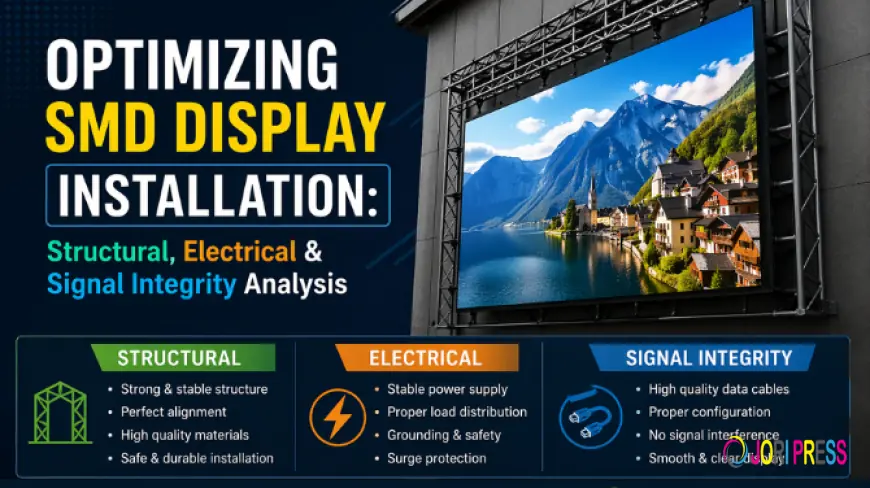
Discover how to optimize SMD display installation through proper structural design, efficient electrical systems, and reliable signal integrity. This guide explains the key technical factors that ensure high performance, durability, and seamless visuals for modern digital signage solutions.

Introduction:
In today’s fast-growing visual technology industry, SMD (Surface-Mounted Device) LED displays play a vital role in advertising, events, and digital signage solutions. However, the real performance of an SMD screen depends not only on its quality but also on how well it is installed and optimized. A poorly installed system can lead to uneven visuals, signal issues, and reduced lifespan.
This blog provides a complete technical overview of how to optimize SMD display installation through structural stability, electrical efficiency, and signal integrity, ensuring maximum performance and long-term reliability.
The Backbone of Installation:
The structural framework is the foundation of every SMD display system. Without proper support, even the highest-quality panels cannot perform effectively.
Key Structural Elements
Load-Bearing Capacity: The mounting structure must support the full weight of the LED cabinets and modules.
Material Quality: Use durable materials such as steel or aluminum to ensure strength and longevity.
Perfect Alignment: Precision in alignment is crucial to avoid visible gaps or uneven display surfaces.
Installation Type: Whether wall-mounted, suspended, or freestanding, the structure must match the site requirements.
A strong structure ensures that your digital signage display remains stable, safe, and visually perfect over time.
Powering Performance Safely:
Electrical systems are the heart of SMD screen functionality. A stable and well-designed power system prevents damage and ensures consistent brightness.
Best Practices:
Always use high-quality SMPS (power supplies) and certified wiring. A reliable electrical setup not only improves performance but also extends the life of your digital signage system.
3. Signal Integrity:
Signal integrity ensures that the content displayed on the screen is clear, synchronized, and free from distortion.
Critical Signal Factors:
High-Quality Cables: Use Cat6 or fiber optic cables for strong and stable data transmission.
Proper Configuration: Correct mapping of sending and receiving cards is essential.
Avoid Interference: Keep data cables separate from power cables.
Refresh Rate Settings: High refresh rates eliminate flickering and ensure smooth visuals.
For large installations, fiber optic solutions are highly recommended to maintain signal quality across long distances. This is especially important in large-scale digital signage projects where performance consistency is critical.
Thermal Management:
Environmental conditions directly impact the performance and durability of SMD screens.
Important Factors
Ventilation Systems: Prevent overheating by ensuring proper airflow.
Cooling Fans: Essential for outdoor and high-brightness displays.
Weather Protection: Use waterproof cabinets (IP65 rating) for outdoor installations.
Dust and Humidity Control: Protect internal components from environmental damage.
Proper environmental management ensures that your digital signage display operates efficiently in all conditions.
Final Step to Perfection:
Once installation is complete, calibration is necessary to achieve the best visual output.
Calibration Checklist
Adjust brightness and contrast levels
Ensure color uniformity across panels
Test for dead pixels or module faults
Perform full-screen signal testing
Accurate calibration enhances viewer experience and ensures professional-quality display output.
6. Maintenance Strategy for Long-Term Success:
Regular maintenance is essential to keep your SMD display running smoothly.
Conduct periodic inspections
Clean modules and cabinets regularly
Monitor power and signal systems
Replace faulty components promptly
A proactive maintenance approach helps avoid costly repairs and ensures long-term reliability.
Conclusion:
Optimizing SMD display installation is a technical process that requires attention to structure, power, and signal systems. By focusing on these key areas, businesses can achieve superior performance, enhanced durability, and maximum return on investment. Whether for advertising, events, or commercial use, a well-installed SMD screen is the backbone of effective visual communication.
What's Your Reaction?
 Like
0
Like
0
 Dislike
0
Dislike
0
 Love
0
Love
0
 Funny
0
Funny
0
 Angry
0
Angry
0
 Sad
0
Sad
0
 Wow
0
Wow
0