

































Blended Learning vs. Standard eLearning: Which is better for L&D
Blended learning platforms are used by organisations for training and individual learners for acquiring new skills. This format offers digitally offline self-paced learning content and in-person classes or virtual instructor-led sessions.

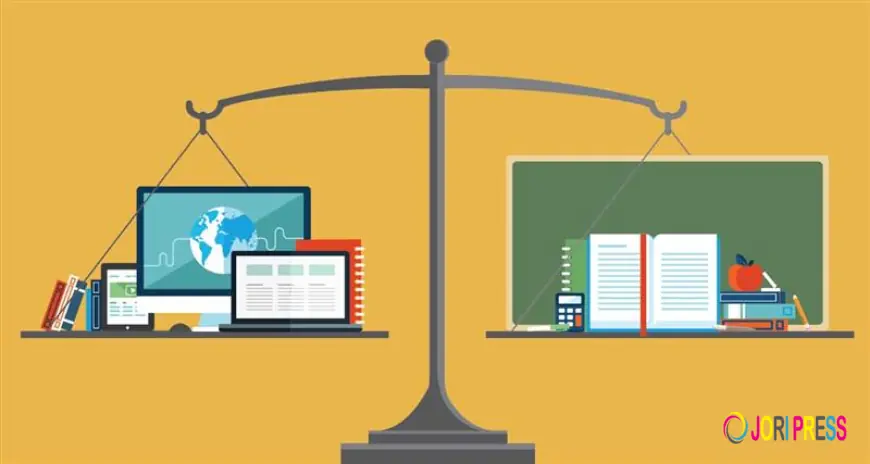
The blended learning platform and standard e-learning platforms have common factors, but still serve very different outcomes for learners. The organisations use these formats for training workforces, but the important question is, which one of these is better?
As per industry research, around 65% of L&D managers believe blended learning solutions provide the most effective training format, combining self-paced content and human guidance.
Similarly, for e-learning, organisations that utilise corporate e-learning can reduce training time by 40% - 60%, where the learners receive a single form of content delivery. Now it is clear that both of these methods are being used by learners.
What is a blended learning platform?
Blended learning platforms are used by organisations for training and individual learners for acquiring new skills. This format offers digitally offline self-paced learning content and in-person classes or virtual instructor-led sessions.
This learning format provides learners with flexibility, guidance, and structured learning. It includes video lectures, text-based PPTs, assessments, short quizzes, discussions, live lectures, and group activities. Also, the platform keeps the record of learners' activities so the instructor can help learners in curating better learning pathways.
What is standard e-learning?
The standard e-learning programs are oftentimes off-the-shelf courses that are completely digitally and learners can decide their own pathway for completing the training or acquiring new skills. The platform for generic content includes recorded lectures, assessments, modules, and basic data on scores and completion of the program.
The differences based on delivery format
-
In a standard e-learning program, training is completely digital, and learners can utilise it at their own pace. Fast ones can move ahead while slow learners can take their time.
-
Blended learning platforms offer both self-paced content and live classes with trainers and peers. The learners have a momentarily flexible schedule.
The differences based on human interaction
-
Standard learning products rarely have a human connection, and even fewer options have recorded sessions by the teacher. It lacks human elements.
-
A solution for blended learning provides learners with human guidance, peer discussions, and project working in teams. This has a perfect balance of human interaction.
The differences based on flexibility and structure
-
The standard e-learning programs allow the learners to carry out the whole training at their own schedule, but this ruins the discipline and structure of learning.
-
The blended learning solutions have made a perfect balance of flexibility with pre-learning material and structured training for learners with live sessions.
The differences based on analytics
-
The generic standard platforms only track digital activities of the user, and that does not include enough elements to calculate ROI.
-
Blended learning platforms have higher qualifications from the industry and are often personalised by organisations for training purposes, and their tracking systems, like SCORM and xAPI, store complete information of learners, whether offline or online.
The differences based on knowledge retention
-
The standard off-the-shelf courses are meant to be completed in one sitting, and learners prefer it that way, but this format is not favourable for long-term retention.
-
A solution for blended learning offers space between each concept and module, and in this gap, learners can absorb the knowledge better and will have it retained for a longer time.
When to use each of these learning formats
By now, you can conclude that the solution for blended learning contradicts standard e-learning services completely. But this does not indicate that either of them is useless and a waste of resources; each of these learning formats is created to serve different purposes, and organisations need multiple programs for functioning smoothly, not every skill needs instructor guidance.
That is why a wise L&D professional would be able to use both of these in different situations, while maintaining budget and quality of learning.
Choose blended learning solutions.
-
When the training requires practising, such as sales training, leadership skills, and customer handling.
-
When the company needs behavioural change via a training solution, blended learning will be able to meet the need.
-
Select this if the workforce has various learning styles, and to accommodate most of them, dual-format training is needed.
-
When this company has filed workers who need real-life practice with basic information.
Choose standard e-learning
-
When the training is only for knowledgeable purposes, like policy revision or refresher content.
-
When the budget is limited, and the training can be helped with the right strategy, then generic courses are useful.
-
When the learners are senior workers who are already motivated enough to complete the course by themselves.
-
The said skill does not need major practice and can be acquired by simple revisions with self-determination.
The Conclusion
The learning and development team is confused for the most part about the training format for their workforce that aligns with the learning needs of workers. They choose either from generic programs that can provide flexibility or a blended learning course that will limit the flexibility for structure.
But the debate is unnecessary; the organisations should choose the training program based on their learning needs and launch it with the right strategy. The rest is irrelevant momentarily.
What's Your Reaction?
 Like
0
Like
0
 Dislike
0
Dislike
0
 Love
0
Love
0
 Funny
0
Funny
0
 Angry
0
Angry
0
 Sad
0
Sad
0
 Wow
0
Wow
0