






































Best Employee Management Practices for Modern Businesses
Explore the best employee management practices to improve productivity, employee engagement, HR operations, and payroll efficiency.
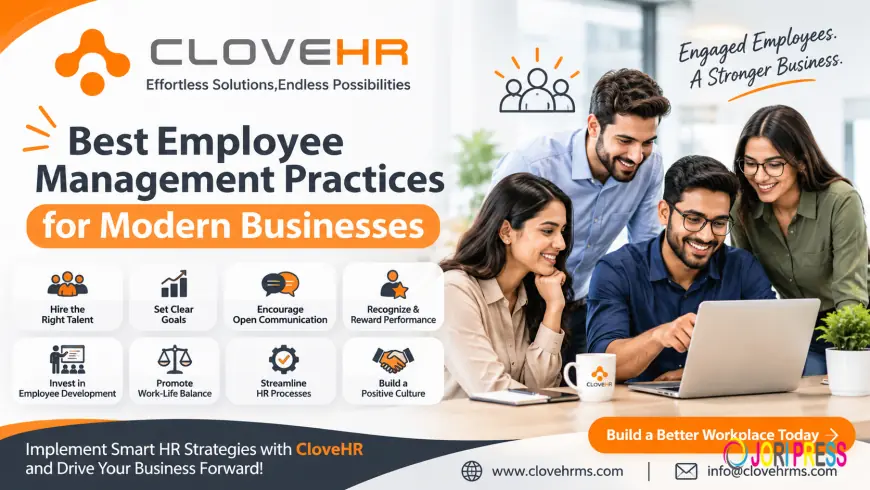
Employees are among the most valuable resources of any organization. Their knowledge, skills, motivation, and performance directly influence business productivity and long-term growth. However, managing a workforce effectively requires more than assigning tasks and monitoring attendance. Businesses need structured processes that support communication, employee development, performance evaluation, compensation, and workplace satisfaction.
As organizations grow, Employee Management Software becomes increasingly complex. HR departments must maintain employee records, coordinate leave requests, monitor attendance, manage payroll, communicate company policies, and ensure that employees remain aligned with organizational objectives.
Traditional management practices may become inefficient when these responsibilities are handled through disconnected spreadsheets, emails, and manual documentation.
Modern businesses can address these challenges by adopting organized HR practices and digital tools. Solutions such as CloveHR help organizations centralize employee information and manage important HR activities through an integrated platform.
In this article, we will explore the best employee management practices that modern businesses can implement to improve workforce productivity and create a positive working environment.
1. Establish Clear Roles and Responsibilities
One of the foundations of effective employee management is ensuring that every employee understands their responsibilities.
When job roles are unclear, employees may become confused about their priorities, reporting structures, and expected outcomes. This can result in duplicated work, missed deadlines, and communication problems.
Businesses should create clear job descriptions that explain:
-
Key responsibilities and daily activities.
-
Reporting managers and team structures.
-
Required skills and qualifications.
-
Performance expectations.
-
Individual and departmental objectives.
Managers should also communicate expectations whenever employees take on new responsibilities or move between departments.
Clear responsibilities improve accountability and help employees understand how their contributions support organizational goals.
2. Maintain Centralized Employee Records
Employee information is required for several HR activities, including recruitment, onboarding, payroll, attendance, performance reviews, and employee communication.
Maintaining these records across different spreadsheets and documents can make information difficult to locate.
A centralized employee management system helps organizations maintain structured employee profiles and retrieve relevant information when required.
Important employee records may include:
-
Personal and professional information.
-
Employment history.
-
Department and designation.
-
Joining and confirmation dates.
-
Salary-related information.
-
Attendance and leave records.
-
Performance and appraisal information.
-
Relevant employment documents.
CloveHR provides centralized employee management capabilities that help businesses organize employee information and manage important workforce activities.
Organizations should also establish appropriate access permissions to protect confidential employee records.
3. Automate Routine HR Activities
HR professionals handle many repetitive responsibilities every month. These include attendance verification, leave calculations, employee documentation, salary processing, and generating reports.
Performing these tasks manually can reduce the time available for employee development and strategic HR planning.
Automation helps reduce repetitive administrative work.
For example, payroll management software can automate salary calculations using configured compensation structures and applicable attendance or leave information.
Similarly, digital attendance and leave management tools can simplify employee requests, approvals, and recordkeeping.
By connecting these processes, businesses can create more consistent HR workflows.
Automation should not remove human oversight. Important decisions involving employee concerns, exceptions, and sensitive situations should still receive appropriate attention from HR professionals.
4. Create an Effective Employee Communication System
Communication is essential for building a productive and collaborative workplace.
Employees need regular updates about company policies, organizational changes, project responsibilities, performance expectations, and important announcements.
When communication depends entirely on informal conversations, important information may not reach everyone.
Businesses should establish reliable communication channels, such as:
-
Regular team meetings.
-
Employee announcements.
-
Internal communication platforms.
-
Manager feedback sessions.
-
HR helpdesk systems.
-
Employee self-service portals.
A structured communication process helps employees understand workplace expectations and provides opportunities to raise questions.
CloveHR's employee management capabilities support team communication and centralized access to relevant employee information, helping organizations improve coordination.
5. Develop a Fair Performance Management Process
Performance management helps businesses understand employee contributions and identify opportunities for improvement.
An effective system should not focus exclusively on identifying mistakes. It should also recognize achievements, provide constructive feedback, and support professional development.
Businesses should establish measurable performance indicators relevant to individual roles.
For example, a sales employee may be evaluated using revenue targets, customer relationships, and conversion rates, while a software developer may be assessed through project delivery, code quality, and collaboration.
Regular performance discussions are generally more useful than relying only on annual appraisals.
Organizations can use performance management software to establish goals, monitor progress, document feedback, and organize performance reviews.
This creates a more structured approach to employee development.
6. Implement a Transparent Leave Management Policy
Employees need time away from work for personal responsibilities, health requirements, family commitments, and holidays.
Without a clear leave policy, organizations may experience confusion about leave balances, approval procedures, and absence reporting.
Businesses should communicate:
-
Available leave categories.
-
Leave eligibility.
-
Application procedures.
-
Approval responsibilities.
-
Carry-forward rules.
-
Holiday policies.
-
Unpaid leave conditions.
A digital leave management system can simplify applications, approval workflows, and leave recordkeeping.
It can also help HR teams connect leave information with attendance and payroll calculations.
When leave records are maintained accurately, managers can plan staffing requirements more effectively.
7. Ensure Accurate and Timely Payroll Processing
Compensation plays an important role in employee satisfaction and workplace trust.
Employees expect their salaries to be processed accurately and according to the organization's payment schedule.
However, payroll administration involves multiple responsibilities, including salary calculations, deductions, overtime, reimbursements, attendance adjustments, and statutory information.
Using payroll management software helps organizations organize these activities and reduce repetitive manual calculations.
A suitable payroll platform should support configurable salary structures, automated calculations, employee payslips, and relevant reporting.
CloveHR provides payroll functionality that connects salary structures with attendance and leave-related adjustments. This helps HR teams manage payroll activities through a centralized workflow.
Businesses should also review payroll outputs and verify applicable statutory requirements before finalizing payments.
8. Invest in Employee Training and Development
Employees need opportunities to improve their knowledge and professional abilities.
Organizations that invest in employee development can build stronger teams and prepare their workforce for changing business requirements.
An effective training strategy should begin by identifying skill gaps and understanding the capabilities employees need to perform their roles successfully.
Businesses can introduce:
-
Technical training programs.
-
Leadership development.
-
Communication workshops.
-
Mentoring opportunities.
-
Online learning resources.
-
Role-specific certification programs.
Training should be evaluated based on practical outcomes rather than attendance alone.
Managers can review whether employees are applying newly acquired skills and whether training has improved their work quality.
9. Encourage Employee Recognition and Engagement
Employees are more likely to remain motivated when their contributions are acknowledged.
Recognition does not always require financial rewards. Managers can appreciate achievements through positive feedback, professional development opportunities, team recognition, and additional responsibilities.
Organizations should create a culture where appreciation is fair, consistent, and connected to meaningful contributions.
Employee engagement surveys can also help management understand workplace concerns.
Questions about communication, workload, leadership, career development, and workplace culture can provide useful insights.
HR teams should review feedback and take appropriate action instead of collecting responses without follow-up.
10. Use Workforce Data for Better Decisions
Modern employee management increasingly depends on accurate workforce information.
Businesses need to understand employee attendance, turnover, performance, leave patterns, payroll expenses, and workforce distribution.
Maintaining this information manually can make reporting difficult.
Digital HR platforms help centralize employee information and generate reports that support management decisions.
For example, attendance reports can help identify recurring absence patterns, while payroll reports can provide visibility into employee-related expenditure.
Performance reports can help managers identify development opportunities and recognize high-performing employees.
However, workforce data should be interpreted carefully. Numbers alone cannot explain every employee's circumstances, and managers should consider relevant context before making decisions.
11. Protect Employee Information and Privacy
Employee management systems store sensitive information, including personal details, salary information, employment documents, and performance records.
Businesses must take appropriate steps to protect this information.
Important practices include:
-
Providing access only to authorized users.
-
Using strong authentication practices.
-
Reviewing access permissions regularly.
-
Maintaining appropriate backup procedures.
-
Establishing data retention policies.
-
Training employees about information security.
-
Evaluating software providers' privacy and security practices.
Organizations should also communicate how employee information is collected, used, and maintained.
Protecting employee information is essential for maintaining trust and responsible HR operations.
12. Adopt Integrated HR Technology
One of the biggest challenges in employee management is the use of disconnected tools.
For example, employee details may be stored in one application, attendance records in another, and payroll calculations in spreadsheets.
This creates unnecessary duplication and makes it difficult to maintain consistent information.
An integrated HRMS can connect important workforce activities through a centralized platform.
CloveHR brings together employee management, payroll, attendance, leave management, performance management, recruitment, and other HR functions.
This allows organizations to manage multiple HR processes through a connected system rather than relying entirely on separate administrative methods.
How to Choose the Right Employee Management Software
Before adopting an HRMS, businesses should identify their most important operational requirements.
Consider the following factors:
Ease of use: Employees and managers should be able to navigate the platform without unnecessary complexity.
Essential features: Evaluate employee records, attendance, leave, payroll, performance, and reporting capabilities.
Integration: Check whether relevant HR processes can share information effectively.
Scalability: Ensure that the platform can support future workforce growth.
Data protection: Review access management, privacy practices, and security controls.
Reporting: Choose a system that provides useful workforce information for HR and management teams.
Support: Understand the availability of implementation guidance and technical assistance.
The right system should simplify existing processes rather than introduce additional administrative complexity.
Improve Employee Management with CloveHR
Managing employees effectively requires coordination between HR teams, managers, and employees.
CloveHR helps businesses centralize employee information and manage important workforce activities through a connected HRMS platform.
Its capabilities include employee records, attendance tracking, leave management, payroll processing, performance monitoring, employee self-service, and reporting.
By bringing these activities together, organizations can reduce administrative effort, improve information accessibility, and establish more organized HR workflows.
Conclusion
Effective employee management is essential for creating a productive and sustainable business.
Organizations should focus on clear responsibilities, transparent communication, accurate records, employee development, fair performance evaluation, and reliable payroll administration.
Technology can support these practices by reducing repetitive tasks and making workforce information easier to manage.
By adopting suitable HR technology and implementing employee-focused management strategies, businesses can create a more organized workplace and support long-term organizational growth.
CloveHR offers businesses an integrated approach to managing their workforce while helping HR professionals focus on people, productivity, and business objectives.
What's Your Reaction?
 Like
0
 Dislike
0
 Love
0
 Funny
0
 Angry
0
 Sad
0
 Wow
0