







































What’s Inside a Shoe Pallet? A Realistic Guide for Resellers

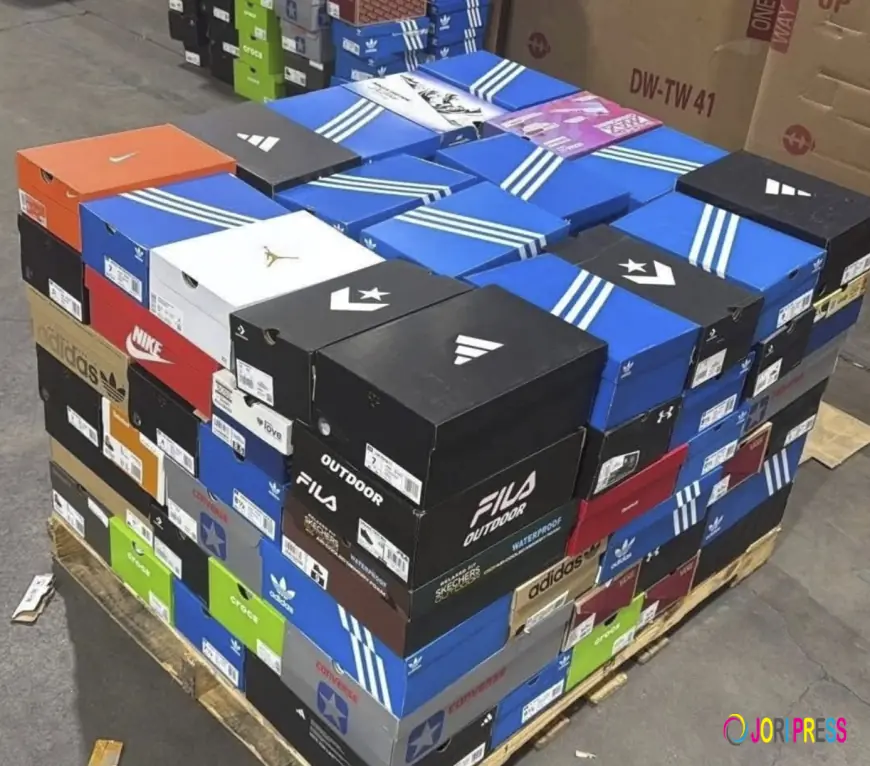
Buying a liquidation pallet of shoes sounds simple: pay one price, get dozens of pairs, resell them for a profit. In practice, it’s messier and more interesting than that. Here’s what side-hustlers and small resellers should actually expect.
What’s really inside a return pallet
Most shoe pallets come from three sources: customer returns, overstock, or shelf pulls. Returns are the least predictable. Some pairs are brand new, still tagged, returned because of a sizing mistake. Others are worn, missing a box, or have a defect the original buyer didn’t want. It’s common for a pallet to contain a mix of resale-ready pairs, “fixable” pairs that need cleaning or minor repair, and a handful that are only good for parts or donation.
A realistic split for many return pallets looks something like: a third in great condition, a third needing some work, and a third that’s a loss. Going in with that expectation rather than assuming every pair is a like-new deal saves a lot of frustration.
Manifested vs. unmanifested pallets
A manifested pallet comes with an itemized list: brands, styles, sizes, and sometimes condition notes. An unmanifested pallet is a mystery box — you don’t know what you’re getting until it arrives.
Manifested pallets cost more per unit, but they let you estimate resale value and plan storage and listings before the pallet even ships. That predictability is valuable for beginners still learning what sells.
Unmanifested pallets are cheaper and can occasionally turn up a great mix, but the variance is high. They’re better suited to buyers who already know their market well enough to handle surprises and who have space to store items that don’t sell right away.
Grading and cleaning for resale
Once the pallet arrives, sorting is the real work. A simple grading system helps: New/Like New, Good (minor wear, cleanable), Fair (visible wear, sell as budget or “pre-owned”), and Parts/Donate (not resalable as-is).
Cleaning is often just a matter of a magic eraser for scuffs, a soft brush and mild soap for fabric uppers, and baking soda to pull odor out of insoles. Missing laces or insoles are cheap fixes that can move a pair from “Fair” to “Good.” The goal isn’t to make everything look brand new it’s to accurately represent condition so buyers aren’t surprised, which also protects your seller rating.
The real cost of flipping a pallet
The sticker price of a pallet is only part of the cost. Freight shipping for a full pallet can run into the hundreds of dollars, especially for cross-country delivery. Add in storage space (a spare room, garage, or storage unit), cleaning supplies, packaging materials, and the time spent sorting, photographing, and listing each pair.
Platform fees matter too resale marketplaces typically take a percentage of each sale, and shipping costs for individual orders add up. When resellers calculate ROI honestly, factoring in every cost and the hours spent, the margin is often smaller than the pallet’s “estimated retail value” suggests.
The bottom line
Shoe pallets can be a legitimate way to build reselling inventory, but they reward patience and realistic math over excitement. Knowing the difference between manifested and unmanifested options, budgeting for freight and fees, and having a simple grading system in place before the pallet arrives are what separate a profitable flip from a garage full of unsold shoes.
What's Your Reaction?
 Like
0
Like
0
 Dislike
0
Dislike
0
 Love
0
Love
0
 Funny
0
Funny
0
 Angry
0
Angry
0
 Sad
0
Sad
0
 Wow
0
Wow
0