









































10 Mistakes to Avoid When Hiring a Nanny
Avoid common nanny hiring mistakes with this practical guide covering experience, background checks, references, interviews, duties, salary, safety, and childcare expectations.

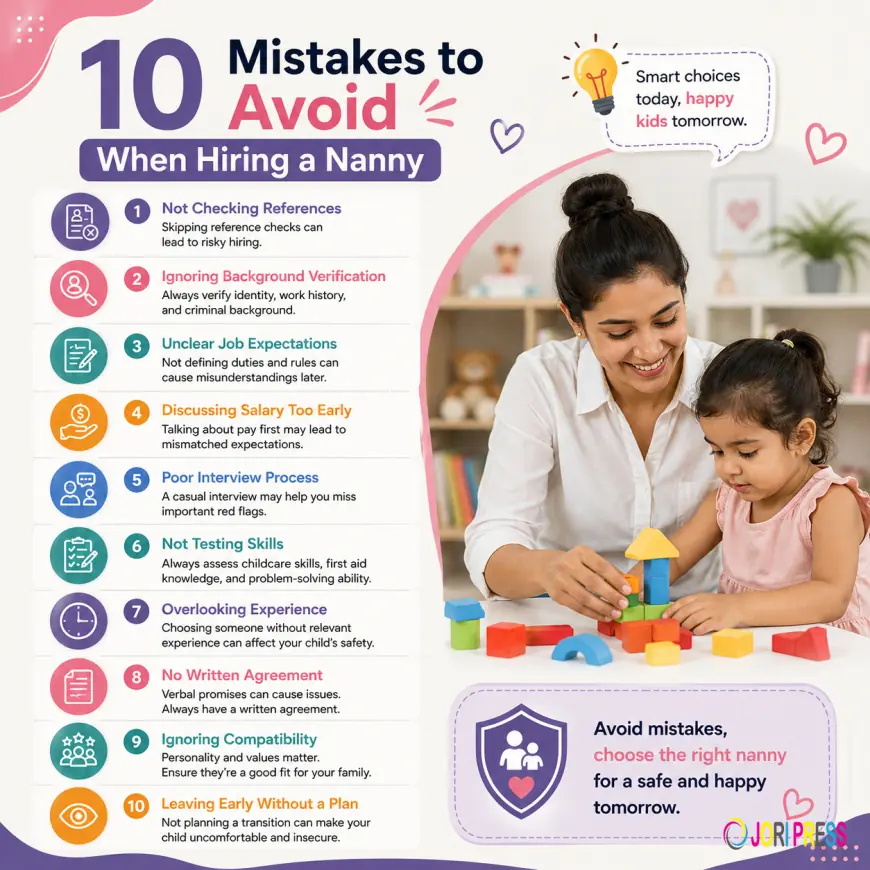
Finding someone to take care of your child is a big decision. A nanny may spend several hours with your child every day, help with meals and routines, accompany them to school or activities, and sometimes become an important part of your household.
Because of this, choosing a nanny should involve more than simply finding someone who says they enjoy working with children. You need to consider their experience, reliability, communication, safety awareness, and ability to fit into your family's routine.
Many parents make hiring decisions quickly because they need childcare support immediately. However, rushing the process can lead to misunderstandings or problems later.
Here are 10 common mistakes to avoid when hiring a nanny, along with simple ways to make the process safer and more organised.
1. Hiring Without Clearly Defining Your Requirements
One of the most common mistakes is starting the search without knowing exactly what you need.
Before speaking to candidates, make a list of your requirements.
Think about:
-
Your child's age
-
Working hours
-
Number of children
-
Meal preparation
-
School pickups
-
Homework assistance
-
Playtime and activities
-
Travel requirements
-
Weekend or evening support
-
Any special childcare needs
For example, someone who is comfortable looking after a toddler may not have the experience required to manage two school-going children.
A clear job description helps you find candidates who actually match your needs.
2. Choosing Someone Only Because They Are Affordable
Budget is obviously an important consideration, but choosing a nanny only because they ask for a lower salary can create problems.
A cheaper option may not have the experience, availability, or skills your family requires.
Instead of looking only at salary, consider the overall value the candidate offers. Experience, reliability, childcare skills, and responsibilities should all be part of your decision.
Also discuss salary openly before hiring. Make sure both sides understand the working hours, holidays, leave, overtime, and additional duties.
This can prevent disagreements later.
3. Skipping Identity and Background Verification
A nanny will have regular access to your home and your child. For this reason, basic identity and background checks should not be ignored.
Ask the candidate to provide appropriate identification and relevant contact details. Check their previous employment information and contact references where possible.
Depending on your location and circumstances, police verification may also be appropriate.
Verification is not about automatically distrusting someone. It is about making a responsible decision based on information rather than assumptions.
Taking a little time to verify important details can give parents greater confidence before hiring.
4. Not Checking Previous References
A candidate may give an excellent interview, but previous employers can provide another perspective.
If references are available, contact them and ask simple, work-related questions.
For example:
-
How long did the nanny work with your family?
-
What responsibilities did they handle?
-
Were they punctual?
-
How did they interact with your children?
-
Were they patient?
-
Did they follow household instructions?
-
Why did the employment end?
-
Would you hire them again?
You don't need to ask private or unnecessary questions. Focus on their reliability, childcare experience, and professional behaviour.
5. Focusing Only on Experience
Experience is important, but it should not be the only thing you consider.
Someone may have several years of experience but still not be the right match for your child or family.
Pay attention to qualities such as:
-
Patience
-
Communication
-
Kindness
-
Responsibility
-
Emotional maturity
-
Ability to remain calm
-
Willingness to follow instructions
Childcare can involve unexpected situations. A nanny needs to be able to respond calmly instead of becoming overwhelmed.
The right combination of experience and personality is often more valuable than experience alone.
6. Not Conducting a Proper Interview
Some parents hire quickly after a short conversation without asking enough questions.
A proper interview can help you understand how a candidate thinks and handles different situations.
Instead of only asking about their previous jobs, ask practical questions.
For example:
“What would you do if my child refuses to eat?”
“How would you handle a child's tantrum?”
“What would you do if my child gets hurt while playing?”
“How would you keep a young child engaged during the day?”
Their answers can help you understand their approach to childcare.
You should also explain your expectations during the interview so that the candidate can decide whether the job is suitable for them.
7. Ignoring Your Child's Comfort
Parents often focus so much on the nanny's qualifications that they forget one important factor: how their child feels around the person.
If possible, introduce the candidate to your child before making the final decision.
Observe their interaction.
Does the nanny speak respectfully?
Do they listen to your child?
Are they patient?
Do they allow the child to become comfortable instead of forcing interaction?
Children may need time to adjust to a new person. However, their comfort and reactions should still be considered when making the final decision.
8. Failing to Discuss Responsibilities Clearly
A nanny's responsibilities should never be based on assumptions.
Before hiring, clearly explain what the job includes.
For example, does the nanny need to:
-
Prepare meals?
-
Wash children's dishes?
-
Help with homework?
-
Pick up the child from school?
-
Organise play activities?
-
Do children's laundry?
-
Travel with the family?
-
Stay late occasionally?
There can be a big difference between childcare and general household work.
If additional duties are expected, discuss them before the person starts working. Clear expectations make the arrangement fairer for both sides.
9. Forgetting to Discuss Safety and Emergency Procedures
Parents should explain what the nanny should do in an emergency.
Share important information such as:
-
Parents' phone numbers
-
Emergency contacts
-
Doctor's contact details
-
Child's allergies, where applicable
-
Important medical information
-
School contact details
-
Emergency instructions
If the nanny will take the child outside, discuss where they can go and what safety rules they need to follow.
You should also explain household safety rules, including rules around cooking equipment, balconies, swimming pools, medicines, pets, and other potential hazards.
A nanny should know what to do if something unexpected happens.
10. Hiring Without a Trial Period
Even after a good interview and reference checks, you may not know whether the arrangement will work until the nanny actually spends time with your family.
A short, mutually agreed trial period can be helpful.
During the trial, observe:
-
Punctuality
-
Communication
-
Patience
-
Interaction with your child
-
Ability to follow instructions
-
Cleanliness
-
Safety awareness
-
Overall reliability
Your child may also need some time to adjust. Don't expect everything to be perfect on the first day.
The purpose of a trial period is to see whether the nanny and family can work comfortably together.
How Helper4u Can Help With Finding Domestic Support
Finding suitable childcare or domestic support through personal contacts can sometimes be difficult, particularly when parents need someone within a specific location or schedule.
Helper4u provides a platform where families can explore domestic workers and employment options based on their requirements. It can make the initial search process more organised and give families another option beyond word-of-mouth recommendations.
However, parents should still take responsibility for proper screening. Identity verification, references, interviews, and clear discussions about responsibilities remain important before hiring anyone to care for a child.
A Simple Nanny Hiring Checklist
Before finalising your decision, ask yourself:
Have I clearly explained the job?
Have I checked the candidate's experience?
Have I verified their identity?
Have I contacted previous employers?
Have I conducted a proper interview?
Have I introduced them to my child?
Have we discussed salary and working hours?
Have we agreed on responsibilities?
Have I explained emergency procedures?
Have I considered a trial period?
If you can answer yes to these questions, you are likely approaching the hiring process more carefully.
Conclusion
Hiring a nanny is an important decision because you are choosing someone who will spend significant time with your child and may become part of your family's daily routine.
Avoiding common mistakes can make the process much easier. Don't rush because you need immediate childcare support. Take time to understand your requirements, check the candidate's background, speak with references, conduct a proper interview, and observe how they interact with your child.
It is equally important to discuss salary, working hours, responsibilities, safety rules, and emergency procedures before the job begins.
Most importantly, remember that a good nanny-family relationship depends on trust, respect, communication, and clear expectations. Taking a careful approach at the beginning can help create a safer and more comfortable environment for both your child and the person caring for them.
FAQs
1. What should I check before hiring a nanny?
Check their childcare experience, identity, references, communication skills, reliability, and understanding of basic child safety.
2. Should I contact a nanny's previous employers?
Yes. Previous employers can provide useful information about the candidate's reliability, childcare skills, punctuality, and behaviour.
3. Should I conduct a background check on a nanny?
Yes. Basic identity and relevant background verification are sensible precautions when someone will regularly care for your child.
4. Is a trial period useful when hiring a nanny?
Yes. A mutually agreed trial period lets parents observe the nanny's interaction with their child, reliability, communication, and ability to follow household expectations.
5. How can I find a suitable nanny?
You can ask trusted contacts for recommendations or explore domestic-help platforms such as Helper4u. Regardless of how you find a candidate, conduct appropriate screening and verification before hiring.
What's Your Reaction?
 Like
0
Like
0
 Dislike
0
Dislike
0
 Love
0
Love
0
 Funny
0
Funny
0
 Angry
0
Angry
0
 Sad
0
Sad
0
 Wow
0
Wow
0