





































ZFCERA Ceramic Injection Molded Parts for Precision Components

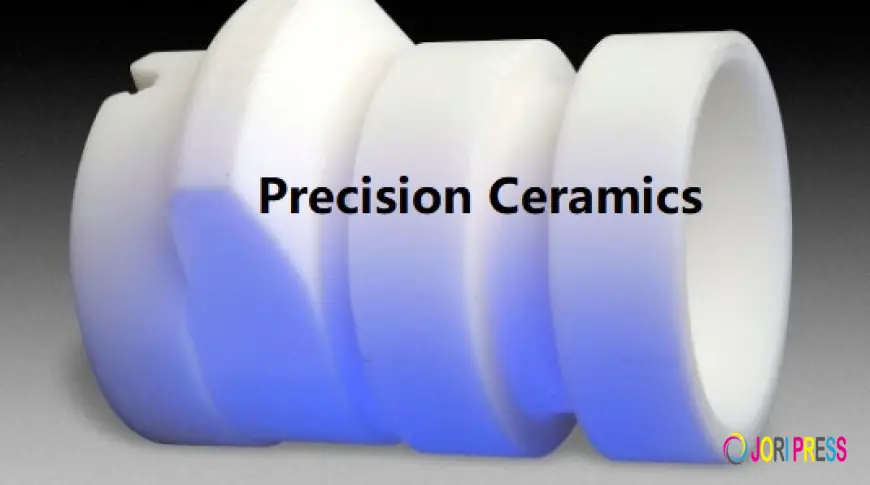
As industries continue to demand smaller, more precise, and more reliable components, advanced manufacturing methods are becoming increasingly important. Ceramic Injection Molded Parts offer an effective solution for producing complex technical components with consistent dimensions and carefully controlled geometries. By combining ceramic material properties with an efficient molding process, Ceramic Injection Molded Parts can support applications that require excellent insulation, heat resistance, chemical stability, and mechanical reliability. This manufacturing approach is particularly useful when traditional machining methods may involve excessive material waste, complicated processing steps, or limitations in producing intricate shapes.
Understanding the Ceramic Injection Molding Process
Ceramic injection molding begins with the preparation of a carefully formulated feedstock, typically consisting of fine ceramic powder combined with suitable binding materials. The mixture is heated and injected into a precisely designed mold cavity, allowing the material to fill detailed structures and complex geometries.
After molding, the binder is gradually removed through a controlled debinding process. The shaped component is then sintered at high temperatures, allowing the ceramic particles to bond and form a dense, stable structure. Depending on the material and application, additional finishing processes may be applied to achieve the required dimensions and surface quality.
This production method is especially useful for components with intricate features, thin walls, small dimensions, or shapes that would be difficult to manufacture economically through conventional machining. Consistent mold design and carefully managed processing parameters are essential for maintaining repeatable quality across production batches.
ZFCERA Advanced Molding and Material Selection
Material selection has a direct influence on the final performance of an injection-molded ceramic component. Alumina is widely used because of its electrical insulation, hardness, thermal stability, and resistance to many chemical environments. Zirconia is another option when higher toughness and mechanical strength are important.
Other technical ceramics may be selected for applications involving extreme temperatures, wear, thermal shock, or specialized electrical requirements. By considering the actual working environment before production begins, engineers can identify a suitable ceramic composition and develop a manufacturing process around the component's intended purpose.
The flexibility of injection molding also makes it possible to produce customized designs. Engineers can work with manufacturers to adjust dimensions, structural details, tolerances, and surface requirements according to technical drawings. This level of customization can be valuable for industries developing specialized equipment or upgrading existing systems.
Advantages for Complex Industrial Components
One of the main advantages of ceramic injection molding is its ability to create complicated shapes with good repeatability. Conventional machining can become difficult when components include narrow channels, small holes, intricate curves, or multiple functional features. Injection molding can simplify the production of such structures by forming much of the geometry directly within the mold.
The process can also reduce material waste compared with subtractive manufacturing methods. Once the mold and production parameters have been properly established, manufacturers can produce multiple components with consistent shapes and dimensions.
For industries that require large quantities of relatively small ceramic components, this manufacturing approach may provide a practical balance between precision and production efficiency. It can also help reduce the need for extensive post-processing, depending on the complexity and tolerance requirements of the final design.
Applications in Modern Technology
Technical ceramic injection molding has applications across many industries. Electronics and semiconductor equipment can benefit from ceramic components that provide electrical insulation and dimensional stability. Medical and laboratory devices may require specialized ceramic structures with clean surfaces and reliable material performance.
The technology can also be applied in automation equipment, sensors, optical systems, energy devices, and precision machinery. In environments involving heat, chemicals, or electrical stress, carefully selected ceramic materials can offer advantages over conventional plastics and metals.
As industrial equipment continues to become more compact, the ability to manufacture small and complex components is becoming increasingly valuable. Injection molding provides designers with greater freedom to develop detailed structures while maintaining repeatable production standards.
Building Reliable Solutions Through Precision
Successful ceramic component production requires more than simply selecting a suitable material. Mold design, feedstock preparation, injection parameters, debinding, sintering, and final inspection all contribute to the quality of the finished product. Small variations during any stage can influence shrinkage, density, dimensional accuracy, or surface condition.
For this reason, close cooperation between product designers and ceramic manufacturers can help improve development efficiency. Technical drawings, operating conditions, production volumes, and performance expectations should be considered together before manufacturing begins.
For companies seeking advanced ceramic manufacturing solutions, Ceramic Injection Molded Parts can provide an efficient way to produce detailed components with stable performance and consistent quality. From electronics and medical equipment to automation and energy applications, this technology offers valuable design flexibility for demanding industrial projects.
What's Your Reaction?
 Like
0
Like
0
 Dislike
0
Dislike
0
 Love
0
Love
0
 Funny
0
Funny
0
 Angry
0
Angry
0
 Sad
0
Sad
0
 Wow
0
Wow
0