






































Why Is Mobile Application Platform Selection Important?

Introduction
Mobile applications help businesses connect with customers, improve services, and simplify daily operations. However, building a successful application requires careful planning and the right technology. Selecting a suitable mobile application platform influences development costs, performance, security, user experience, and future scalability. Businesses must evaluate their goals and audience before deciding which platform best supports their needs.
Reaching the Right Audience
The selected platform determines which users can access an application. Android supports a wide range of devices and price points, making it suitable for businesses targeting diverse audiences. iOS is valuable for companies focusing on Apple users. Some businesses benefit from launching on both platforms to reach more customers. Researching customer preferences, geographical markets, and device usage helps companies choose an appropriate development strategy and improve their chances of reaching the right audience.
Choosing Native or Cross-Platform Development
Businesses can choose native or cross-platform development according to their requirements. Native applications are built specifically for an operating system and can use its features effectively. Developers may use Swift for iOS development and suitable technologies for Android applications.
Cross-platform frameworks such as Flutter and React Native allow teams to develop applications for Android and iOS using a largely shared codebase. However, the best option depends on application complexity, performance requirements, integrations, and available resources. Mobile Application Developers can evaluate these factors before recommending a suitable approach.
Managing Budget and Development Time
Platform selection directly influences development expenses, staffing, testing, and delivery schedules. Maintaining separate native applications may require additional resources, whereas cross-platform development can reduce some costs. Nevertheless, the final budget depends on features, integrations, security requirements, and design complexity. Businesses should evaluate both initial development expenses and long-term maintenance costs. Choosing a platform that matches project requirements helps companies manage resources effectively without compromising essential functionality or application quality.
Improving Performance, Security, and User Experience
A successful application should provide a smooth, responsive, and accessible experience. Platform capabilities affect features such as notifications, camera access, location services, and device authentication. Developers must consider loading speed, screen sizes, accessibility, and operating system guidelines during development and testing.
Security is equally important when applications handle personal information, payments, or confidential business data. Appropriate authentication, encrypted communication, permission controls, and regular updates help protect users. Testing across supported devices and operating system versions also helps identify compatibility problems before launch.
Supporting Future Growth and Maintenance
Businesses should select a platform that supports future expansion. As customer demand increases, applications may require additional features, cloud integration, analytics, and connections with external services. Evaluating framework support, developer availability, and compatibility with planned improvements helps businesses prepare for changing requirements. Regular maintenance also helps resolve bugs, strengthen security, and maintain compatibility with newer devices. A flexible platform makes it easier to adapt applications as business objectives and customer expectations evolve.
How CodeRegime Technologies Can Help
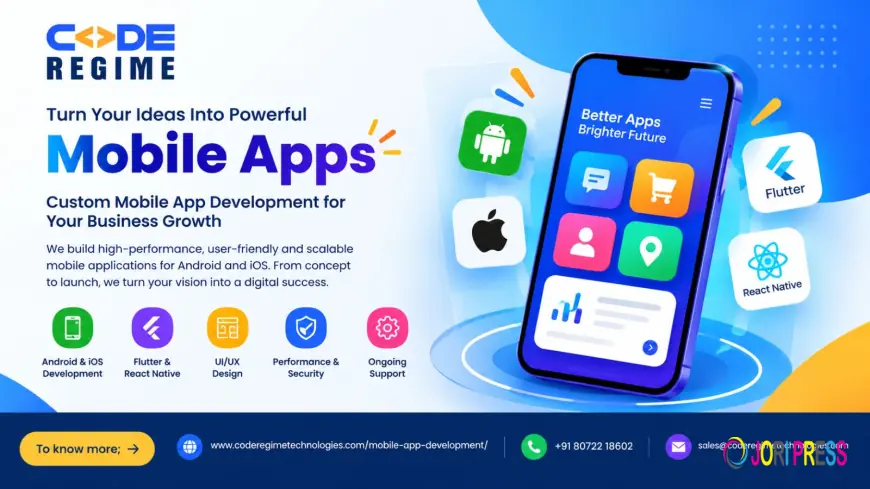
CodeRegime Technologies provides custom mobile app development services using technologies such as Flutter, React Native, and Swift. Its services cover planning, design, development, testing, deployment, and technical support. By understanding business objectives, target audiences, and functional requirements, the team can help businesses evaluate platform options and develop applications suited to their needs. This approach supports reliable performance, practical functionality, and sustainable digital growth.
Conclusion
Mobile application platform selection is important because it affects audience reach, development costs, performance, security, and scalability. Businesses should consider their goals, customer preferences, essential features, budget, and future plans before making a decision. Experienced Mobile Application Developers at Code Regime Technologies can help businesses evaluate technical options and choose a suitable platform. With careful planning and the right development approach, businesses can deliver valuable mobile experiences, strengthen customer relationships, and support long-term growth.
What's Your Reaction?
 Like
0
 Dislike
0
 Love
0
 Funny
0
 Angry
0
 Sad
0
 Wow
0