








































Why Indian Restaurants Use Different Onion Cuts for Different Gravies in NJ
Discover why Indian restaurants in New Jersey use different onion cuts for different gravies. Learn how chopped, sliced, and pureed onions influence flavor, texture, sweetness, and consistency in authentic Indian cuisine.
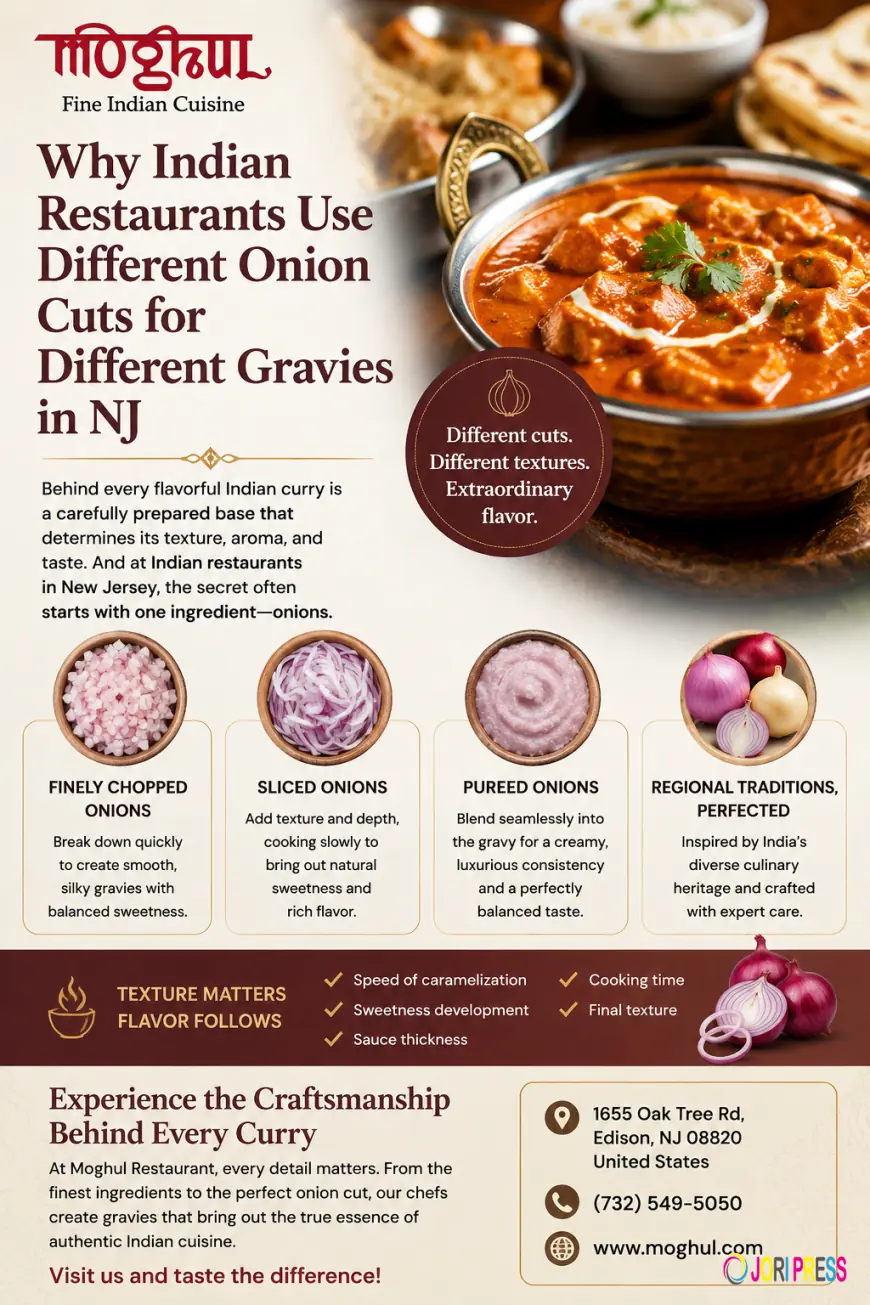
Behind every flavorful Indian curry is a carefully prepared base that determines its texture, aroma, and taste. Among the most important ingredients in this process is the onion. While many diners may not notice it, chefs pay close attention to how onions are cut before they are cooked. This attention to detail is one reason Indian restaurants in New Jersey are able to create a wide variety of gravies with distinct characteristics. Different onion cuts influence how the ingredient cooks, how much sweetness it develops, and how it contributes to the final consistency of a dish. Understanding these techniques offers a deeper appreciation for the craftsmanship involved in Indian cooking.
Why Onion Preparation Matters
Onions serve as the backbone of many Indian gravies. They provide body, natural sweetness, and depth of flavor that help balance spices and other ingredients. However, onions do not behave the same way in every recipe. Their impact depends largely on how they are prepared before they enter the pan. A finely chopped onion cooks differently from a sliced onion, and a pureed onion creates a completely different result altogether. By adjusting the size and style of the cut, chefs can control how the onion interacts with the other ingredients and how the gravy develops throughout the cooking process.
Finely Chopped Onions for Smooth Sauces
Many popular Indian curries require a rich and smooth texture. To achieve this result, chefs often use finely chopped onions that break down easily during cooking. As these small pieces cook, they soften quickly and blend into the sauce. Their natural sugars caramelize more evenly, contributing both sweetness and complexity to the gravy. This technique is commonly used when preparing dishes that require a silky consistency and a refined mouthfeel. The result is a sauce that coats ingredients evenly and delivers balanced flavor in every bite.
Sliced Onions for Richer Texture
Some gravies benefit from additional texture and a more rustic appearance. In these cases, chefs may choose sliced onions instead of finely chopped ones. Because larger pieces take longer to break down, they retain some structure during cooking. This creates a heartier gravy with visible layers of flavor and texture. The slower cooking process can also influence how sweetness develops, producing a different flavor profile than gravies made with smaller onion pieces. These subtle differences help create the variety diners experience across Indian menus.
Pureed Onions for Creamy Consistency
For certain dishes, chefs use pureed onions to create exceptionally smooth gravies. The puree blends seamlessly with spices, tomatoes, and other ingredients, forming a rich foundation for the sauce. This approach allows flavors to combine more thoroughly while producing a luxurious texture. The onions become fully integrated into the gravy rather than remaining as separate pieces. Many chefs rely on this method when preparing dishes that emphasize creaminess and consistency, ensuring that every spoonful delivers the same balanced flavor experience.
Regional Traditions Shape Onion Techniques
India's diverse culinary heritage has led to countless regional cooking styles, each with its own approach to gravy preparation. These traditions often influence how onions are cut and cooked at Indian restaurants in New Jersey. Some regions favor lighter sauces with finely prepared ingredients, while others embrace richer gravies that incorporate larger onion pieces for texture. These variations contribute to the remarkable diversity found within Indian cuisine. Diners exploring different regional specialties may notice these distinctions, even if they are not immediately aware of the role onion preparation plays in creating them.
The Connection Between Texture and Flavor
Texture and flavor are closely linked in cooking. The way onions are cut affects not only the appearance of a gravy but also how flavors are released during the cooking process.
Several factors are influenced by onion preparation:
-
Speed of caramelization
-
Sweetness development
-
Sauce thickness
-
Cooking time
-
Final texture
These elements work together to shape the overall character of a dish. Even small changes in preparation can create noticeable differences in the final result.
Appreciating the Details Behind Every Curry
Many guests who enjoy a best Indian buffet NJ experience focus on the variety of dishes available, but much of that variety comes from subtle techniques used during preparation. Onion cutting is one of those techniques that often goes unnoticed despite its significant impact on flavor and texture.
Professional chefs understand that great cooking depends on mastering details. By carefully selecting the right onion cut for each recipe, they can create gravies that complement specific ingredients and cooking styles.
Discover the Craftsmanship Behind Authentic Indian Cuisine!
The next time you enjoy a flavorful Indian curry, take a moment to appreciate the preparation that went into creating it. Different onion cuts help determine how a gravy tastes, feels, and develops throughout the cooking process. From finely chopped onions that create smooth sauces to sliced and pureed variations that offer unique textures, each technique serves a specific purpose. This attention to detail is part of what makes dining at Indian restaurants in New Jersey such a rewarding experience, allowing guests to enjoy the depth, complexity, and tradition that define authentic Indian cuisine.
What's Your Reaction?
 Like
0
Like
0
 Dislike
0
Dislike
0
 Love
0
Love
0
 Funny
0
Funny
0
 Angry
0
Angry
0
 Sad
0
Sad
0
 Wow
0
Wow
0