








































The History of Organic Cotton: From Traditional Farming to Sustainable Textile Innovation
Organic cotton has become an important material in the global textile industry as consumers and manufacturers increasingly prioritize sustainability. Known for its natural fibers and environmentally conscious production methods

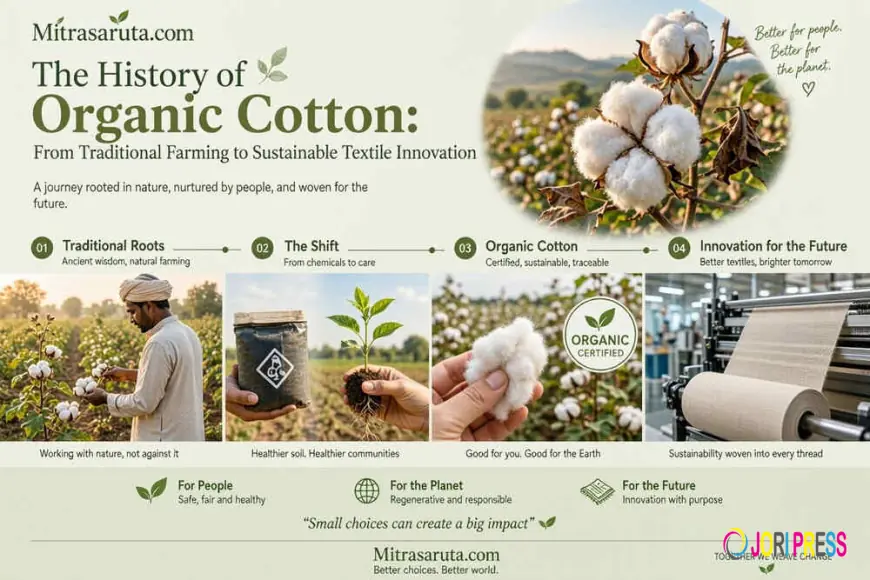
Organic cotton has become an important material in the global textile industry as consumers and manufacturers increasingly prioritize sustainability. Known for its natural fibers and environmentally conscious production methods, organic cotton represents an alternative to conventional cotton farming. However, its development did not happen overnight. Its history reflects centuries of traditional agricultural knowledge, changing farming practices, environmental awareness, and technological innovation.
Understanding the history of organic cotton helps explain how this natural fiber evolved from traditional cultivation methods into a significant part of modern sustainable textile manufacturing.
1. The Ancient Origins of Cotton Cultivation
Cotton has been cultivated for thousands of years in different parts of the world. Historical evidence suggests that early cotton production developed independently in regions such as the Indian subcontinent, Africa, and the Americas.
Ancient communities discovered that cotton fibers could be spun into yarn and woven into comfortable fabrics. In India, cotton textiles became an important part of daily life and international trade. Meanwhile, civilizations in Central and South America also developed sophisticated cotton-growing and weaving traditions.
Early cotton farmers relied primarily on natural agricultural methods. They used locally available seeds, organic matter, crop residues, and traditional irrigation techniques to maintain soil fertility. Synthetic pesticides and chemical fertilizers did not exist, so farming depended heavily on ecological knowledge and seasonal conditions.
Although these practices were not formally identified as organic agriculture, many traditional cotton-growing systems shared characteristics with modern organic farming.
2. The Industrial Revolution and Conventional Cotton Production
The Industrial Revolution significantly transformed the cotton industry. During the eighteenth and nineteenth centuries, technological developments such as mechanical spinning machines and power looms increased textile production capacity.
As demand for cotton fabrics expanded, farmers and manufacturers needed larger quantities of raw materials. Cotton cultivation became increasingly commercialized, and agricultural systems gradually shifted toward higher production volumes.
During the twentieth century, the introduction of synthetic fertilizers, chemical pesticides, and modern agricultural machinery changed cotton farming considerably. These technologies helped improve productivity and control certain agricultural problems.
However, intensive farming also created environmental concerns. Excessive chemical applications, soil degradation, water pollution, and biodiversity loss became important issues in some cotton-producing regions.
These challenges encouraged farmers, environmental organizations, and textile manufacturers to reconsider traditional agricultural practices and explore more sustainable production methods.
3. The Emergence of Organic Cotton Farming
The modern organic cotton movement gained attention during the late twentieth century as environmental awareness increased. Farmers and sustainability advocates began promoting agricultural systems that reduced dependence on synthetic chemicals and protected natural resources.
Organic cotton farming focuses on maintaining healthy soil, supporting biodiversity, and using environmentally responsible agricultural practices. Instead of relying on conventional synthetic pesticides and fertilizers, organic farmers use approaches such as crop rotation, composting, biological pest management, and natural soil improvement.
Crop rotation is particularly important because it helps maintain soil structure, improve nutrient balance, and reduce the buildup of certain pests and diseases.
The movement also encouraged greater awareness of water management and responsible farming practices. Organic cotton became increasingly attractive to textile businesses seeking materials that aligned with environmental and ethical production goals.
4. The Development of Organic Cotton Standards and Certification
As demand for organic cotton increased, the textile industry needed reliable ways to verify product claims. Certification systems were developed to establish production requirements, improve transparency, and strengthen consumer confidence.
One important development was the introduction of international organic textile standards. The Global Organic Textile Standard (GOTS) became widely recognized for its comprehensive approach to organic textile processing.
GOTS evaluates more than the agricultural origin of cotton. It also addresses environmental management, chemical inputs, processing requirements, and social criteria throughout the textile supply chain.
Other certification programs, including the Organic Content Standard (OCS), provide systems for verifying and tracking organic material content in textile products.
These standards help manufacturers, suppliers, retailers, and consumers identify products made with verified organic fibers. They also encourage better traceability and responsible supply chain management.
5. Organic Cotton in Modern Textile Manufacturing
Today, organic cotton is used in numerous textile applications, including clothing, towels, bedding, baby products, and home furnishings.
Its natural softness, breathability, and versatility make it suitable for a wide range of fabric constructions. Manufacturers can process organic cotton into different yarn counts, woven fabrics, knitted materials, and blended textile products.
Modern spinning and weaving technologies have also improved the efficiency and consistency of organic cotton processing. Manufacturers can produce high-quality textiles while following applicable organic processing requirements.
In addition, digital supply chain management, improved fiber testing, and traceability systems help businesses monitor raw materials and production processes more effectively.
For textile manufacturers, organic cotton offers an opportunity to serve customers who value product quality, material transparency, and environmental responsibility.
6. Environmental and Social Benefits of Organic Cotton
Organic cotton is associated with several potential environmental benefits. Its farming systems prohibit most synthetic pesticides and fertilizers, encourage soil health, and support biodiversity through more diverse agricultural practices.
Depending on local conditions and farming methods, organic cotton production may also contribute to improved water management and reduced chemical pollution.
Social considerations are another important part of the organic cotton industry. Responsible sourcing programs and recognized certification standards can encourage better working conditions, supply chain transparency, and responsible business practices.
Nevertheless, organic cotton is not automatically impact-free. Water consumption, transportation, processing energy, and land requirements still influence the overall environmental footprint of textile products. Responsible management is therefore essential throughout the entire supply chain.
7. The Future of Organic Cotton and Sustainable Innovation
The future of organic cotton will likely be shaped by continued innovation in agriculture, textile processing, and supply chain management.
Farmers are exploring improved crop varieties, regenerative agricultural practices, efficient irrigation systems, and biological pest control. Meanwhile, manufacturers are investing in cleaner processing technologies, waste reduction, and more efficient production methods.
Growing consumer interest in sustainable fashion is also encouraging brands to consider organic cotton as part of their material sourcing strategies.
For suppliers and manufacturers, maintaining consistent fiber quality, reliable availability, transparent certification, and competitive pricing will remain essential to long-term growth.
Conclusion
The history of organic cotton demonstrates how traditional agricultural knowledge can influence modern textile innovation. From ancient cotton cultivation to contemporary certified production systems, this natural fiber has developed alongside changing consumer expectations and environmental priorities.
Today, organic cotton represents more than an alternative raw material. It reflects a broader movement toward responsible agriculture, transparent manufacturing, and sustainable textile development. As technology and environmental awareness continue to advance, organic cotton is expected to maintain an important role in shaping the future of the global textile industry.
What's Your Reaction?
 Like
0
 Dislike
0
 Love
0
 Funny
0
 Angry
0
 Sad
0
 Wow
0