

























What Makes NFT Gaming Platform Development Essential for Building Successful Web3 Games

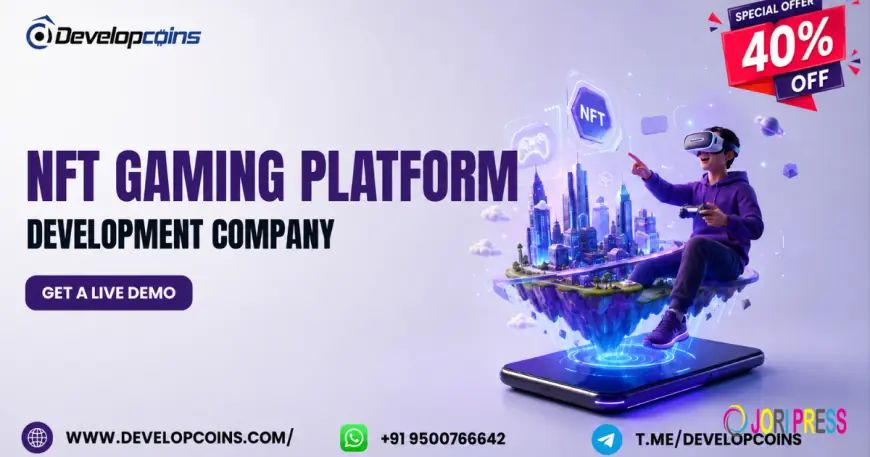
Players want more than a fun few hours anymore. They want to own what they earn, carry it between worlds, and trade it for something real. That expectation is reshaping how studios build games, and it's why NFT gaming platform development has become one of the most active areas in blockchain right now.
Building a Web3 game Development takes more than bolting NFTs onto an existing title. The hard part is making blockchain support the gameplay instead of getting in its way.
How NFT Games Differ From Traditional Games
In a traditional game, the publisher controls everything. You buy a skin or a weapon, but you never really own it. The moment the publisher shuts the servers down, it's gone.
Blockchain flips that. Smart contracts development defines how an asset gets created, transferred, and used, and ownership sits with the player, verifiable on-chain. That opens the door to collecting, trading, upgrading, and in some cases carrying assets across different games.
But ownership by itself won't make a game good. Players still need tight mechanics, real challenge, and a reason to log back in tomorrow.
Five Game Models Driving Web3 Innovation
Each genre uses NFTs differently, depending on how players engage and how the economy is built.
NFT RPG Games
RPGs already revolve around characters, gear, and progression, so NFTs fit naturally here. The catch: an NFT needs to do something in the game, not just sit in a wallet as a collectible.
NFT Strategy Games
Blockchain assets can represent characters, resources, or territory. Ownership adds a new layer to strategic decisions, especially when resources are genuinely scarce. Get the economy wrong, though, and financial incentive swallows the strategy.
NFT Card Games
Players build decks and hunt rare cards, and smart contracts guarantee that scarcity is real, not just claimed. Marketplaces then let players trade the cards they're allowed to trade.
NFT Battle Royale Games
Speed and competitive balance matter most here, so NFTs usually show up as characters, cosmetics, or optional weapons. Studios have to watch closely: ownership should never translate into an unfair edge in the match itself.
Metaverse Games
Metaverse games can extend NFT utility beyond individual gameplay sessions. Virtual land, avatars, collectibles, accessories, and digital experiences can become part of persistent virtual environments.
This is where metaverse game development plays a crucial role, as it focuses on building interconnected 3D worlds where players can interact, trade, and engage in real-time experiences powered by blockchain.
Why Platform Architecture Matters
A Web3 game needs solid infrastructure behind it: blockchain integration, smart contracts, NFT minting, wallets, marketplaces, authentication, game servers, analytics, and secure APIs.
Scale is the real test. A game that runs fine for a hundred players can buckle under a few thousand. Studios need to decide early what runs on-chain and what stays off-chain, because that decision shapes everything downstream.
Security matters just as much. A vulnerable smart contract, a compromised wallet, or a sloppy API can wreck both the platform and the trust players had in it.
Choosing the Right Development Partner
Picking an experienced NFT gaming platform development company changes the outcome. You want a team that treats blockchain as part of the game's design, not a feature bolted on at the end, one that understands how tokenomics, smart contracts, UX, security, and scalability fit together.
That process should start with the game itself: what it's for, who's playing it. From there the team can work out the blockchain architecture, NFT utility, marketplace features, and monetization model that actually fit.
This matters because every genre asks for something different. A card game leans on scarcity and marketplace mechanics. A metaverse game needs persistent worlds, avatar systems, and heavy multiplayer infrastructure.
The Future Is About Better Games, Not Just More NFTs
The long-term opportunity in Web3 gaming will depend on whether developers can deliver experiences that players genuinely enjoy. NFTs and blockchain should enhance ownership, identity, interoperability, and economic participation without compromising gameplay.
Projects exploring NFT RPG games, NFT strategy games, NFT card games, NFT battle royale games, and metaverse games demonstrate how diverse the Web3 gaming landscape can become. The next generation of successful platforms will likely be those that combine strong game design with thoughtful blockchain implementation.
Developcoins focuses on building customized Web3 gaming solutions around different gameplay concepts and business requirements, helping businesses explore blockchain-powered gaming with scalable technology and meaningful digital asset utility.
What's Your Reaction?
 Like
0
Like
0
 Dislike
0
Dislike
0
 Love
0
Love
0
 Funny
0
Funny
0
 Angry
0
Angry
0
 Sad
0
Sad
0
 Wow
0
Wow
0