




































What Actually Matters When Choosing a Personal Trainer Course?
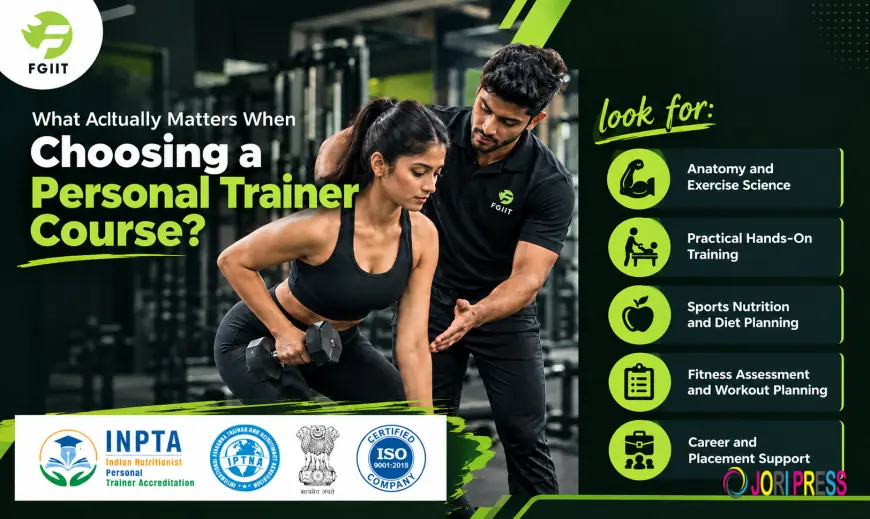
Picking a personal trainer course can feel confusing when every brochure sounds the same. This guide covers the five things that really matter: anatomy and exercise science, hands-on practice, nutrition knowledge, fitness assessment and workout planning, and honest career support.
Scroll through any fitness page and you will find dozens of personal trainer courses, each promising a quick certificate and a bright career. The choices can feel overwhelming, especially when every brochure sounds the same. So how do you tell a course that builds real skill from one that only hands out paper?
The answer lies in looking past the marketing and checking what you will actually learn and practise. Here are the five things worth examining before you spend your time and money.
Does the Course Teach Anatomy and Exercise Science Properly?
Everything a trainer does rests on understanding the body. If you do not know how muscles, joints, and energy systems work, you are guessing when you design a program or correct someone's form.
A solid course should cover:
- The major muscle groups and how they move the joints
- How the heart, lungs, and muscles respond to exercise
- Basic biomechanics, such as why a squat or deadlift is done a certain way
- How the body adapts to training over weeks and months
- Common movement mistakes and the injuries they can lead to
Ask to see the syllabus. If anatomy is squeezed into a single short session, that is a warning sign. Clients trust trainers to keep them safe, and safety starts with knowledge.
Will You Get Practical Hands-On Training?
Theory alone does not make a good trainer. You cannot learn to spot a rounded back, cue a movement, or adjust a client's grip from a video or a textbook. These skills come from doing them, again and again, with feedback.
Look for courses that include live demonstrations, supervised practice sessions, and chances to train real people. Online learning can be excellent for theory, but check how the course handles practical skills. Good programs use recorded demonstrations, video feedback on your form, case studies, or in-person workshops to fill that gap.
A useful question to ask: "How many hours will I spend practising, and who will give me feedback?"
Is Sports Nutrition and Diet Planning Included?
Clients rarely ask only about workouts. They want to know what to eat before training, how much protein is enough, and how to lose fat without feeling drained. A trainer who cannot answer these basics will lose credibility quickly.
A good course introduces:
- Macronutrients and micronutrients, and what each one does
- Hydration and meal timing around workouts
- Simple diet planning for fat loss, muscle gain, and general health
- Common myths about supplements and crash diets
It is also important to understand the limits. A personal trainer can share general healthy eating guidance, but clients with medical conditions should be referred to a qualified doctor or registered dietitian. The best courses teach this boundary clearly, because it protects both the client and the trainer.
Can You Learn Fitness Assessment and Workout Planning?
Two people can walk into a gym with the same goal and need completely different plans. That is why assessment comes before programming. A trainer should know how to gather a client's health history, measure their current fitness, check posture and movement, and set realistic goals.
From there, the course should show you how to turn that information into a plan. Look for training in:
- Client screening and readiness questionnaires
- Basic fitness tests for strength, flexibility, and endurance
- Setting short-term and long-term goals
- Progressive workout design, including sets, reps, and rest
- Adjusting a plan when a client plateaus, gets busy, or feels pain
If a course teaches only a fixed set of exercises without explaining how to personalise them, you will struggle when real clients arrive.
Where Does Career and Placement Support Fit In?
A certificate helps, but a career needs more. Ask what happens after the course ends. Does the institute offer guidance on writing a resume, preparing for gym interviews, building a client base, or starting online coaching? Are there connections with gyms and studios where graduates can begin?
Be careful with big promises. No institute can honestly guarantee a job, and claims of guaranteed placement deserve extra questions. Instead, look for realistic support, such as mentorship, internship or practice opportunities, and honest advice about the job market.
Reading reviews and speaking with past students is one of the best ways to check whether the support is real.
Should You Check Accreditation and Recognition?
Yes, and it takes just a few minutes. Find out which bodies accredit or recognise the certification, and whether gyms and employers you want to work for value it. Requirements and recognition can differ, so it is worth confirming directly with the institute and with a few local gyms before enrolling.
Also look at the trainers teaching the course. Do they have real coaching experience? Instructors who have worked with actual clients bring lessons that no textbook can offer.
Final Thoughts
Choosing a personal trainer course is a big step, and the best one is not always the cheapest or the flashiest. Look for strong anatomy and exercise science, plenty of hands-on practice, useful nutrition knowledge, solid training in assessment and programming, and honest career support. Ask questions, compare syllabi, and speak with past students before you decide.
What's Your Reaction?
 Like
0
Like
0
 Dislike
0
Dislike
0
 Love
0
Love
0
 Funny
0
Funny
0
 Angry
0
Angry
0
 Sad
0
Sad
0
 Wow
0
Wow
0