











































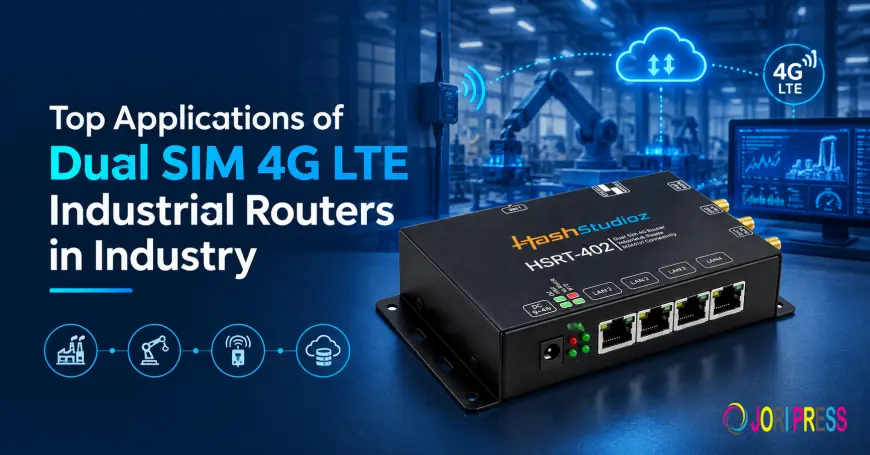
Top Applications of Dual SIM 4G LTE Industrial Routers in Industry
Explore the top applications of Dual SIM 4G LTE Industrial Routers in industrial automation, remote monitoring, IoT connectivity, and smart manufacturing.

In today's connected world, industries need reliable internet connectivity to monitor equipment, transfer data, and manage operations remotely. A network interruption can affect production, delay communication, and reduce operational efficiency. This is why a Dual SIM 4G LTE Industrial Router is becoming an important networking solution for industrial applications.
These routers use cellular connectivity to connect industrial devices, machines, sensors, and control systems to remote networks. With dual SIM support, they can use two SIM cards from the same or different network operators, depending on the router configuration, to improve connectivity options and support network failover.
From smart manufacturing and energy management to transportation and remote monitoring, Dual SIM 4G LTE Industrial Routers support a wide range of industrial applications.
In this blog, we will explore their key features, top industrial applications, and benefits for modern businesses.
What Is a Dual SIM 4G LTE Industrial Router?
A Dual SIM 4G LTE Industrial Router is a networking device designed to provide cellular internet connectivity for industrial equipment and IoT systems. It supports two SIM cards, allowing network switching or failover when configured and supported by the device.
Unlike standard consumer routers, industrial routers are designed for demanding environments and applications that require reliable connectivity, remote access, and secure data communication.
Depending on the model, these routers may support Ethernet, Wi-Fi, VPN connectivity, industrial protocols, and remote device management.
Key Features of a Dual SIM 4G LTE Industrial Router
-
Dual SIM support: Enables connectivity through two SIM cards and can support automatic failover or network selection.
-
4G LTE connectivity: Provides internet access in locations where wired broadband is unavailable or impractical.
-
Industrial design: Selected models are built to operate in demanding environments with wider temperature ranges and durable enclosures.
-
Ethernet connectivity: Connects PLCs, industrial computers, sensors, and other network-enabled equipment.
-
VPN support: Helps establish secure connections between remote devices and central networks.
-
Remote management: Allows administrators to monitor and configure supported devices remotely.
-
Flexible installation: Suitable for factories, remote sites, mobile equipment, and outdoor enclosures, depending on the model.
Top Applications of Dual SIM 4G LTE Industrial Routers in Industry
1. Smart Manufacturing and Industrial Automation
Modern manufacturing facilities use connected machines, programmable logic controllers (PLCs), sensors, and industrial computers to automate production processes. These devices need reliable communication with monitoring systems and centralized applications.
A Dual SIM 4G LTE Industrial Router can connect industrial equipment to remote monitoring platforms and supervisory systems, especially when a wired network is unavailable or a secondary connection is required.
Key applications include:
-
Remote monitoring of production equipment.
-
Connecting PLCs and industrial controllers to centralized systems.
-
Collecting machine performance and operational data.
-
Supporting remote diagnostics and maintenance.
-
Providing backup connectivity for critical network links.
Example: A manufacturing plant can use an industrial router to send machine status and production data to a remote operations team. If the primary cellular connection becomes unavailable, a configured SIM failover feature can help restore connectivity through the secondary network.
2. Industrial IoT (IIoT) and Remote Monitoring
Industrial IoT connects machines, sensors, gateways, and monitoring platforms to provide real-time visibility into industrial operations. However, many industrial assets are installed at locations where traditional internet infrastructure is limited.
A Dual SIM 4G LTE Industrial Router provides cellular connectivity for these systems, helping devices transmit operational data to cloud platforms or remote servers.
Key applications include:
-
Remote sensor monitoring.
-
Equipment status tracking.
-
Industrial data collection.
-
Remote access to IoT gateways.
-
Connecting distributed assets to cloud-based dashboards.
Example: A company operating equipment across multiple sites can use cellular routers to transmit sensor readings to a centralized dashboard. This helps teams identify performance changes and respond to potential issues without visiting every location.
3. Energy and Power Management
Energy infrastructure often includes remote substations, distribution panels, solar installations, and power monitoring equipment. Reliable communication helps operators monitor system performance and respond to faults.
Dual SIM 4G LTE Industrial Routers can provide network access for monitoring devices and control systems in locations where installing wired internet is expensive or difficult.
Key applications include:
-
Remote monitoring of electrical substations.
-
Solar power plant monitoring.
-
Energy meter data collection.
-
Monitoring industrial power systems.
-
Connecting remote energy management equipment.
Example: A solar power installation can use an industrial router to transmit inverter performance, energy production, and system alerts to a remote monitoring platform.
For critical infrastructure, router selection should consider cybersecurity, network availability, environmental ratings, and the requirements of the control system.
4. Oil, Gas, and Remote Industrial Sites
Oil and gas facilities, pipelines, pumping stations, and remote industrial installations may operate far from offices and conventional communication infrastructure. Cellular connectivity can provide a practical way to connect remote equipment when suitable mobile network coverage is available.
A Dual SIM 4G LTE Industrial Router can support communication between field equipment and centralized monitoring systems.
Key applications include:
-
Remote pipeline monitoring.
-
Monitoring pumping stations and storage facilities.
-
Transmitting pressure and temperature readings.
-
Remote access to industrial controllers.
-
Sending equipment status and alarm notifications.
Example: A pipeline monitoring system can send sensor data to a central control room through a cellular router. A second SIM may provide an alternative network connection if the first operator experiences an outage.
In hazardous locations, the complete installation must meet applicable safety and certification requirements. A standard industrial router should not automatically be assumed suitable for installation in an explosive atmosphere.
5. Transportation and Fleet Management
Transportation and logistics companies rely on connectivity to track vehicles, exchange operational information, and support fleet management applications. Industrial cellular routers can provide internet access for vehicle-mounted systems and mobile equipment.
Dual SIM support can be useful when vehicles travel across areas with different cellular coverage conditions.
Key applications include:
-
Fleet tracking and monitoring.
-
Vehicle telemetry and diagnostics.
-
Connecting onboard computers.
-
Supporting mobile surveillance systems.
-
Transmitting logistics and operational data.
Example: A logistics company can install compatible cellular routers in service vehicles to connect onboard equipment to its fleet management platform. Depending on the configuration, the router can switch to a secondary SIM when the primary cellular connection fails.
Actual connectivity depends on network coverage, supported LTE bands, antenna placement, and the mobile operators available along the route.
6. Water Treatment and Wastewater Management
Water treatment plants and wastewater facilities use sensors, pumps, meters, and controllers to manage water flow and monitor treatment processes. Some pumping stations and monitoring points are located away from the main control room.
Dual SIM 4G LTE Industrial Routers can connect remote monitoring equipment to centralized systems, reducing dependence on dedicated wired connections at every location.
Key applications include:
-
Monitoring water levels and flow rates.
-
Connecting pump controllers and PLCs.
-
Collecting water quality sensor readings.
-
Monitoring remote pumping stations.
-
Sending alerts for abnormal operating conditions.
Example: A municipal water management team can receive remote status updates from pumping stations through a cellular connection. This allows operators to identify equipment issues and coordinate maintenance more efficiently.
7. Smart Agriculture and Irrigation Systems
Large farms and agricultural installations increasingly use connected sensors and automated equipment to manage water, monitor environmental conditions, and improve resource utilization.
A Dual SIM 4G LTE Industrial Router can connect irrigation controllers, weather stations, and IoT gateways to a remote monitoring platform where mobile network coverage is available.
Key applications include:
-
Remote irrigation control.
-
Soil moisture monitoring.
-
Agricultural pump management.
-
Weather station connectivity.
-
Monitoring greenhouse automation systems.
Example: A farm can use a cellular router to connect irrigation controllers to a remote management dashboard. Operators can monitor system status and adjust supported equipment without needing a wired broadband connection at the field location.
8. Smart Buildings and Commercial Infrastructure
Commercial buildings use connected systems to manage heating, ventilation, air conditioning (HVAC), access control, energy consumption, and surveillance equipment.
A Dual SIM 4G LTE Industrial Router can provide connectivity for building management systems, particularly at remote facilities or locations that need an alternative internet connection.
Key applications include:
-
Building management system connectivity.
-
Remote HVAC monitoring.
-
Energy meter data transmission.
-
Connecting access control equipment.
-
Backup internet connectivity for selected building systems.
Example: A company operating multiple commercial sites can use cellular routers to connect local monitoring equipment to a central management platform, helping its facilities team oversee operations across locations.
9. Mining and Heavy Equipment Monitoring
Mining operations often involve heavy machinery, remote monitoring equipment, and geographically distributed facilities. Network connectivity helps teams collect equipment data and coordinate maintenance.
Dual SIM 4G LTE Industrial Routers can support these systems where cellular coverage is available and the router is suitable for the operating environment.
Key applications include:
-
Heavy equipment monitoring.
-
Remote diagnostics.
-
Sensor data transmission.
-
Monitoring equipment operating conditions.
-
Connecting remote site infrastructure.
Example: A mining operator can use a cellular router to transmit machinery status and performance data to a maintenance team. This information can help teams identify developing issues and plan service activities.
For underground mines or locations without adequate cellular coverage, additional communication infrastructure may be necessary.
10. Retail Kiosks, ATMs, and Distributed Industrial Devices
Distributed devices such as payment terminals, kiosks, digital signage systems, and unattended machines require connectivity for transaction processing, remote management, and system updates.
A Dual SIM 4G LTE Industrial Router can provide cellular network access where wired broadband is unavailable or where an alternative connection is needed.
Key applications include:
-
Connecting unattended kiosks.
-
Supporting remote device management.
-
Providing connectivity for digital signage.
-
Monitoring distributed machines.
-
Supporting backup connectivity for selected systems.
Example: An operator managing kiosks across multiple locations can use cellular routers to connect the devices to a centralized monitoring system. Remote access can simplify troubleshooting and help reduce unnecessary site visits.
Benefits of Using a Dual SIM 4G LTE Industrial Router
Dual SIM 4G LTE Industrial Routers offer several advantages for industrial connectivity.
|
Benefit |
Description |
|
Improved connectivity options |
Two SIM slots can provide access to two cellular subscriptions or networks. |
|
Network failover |
Supported configurations can switch to the secondary SIM when the primary connection fails. |
|
Flexible deployment |
Cellular connectivity can simplify installations where wired internet is difficult to arrange. |
|
Remote monitoring |
Connected equipment can send operational data to remote dashboards and servers. |
|
Reduced downtime risk |
An alternative cellular connection can help maintain communication during certain network outages. |
|
Secure remote access |
Supported VPN features can help protect communication between remote sites and central networks. |
|
Centralized management |
Remote administration features can simplify monitoring and configuration across distributed installations. |
Important: Dual SIM does not automatically mean two simultaneous internet connections or uninterrupted connectivity. Actual behavior depends on the router's firmware, failover configuration, SIM compatibility, operator coverage, and available network services.
How to Choose the Right Dual SIM 4G LTE Industrial Router
Selecting the right router requires evaluating the application, network environment, and industrial equipment it will connect.
Consider the following factors before making a purchase:
-
Dual SIM functionality: Check whether the router supports automatic failover, manual switching, or other required SIM management options.
-
LTE band compatibility: Confirm that the supported cellular bands match the network operators in your deployment region.
-
Ethernet ports: Verify the number and speed of Ethernet ports needed for PLCs, gateways, computers, and other devices.
-
VPN and security: Look for appropriate VPN protocols, firewall capabilities, secure management, and firmware update support.
-
Industrial operating conditions: Check the temperature range, power input, enclosure protection, and certifications required by the installation.
-
Remote management: Consider whether the router supports remote configuration, diagnostics, and connection-status monitoring.
-
Power requirements: Ensure the input voltage matches the power available at the installation site.
-
Antenna support: Check the antenna connectors and requirements for reliable cellular reception.
For critical applications, also evaluate recovery time after network failure, power backup requirements, and whether a wired or different wireless connection is needed as an additional backup.
Conclusion
Dual SIM 4G LTE Industrial Routers provide flexible cellular connectivity for modern industrial systems. Their applications span smart manufacturing, Industrial IoT, energy management, transportation, water treatment, agriculture, mining, and distributed equipment monitoring.
By supporting two SIM cards and compatible network failover features, these routers can help businesses improve connectivity options, monitor remote assets, and simplify communication across geographically distributed operations.
When choosing a solution, evaluate network compatibility, security, industrial specifications, and the connectivity requirements of your equipment.
If your business needs reliable connectivity for industrial automation, IoT gateways, or remote monitoring systems, a Dual SIM 4G LTE Industrial Router can be a practical option for building a connected industrial infrastructure.
Frequently Asked Questions (FAQs)
1. What is a Dual SIM 4G LTE Industrial Router used for?
It provides cellular internet connectivity for industrial equipment, IoT gateways, PLCs, remote monitoring systems, and other connected devices.
2. What is the advantage of having two SIM slots?
Two SIM slots provide additional network options. When supported and configured, the router can switch to a secondary SIM if the primary cellular connection becomes unavailable.
3. Can a Dual SIM 4G LTE Industrial Router support IoT applications?
Yes. It can connect IoT gateways, sensors, controllers, and other compatible devices to cloud platforms or centralized monitoring systems through cellular connectivity.
4. Does a Dual SIM router require a wired internet connection?
No. It can access the internet through a compatible 4G LTE cellular network. Ethernet may still be used to connect local devices.
5. How do I choose an industrial router for remote monitoring?
Check LTE band compatibility, dual SIM failover functionality, Ethernet ports, VPN and security features, power requirements, operating temperature, and remote management capabilities.
What's Your Reaction?
 Like
0
 Dislike
0
 Love
0
 Funny
0
 Angry
0
 Sad
0
 Wow
0