








































TIA vs Stroke: Know the Difference and Warning Signs
Understand the key differences between TIA and stroke, including symptoms, causes, diagnosis, treatment, and why a TIA should never be ignored. TIA and stroke can cause similar sudden symptoms such as facial weakness, arm numbness, speech difficulty, vision changes, and balance problems. Learn how a Transient Ischemic Attack differs from a stroke, why TIA can be an important warning sign, how these conditions are diagnosed and treated, and when urgent medical attention is needed.
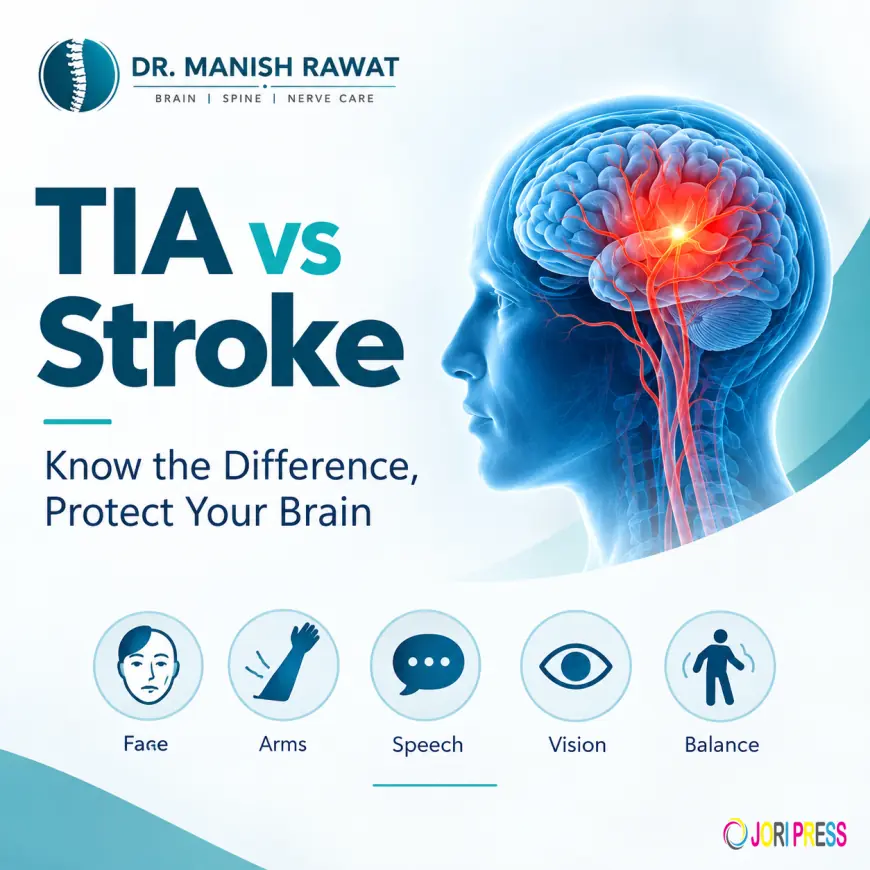
A sudden episode of weakness, numbness, difficulty speaking, blurred vision, dizziness, or loss of balance can be alarming. Sometimes these symptoms disappear within a short period, while in other situations they continue and result in permanent brain damage. Understanding the difference between a Transient Ischemic Attack (TIA) and a stroke is therefore important for patients and families.
A TIA is often referred to as a “mini-stroke,” but this term can make the condition sound less serious than it actually is. A TIA is a temporary neurological event that can serve as an important warning that a person may be at increased risk of a future stroke.
A stroke, on the other hand, causes injury to brain tissue because blood flow is interrupted or a blood vessel bleeds. Both conditions require prompt medical attention, particularly when symptoms appear suddenly.
What Is a TIA?
A Transient Ischemic Attack (TIA) occurs when blood flow to part of the brain is temporarily blocked or reduced. This temporary interruption can produce symptoms similar to those of a stroke.
The symptoms may include:
-
Weakness or numbness affecting one side of the body
-
Facial weakness or drooping
-
Difficulty speaking
-
Difficulty understanding speech
-
Sudden vision changes
-
Dizziness or loss of balance
-
Difficulty walking
-
Sudden confusion
In a TIA, the symptoms resolve and there is no permanent brain tissue injury under the modern tissue-based definition.
However, symptom resolution does not mean the event should be ignored. A TIA may indicate an underlying problem such as narrowing of an artery, a blood clot, or a heart rhythm disorder.
Urgent medical evaluation can help identify the possible cause and determine steps to reduce the risk of a future stroke.
What Is a Stroke?
A stroke occurs when blood supply to part of the brain is interrupted or when a blood vessel in the brain ruptures and causes bleeding.
Brain cells require a continuous supply of oxygen and nutrients. When blood flow is blocked or bleeding damages brain tissue, brain cells can become injured or die.
Strokes are broadly classified into two major types.
Ischemic Stroke
An ischemic stroke occurs when a blood vessel supplying the brain becomes blocked. The blockage may be caused by a blood clot that forms in an artery or travels from another part of the body.
This is the most common type of stroke.
Hemorrhagic Stroke
A hemorrhagic stroke occurs when a blood vessel ruptures and causes bleeding in or around the brain.
The bleeding can increase pressure inside the skull and damage surrounding brain tissue. Treatment is different from that used for an ischemic stroke and may involve specialist medical or neurosurgical management depending on the cause and severity.
TIA vs Stroke: What Is the Difference?
The main difference is whether there has been permanent brain tissue injury.
A TIA is caused by temporary interruption of blood flow, with symptoms resolving and no permanent tissue injury according to the tissue-based definition. A stroke involves brain injury caused by interrupted blood flow or bleeding.
However, symptoms alone cannot reliably tell you whether an event is a TIA or stroke.
For example, a person may experience weakness or speech difficulty that improves before they reach the hospital. That does not mean it is safe to assume that the event was harmless.
Medical assessment and appropriate brain and blood-vessel imaging may be necessary to determine what happened.
TIA vs Stroke at a Glance
| Feature | TIA | Stroke |
|---|---|---|
| Blood flow | Temporarily interrupted | Interrupted or affected by bleeding |
| Symptoms | Usually temporary | May persist |
| Brain injury | No permanent tissue injury by modern definition | Brain injury occurs |
| Emergency evaluation | Required | Required |
| Long-term effects | Usually no lasting neurological disability from the TIA itself | May cause lasting disability |
| Importance | Warning event requiring evaluation | Medical emergency requiring urgent treatment |
What Are the Warning Signs of TIA and Stroke?
TIA and stroke can produce very similar symptoms. These symptoms usually begin suddenly.
Common warning signs include:
1. Sudden Facial Weakness
One side of the face may droop or feel weak. The person may have difficulty smiling normally.
2. Arm or Leg Weakness
Sudden weakness or numbness may occur, particularly on one side of the body. The person may struggle to lift or control one arm.
3. Speech Problems
Speech may suddenly become slurred, unclear, or difficult to produce. A person may also have difficulty understanding what others are saying.
4. Vision Changes
Sudden blurred or lost vision in one or both eyes can occur.
5. Balance Problems
Sudden dizziness, difficulty walking, loss of coordination, or problems maintaining balance can sometimes be associated with a stroke or TIA.
6. Sudden Confusion
A person may suddenly become confused or have difficulty understanding information.
7. Severe or Unusual Headache
A sudden, severe headache, particularly when accompanied by other neurological symptoms, requires urgent assessment because it can occur with certain types of stroke, including hemorrhagic stroke.
Remember FAST
A simple way to remember some of the most common stroke warning signs is FAST:
F – Face: Does one side of the face droop when the person smiles?
A – Arms: Is one arm weak or unable to stay raised?
S – Speech: Is speech slurred or difficult to understand?
T – Time: Seek emergency medical attention immediately.
Not every stroke presents with all of these signs. Sudden neurological symptoms should never be ignored simply because they do not fit the complete FAST pattern.
What Causes a TIA or Stroke?
TIA and ischemic stroke often involve reduced blood flow caused by a clot or narrowing of a blood vessel.
Several factors can increase the risk, including:
-
High blood pressure
-
Diabetes
-
High cholesterol
-
Smoking
-
Obesity
-
Physical inactivity
-
Certain heart conditions
-
Atrial fibrillation and other abnormal heart rhythms
-
Previous TIA or stroke
-
Certain blood-vessel disorders
-
Increasing age
Some risk factors cannot be changed, but many can be managed through medical care and lifestyle changes.
Understanding the underlying cause is particularly important after a TIA because appropriate treatment may reduce the risk of a subsequent stroke.
How Is a TIA Diagnosed?
Diagnosing a TIA can sometimes be challenging because the symptoms may have disappeared by the time the patient reaches a hospital.
Doctors may evaluate:
-
The patient's symptoms and their duration
-
Medical and family history
-
Blood pressure
-
Neurological function
-
Heart rhythm
-
Blood sugar and cholesterol
-
Brain imaging
-
Blood vessels supplying the brain
-
Possible sources of blood clots
Depending on the patient's circumstances, investigations may include CT or MRI of the brain, CT or MR angiography, carotid artery assessment, an ECG, prolonged heart-rhythm monitoring, echocardiography, and blood tests.
The purpose is not only to determine whether brain injury occurred but also to identify why the event happened.
How Is Stroke Diagnosed?
Stroke diagnosis is usually based on the patient's symptoms, neurological examination, and brain imaging.
A CT scan is commonly used in emergency assessment because it can quickly identify bleeding in the brain. MRI can provide more detailed information about brain tissue and may detect areas of ischemic injury.
Additional imaging may be performed to examine the blood vessels and determine whether a major artery is blocked.
Identifying the type and cause of stroke is essential because treatment depends on the specific situation.
How Is a TIA Treated?
Treatment following a TIA focuses largely on preventing another event or a future stroke.
Depending on the underlying cause, doctors may recommend:
-
Antiplatelet medication
-
Anticoagulant medication for certain heart-related causes
-
Cholesterol-lowering treatment
-
Blood-pressure management
-
Diabetes management
-
Treatment for abnormal heart rhythms
-
Management of carotid artery disease in selected patients
-
Smoking cessation
-
Dietary improvements
-
Regular physical activity when medically appropriate
Medication should always be taken according to a qualified healthcare professional's advice. The appropriate treatment varies depending on the cause and the individual's medical history.
How Is an Ischemic Stroke Treated?
Treatment for an ischemic stroke depends heavily on the timing, location, severity, and cause of the blockage.
For eligible patients, emergency treatment may include intravenous thrombolysis, which uses medication to dissolve a blood clot.
Some patients with a large-vessel blockage may be candidates for mechanical thrombectomy. This is a minimally invasive procedure in which specialists use a catheter to reach the blocked blood vessel and remove the clot.
Not every patient is eligible for these treatments. Assessment by a specialized stroke team is necessary to determine the appropriate approach.
How Is a Hemorrhagic Stroke Treated?
Treatment for hemorrhagic stroke differs from ischemic stroke because the problem involves bleeding rather than a blocked blood vessel.
Management may include:
-
Controlling blood pressure
-
Managing increased pressure inside the skull
-
Reversing certain blood-thinning medications when appropriate
-
Monitoring the patient closely
-
Treating the underlying cause of bleeding
-
Neurosurgical or endovascular procedures in selected cases
The appropriate treatment depends on the location and size of the hemorrhage, its cause, the patient's condition, and other medical factors.
Why Is a TIA a Warning Sign?
A TIA should never be considered something that can simply be ignored because the symptoms disappear.
It may indicate that blood vessels supplying the brain are affected or that another condition is increasing the risk of clot formation.
A person who experiences a TIA may require further investigations to identify the cause. Managing high blood pressure, diabetes, cholesterol, smoking, heart rhythm problems, and other risk factors can be an important part of stroke prevention.
The exact risk varies from person to person, which is why timely medical assessment matters.
Can TIA and Stroke Be Prevented?
Not every stroke can be prevented, but many risk factors can be managed.
Important preventive measures include:
Control Blood Pressure
High blood pressure is one of the major modifiable risk factors for stroke. Regular monitoring and appropriate treatment can help reduce risk.
Manage Diabetes
Keeping blood glucose within the recommended range can help protect blood vessels and reduce vascular complications.
Maintain Healthy Cholesterol Levels
High cholesterol can contribute to narrowing of blood vessels. Doctors may recommend lifestyle changes or medication depending on the individual's risk profile.
Stop Smoking
Smoking damages blood vessels and contributes to cardiovascular disease. Quitting can reduce vascular risk.
Stay Physically Active
Regular physical activity, when medically appropriate, can support cardiovascular health and help manage weight, blood pressure, and blood sugar.
Follow a Balanced Diet
A diet rich in vegetables, fruits, whole grains, and other nutritious foods while limiting excessive salt and unhealthy fats can support overall cardiovascular health.
Manage Heart Conditions
Conditions such as atrial fibrillation can increase the risk of blood clots and stroke. Appropriate medical management can help reduce that risk.
What Happens After a Stroke?
Recovery after stroke varies considerably.
Some people recover quickly, while others may experience persistent problems involving movement, speech, swallowing, memory, vision, or coordination.
Rehabilitation can play an important role. Depending on the patient's needs, rehabilitation may involve:
-
Physiotherapy
-
Occupational therapy
-
Speech and language therapy
-
Swallowing assessment
-
Cognitive rehabilitation
-
Psychological and social support
Early assessment and an individualized rehabilitation plan can help patients work toward the best possible functional recovery.
When Should You Consult a Stroke Specialist?
Sudden neurological symptoms should be treated as an emergency rather than waiting for a routine appointment.
If symptoms such as facial drooping, weakness, numbness, speech difficulty, sudden vision loss, severe imbalance, or confusion occur, seek emergency medical care immediately—even if the symptoms improve.
For evaluation, treatment planning, and prevention after a TIA or stroke, patients may need assessment by a Stroke Specialist in Gurgaon or an appropriate multidisciplinary stroke team.
People who have already experienced a TIA or stroke may also require continued follow-up to monitor risk factors, medications, and recovery.
Conclusion
TIA and stroke can share many of the same warning signs, including sudden weakness, numbness, speech difficulty, vision problems, dizziness, and loss of balance. The critical difference is that a TIA does not result in permanent brain tissue injury under the modern tissue-based definition, while a stroke causes brain injury.
Most importantly, symptoms that disappear should not be dismissed. A TIA can provide an important opportunity to identify and manage factors that may increase future stroke risk.
If you or someone around you develops sudden neurological symptoms, seek emergency medical care immediately. Early assessment can help determine the cause, guide appropriate treatment, and support strategies for preventing future events.
Frequently Asked Questions
Is a TIA the same as a stroke?
No. A TIA is a temporary neurological event without permanent brain tissue injury under the modern tissue-based definition. A stroke causes brain injury due to blocked blood flow or bleeding.
Can a TIA turn into a stroke?
A TIA itself does not “turn into” a stroke, but it can be an important warning that the person is at increased risk of having a stroke. Prompt evaluation is therefore important.
How long does a TIA last?
TIA symptoms are temporary and may resolve within minutes or hours. However, duration alone should not be used to diagnose a TIA because a stroke can also have symptoms that improve.
Should I go to the hospital if TIA symptoms disappear?
Yes. Sudden stroke-like symptoms require urgent medical evaluation even if they disappear completely.
Is every stroke caused by a blood clot?
No. Ischemic strokes are caused by blocked blood flow, often due to a clot or narrowing of an artery. Hemorrhagic strokes occur because a blood vessel ruptures and bleeds.
Can lifestyle changes reduce stroke risk?
Lifestyle measures such as not smoking, staying physically active, maintaining a healthy diet, and managing blood pressure, diabetes, and cholesterol can help reduce modifiable stroke risk.
What's Your Reaction?
 Like
0
Like
0
 Dislike
0
Dislike
0
 Love
0
Love
0
 Funny
0
Funny
0
 Angry
0
Angry
0
 Sad
0
Sad
0
 Wow
0
Wow
0