









































The Loch at the Heart of Werewolves of Scotland

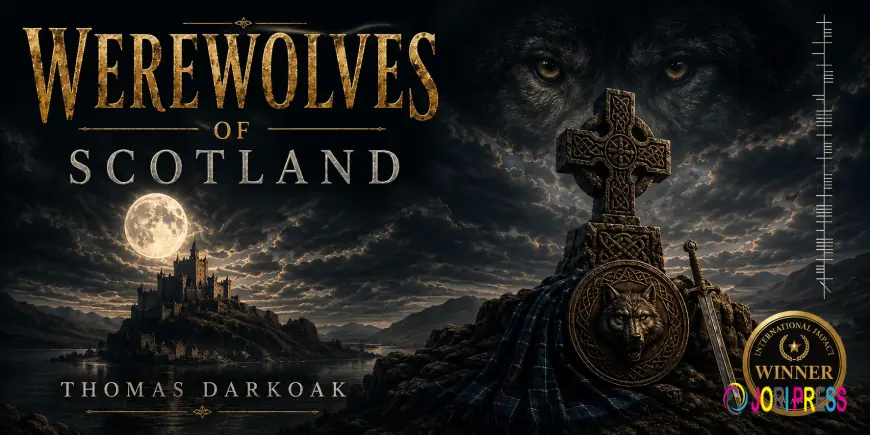
Water has always held a strange place in old stories. Lakes hide swords. Rivers carry warnings. Seas take kings and return legends. A still loch, especially one held between forest and mountain, can feel less like scenery and more like a secret waiting for the right person to listen.
That feeling lives at the heart of Werewolves of Scotland. Thomas Darkoak understands the power of sacred places. His Highland fantasy does not treat the loch as a pretty view to place behind the action. From the beginning, the water carries reverence. It feels touched by something older than human memory. The reader is invited to look at it the way people in ancient tales looked at holy ground: with wonder, caution, and the sense that not everything there can be explained.
That choice gives the book a richer atmosphere. A loch in Scottish fantasy is never only water. It suggests depth, concealment, beauty, and danger. The surface may shine, but no one truly knows what rests beneath it. Darkoak uses that natural mystery well. The loch becomes part of the book’s emotional weather. It holds silence. It reflects light. It marks the story with a feeling that something sacred has entered the world quietly, not with thunder, but with presence.
Readers who enjoy fantasy with atmosphere will notice this immediately. The loch also balances the wildness of the wolves and the harshness of the Highland world. The forest feels watchful. The mountains feel severe. The village carries human tension. The loch brings another mood altogether. It offers stillness, but not emptiness. It suggests peace, but not simplicity. It is beautiful in the way sacred things are beautiful: not soft, but lasting.
That is why the book’s opening mood lingers. Too many fantasy novels hurry past wonder to reach conflict. Werewolves of Scotland let wonder breathe. It gives readers the sense that the world is not merely dangerous, but meaningful. This is important because danger without meaning quickly becomes noise. Darkoak’s world has danger, but it also has places worth protecting.
The loch helps readers understand that. It also deepens the book’s connection between land and destiny. In this story, geography is not random. The forest, the loch, the roads, the old village, and the passes all carry weight. Each place has a role in the reader’s imagination. The added map in the third edition strengthens that feeling, letting readers see the world as territory, not an abstraction.
For anyone who loves Highland fantasy, this matters. The best Scottish-inspired stories do not simply borrow the setting. They respect the feeling of the land. They understand that certain places seem to hold memory longer than people do.
Werewolves of Scotland has that respect. The loch becomes a quiet reason the book feels different from ordinary werewolf fiction. It gives the supernatural elements a sacred frame. The wolves may draw the eye, but the water sets the tone. It reminds readers that this is a world of guardianship, hidden history, and mysteries that should not be handled carelessly.
In the end, the loch is not a background detail. It is part of the legend’s pulse. Open Werewolves of Scotland by Thomas Darkoak and let the Highland waters pull you into a world where beauty, danger, and sacred mystery meet beneath the mist.
What's Your Reaction?
 Like
0
Like
0
 Dislike
0
Dislike
0
 Love
0
Love
0
 Funny
0
Funny
0
 Angry
0
Angry
0
 Sad
0
Sad
0
 Wow
0
Wow
0