










































What to Look for When Choosing a Telemedicine Software Provider in 2027
Compare key factors for choosing a telemedicine software provider in 2027, from features and security to integrations, pricing, and scalability.
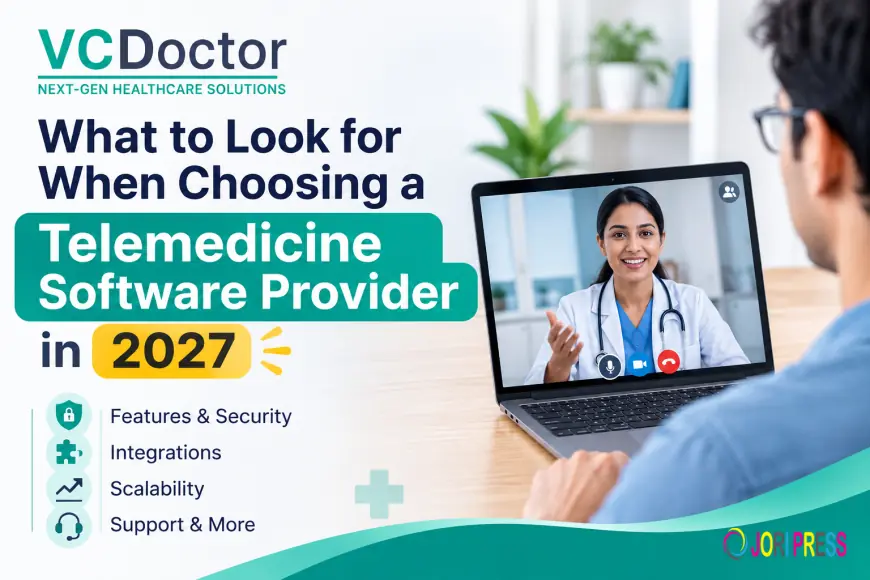
Choosing telemedicine software is no longer just about offering video consultations. Healthcare businesses need a platform that fits their daily workflow, supports patients, and makes it easier for doctors to manage consultations without unnecessary complications.
With so many platforms available, comparing them can be confusing. Some focus mainly on video consultations, while others offer appointment scheduling, electronic medical records, prescriptions, billing, and patient management in one place.
Before investing in a platform, here are some practical things worth checking.
1. Check Whether It Fits Your Healthcare Workflow
Every healthcare business works differently. A small clinic may need appointment booking and video consultations, while a multi-specialty hospital may require patient records, billing, prescriptions, and department coordination.
Before choosing software, check whether it supports the way your team actually works. A platform that requires doctors or staff to change their entire routine may create more problems than it solves.
2. Look Beyond Video Consultations
Video calling is an essential feature, but it should not be the only reason to select a platform. A useful telemedicine solution should help manage the consultation process before, during, and after the appointment.
Look for features such as:
-
Online appointment scheduling
-
Patient registration
-
Video and audio consultations
-
Digital prescriptions
-
Medical record management
-
Follow-up appointment management
The goal is to reduce manual work, not simply move face-to-face consultations online.
3. Make Sure Patient Data Is Protected
Healthcare software handles sensitive patient information, so security should never be overlooked. Before selecting a platform, ask how patient records, consultation data, and documents are stored and protected.
Check whether the software supports encryption, role-based access, secure authentication, audit logs, and relevant healthcare privacy and regulatory requirements for your operating regions.
Don't rely only on a vendor's security claims. Ask for documentation about the security measures and compliance standards they actually support.
4. Check Whether It Can Connect With Your Existing Systems
Healthcare businesses may already use hospital management software, laboratory systems, billing tools, electronic medical records, or pharmacy software. Using a separate telemedicine platform without integration can result in duplicate data entry and disconnected workflows.
Ask the provider whether the platform supports integrations through APIs or relevant healthcare interoperability standards such as HL7 and FHIR, where applicable.
A connected system can help healthcare teams access relevant information without constantly switching between different applications.
5. Consider the Patient Experience
Patients should not need technical expertise to book an appointment or join a consultation. Complicated registration, confusing interfaces, or connectivity problems can discourage patients from using virtual care services.
Test the platform from a patient's perspective. Check how easily they can:
-
Book and reschedule appointments.
-
Join consultations from a phone or computer.
-
Upload medical reports.
-
Receive prescriptions and follow-up instructions.
-
Contact support when they experience difficulties.
A simple patient experience can make virtual consultations more accessible and convenient.
6. Understand the Pricing Before Making a Decision
Telemedicine software pricing can vary depending on the number of users, features, integrations, hosting, and customization requirements. Some providers charge monthly subscriptions, while others offer enterprise pricing or custom development packages.
Before finalizing a provider, clarify:
-
Is there a setup fee?
-
Are additional doctors or users charged separately?
-
Are integrations included in the package?
-
Is maintenance or technical support included?
-
Are there extra charges for custom features?
Understanding the complete cost can help you avoid unexpected expenses later.
7. Choose a Platform That Can Grow With Your Business
Your healthcare business may expand over time by adding doctors, clinics, specialties, or new services. Choosing software that supports future growth can save you from switching platforms later.
Check whether the provider offers scalable infrastructure, additional user support, new modules, integrations, and customization options. A platform that works for a small clinic today should ideally have options to accommodate your changing requirements.
8. Evaluate Customer Support and Training
Even well-designed software may require assistance during setup or daily use. Delayed technical support can interrupt consultations and affect patient experience.
Before purchasing, ask whether the provider offers onboarding, user training, technical support, documentation, and assistance with troubleshooting. If possible, check the provider's support availability and response process.
9. Request a Demo Before Purchasing
A product demo can help you understand how the platform works in real situations rather than relying entirely on sales descriptions.
During the demo, ask the provider to show how appointments are booked, consultations are conducted, prescriptions are generated, patient records are managed, and integrations work. If customization is required, discuss the expected timeline and cost.
Testing the platform before making a commitment can help you make a more informed decision.
Conclusion
Choosing telemedicine software in 2027 requires more than comparing feature lists or pricing plans. The right platform should fit your healthcare workflow, offer a convenient patient experience, protect sensitive data, support integrations, and accommodate future growth.
Take the time to compare providers, test their platforms, and understand what is included before making a final decision. A well-chosen solution can make virtual care easier to manage for healthcare teams while helping patients access healthcare services more conveniently.
What's Your Reaction?
 Like
0
 Dislike
0
 Love
0
 Funny
0
 Angry
0
 Sad
0
 Wow
0