





































Signs and Symptoms of Torn Rotator Cuff
Learn the hallmark signs of a torn rotator cuff, from deep shoulder aches to muscle weakness. Discover treatment options and recovery timelines in this 2026 guide.

Shoulder pain is a common ailment, but when it starts interfering with simple daily tasks like reaching for a glass in the cupboard, combing your hair, or sleeping comfortably on your side it could point to a more serious underlying issue. One of the most frequent causes of persistent shoulder dysfunction is a tear in the rotator cuff.
Because the shoulder joint relies heavily on muscles and tendons for its stability, a tear can significantly disrupt your upper body mobility. Recognizing the early signs of a torn rotator cuff is crucial for preventing long-term joint degeneration and finding the right path to recovery.
In this comprehensive guide, we will define what a rotator cuff tear is, break down its hallmark symptoms, explore the differences between acute and degenerative tears, and provide actionable next steps for clinical care.
What is a Torn Rotator Cuff?
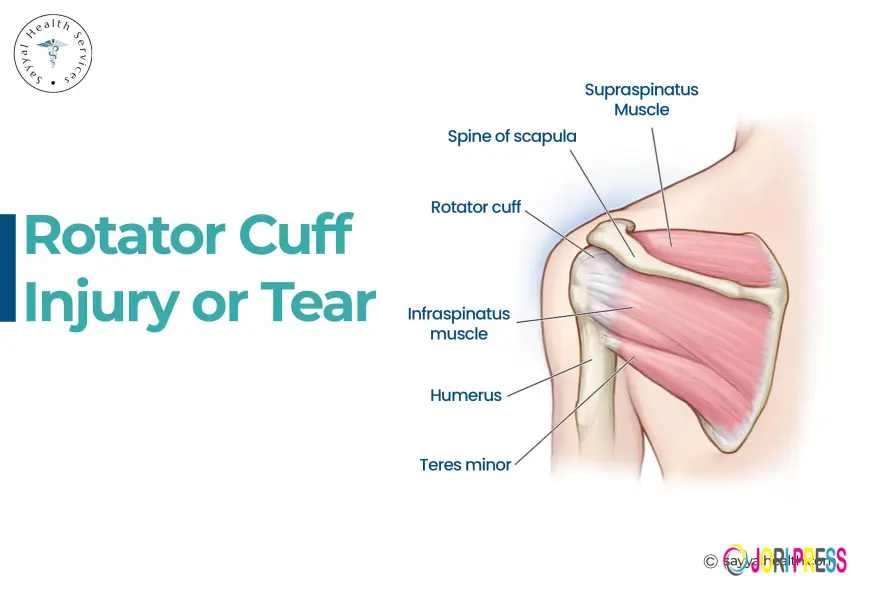
A torn rotator cuff occurs when one or more of the tendons that connect the muscles of the rotator cuff to the head of the humerus (upper arm bone) become partially or completely detached. The rotator cuff itself is a group of four stabilizing muscles: the supraspinatus, infraspinatus, teres minor, and subscapularis.
Together, these muscles form a "cuff" that keeps the ball of your upper arm firmly within the shallow socket of the shoulder, allowing you to lift and rotate your arm. Tears are medically categorized into two primary types:
-
Partial Tears: The tendon is damaged or frayed but not completely severed.
-
Full-Thickness (Complete) Tears: The tendon is pulled completely off the bone, creating a gap in the tissue.
The Primary Signs of a Torn Rotator Cuff
While shoulder discomfort can stem from several conditions, a specific cluster of clinical features strongly indicates a rotator cuff injury. If you are experiencing the following symptoms, it is time to seek an expert medical evaluation.
1. Deep, Dull Ache in the Shoulder
The most pervasive symptom is a deep, poorly localized ache within the shoulder joint. Unlike muscle soreness from a workout, this pain tends to persist despite rest. It is often described as a throbbing sensation felt deep inside the upper arm, rather than on the skin's surface.
2. Severe Pain with Overhead Movements
Because the rotator cuff muscles are responsible for initiating arm elevation, activities that require lifting your arm above shoulder level will actively pinch or strain the torn tissue. Pain typically spikes when lifting heavy objects, throwing a ball, or reaching backward.
3. Sleep Disruption and Night Pain
A hallmark sign of a torn rotator cuff is pain that intensifies when lying down, particularly if you roll onto the affected shoulder. The pressure shifts the joint alignment and compresses the inflamed tendons, frequently waking patients up from a sound sleep.
4. Noticeable Muscle Weakness (The "Drop Arm" Sign)
True muscle weakness distinct from pain that causes you to stop moving is a major red flag for a full-thickness tear. Patients often find it difficult to lift their arm to the side or rotate it outward. In severe cases, if you raise your arm up sideways and try to lower it slowly, it may suddenly "drop" because the torn tendon cannot support the weight of the limb.
5. Crepitus (Clicking, Popping, or Grinding)
When a tendon is torn or frayed, it can catch on nearby ligaments or bones during movement. This creates a mechanical clicking, snapping, or grinding sensation known medically as crepitus inside the joint when you rotate your arm.
Acute vs. Degenerative Tears: What's the Difference?
Rotator cuff injuries generally happen in one of two ways, and the onset of your symptoms will depend entirely on how the tear occurred.
Acute Injuries (Trauma)
These happen suddenly due to a specific event, such as falling onto an outstretched hand, lifting something too heavy with a jerking motion, or dislocating the shoulder.
-
Symptom Profile: Immediate, excruciating pain, a snapping sensation, and instantaneous weakness in the arm.
Degenerative Tears (Wear and Tear)
The vast majority of rotator cuff tears develop gradually over time. They are caused by the natural wear and tear of aging, repetitive overhead stress (common in painters, carpenters, and tennis players), and a diminished blood supply to the tendons as we grow older.
-
Symptom Profile: Mild pain at first that gradually intensifies over months or years. Many people with degenerative tears may only have minor symptoms until a small movement suddenly worsens the tear.
Clinical Diagnostic Methods
If a healthcare professional suspects a tear based on your physical examination and mobility testing, they will typically order imaging to confirm the diagnosis and assess the tear's size:
-
Ultrasound: A quick, dynamic, and cost-effective way to view the tendons in real-time as you move the shoulder.
-
MRI (Magnetic Resonance Imaging): The gold standard for shoulder imaging. An MRI provides detailed, high-resolution pictures of both partial and full-thickness tears, as well as any associated muscle atrophy or bone spurs.
-
X-rays: While X-rays cannot show soft tissue like tendons, they are used to rule out arthritis, fractures, or bone spurs that might be compressing the rotator cuff space.
Frequently Asked Questions
Can a torn rotator cuff heal on its own without surgery?
Partial tears and mild degenerative tears often do not require surgery. While the tendon tissue itself may not spontaneously reattach to the bone, targeted physical therapy can strengthen the surrounding shoulder muscles to fully compensate for the injury, completely resolving pain and restoring function. Full-thickness tears in active individuals usually require surgical repair.
How long does it take to recover from a rotator cuff injury?
Non-surgical recovery involving rest, physical therapy, and anti-inflammatory management typically takes 6 to 12 weeks. If surgical repair is necessary, full recovery is a longer process, usually requiring 4 to 6 months of dedicated rehabilitation to regain complete strength and range of motion.
What happens if you leave a torn rotator cuff untreated?
Ignoring the signs of a torn rotator cuff can lead to permanent joint issues. Over time, the torn tendon can retract further, and the unused muscle can undergo fatty degeneration (atrophy), making surgical repair impossible later on. Chronic instability can also trigger a specialized form of joint degeneration called rotator cuff tear arthropathy.
Should I wear a sling if my shoulder hurts?
Immobilizing your shoulder in a sling for a prolonged period without a doctor's recommendation can lead to a condition called "frozen shoulder" (adhesive capsulitis), which causes severe stiffness. Slings should generally only be used briefly following an acute trauma until you can see a medical professional.
Conclusion
Living with chronic shoulder pain can severely impact your quality of life, but you do not have to accept a loss of mobility. The key to overcoming a rotator cuff injury lies in early intervention. Recognizing the primary signs of a torn rotator cuff such as deep night pain, overhead weakness, and persistent aching allows you to implement targeted therapies before the joint suffers further structural wear.
What's Your Reaction?
 Like
0
Like
0
 Dislike
0
Dislike
0
 Love
0
Love
0
 Funny
0
Funny
0
 Angry
0
Angry
0
 Sad
0
Sad
0
 Wow
0
Wow
0