




































Sustainable Clothing: From Affordable Sustainable Dresses to Everyday Basics
Discover practical ways to choose sustainable clothing, find Affordable Sustainable Dresses and build a versatile wardrobe with better materials, quality and long-term wear in mind.
Sustainable clothing has become one of those phrases that appears everywhere in fashion. But once you move past the labels and marketing, things get a little more complicated.
What actually makes a garment sustainable?
Is an expensive dress automatically a better choice? Does organic fabric always mean a product has a lower environmental impact? And can you build a more responsible wardrobe without spending a fortune?
The short answer is yes, but it takes a little more thought than simply looking for a “sustainable” label.
Good sustainable fashion is often about making better decisions repeatedly: buying pieces you will actually wear, looking at materials and construction, taking care of what you own, and resisting the temptation to replace perfectly good clothes just because a new trend has appeared.
That is where sustainable clothing becomes much more practical.
What Does Sustainable Clothing Actually Mean?
There isn't one single definition of sustainable clothing.
The term can cover several parts of the fashion process, including the materials used, manufacturing practices, garment longevity, packaging, transport, working conditions and what eventually happens to a garment when it is no longer wanted.
For shoppers, that can make the subject feel unnecessarily complicated.
A useful starting point is to think about the entire life of a garment.
A dress that is worn dozens of times, looked after properly and kept for years may be a more sensible purchase than a supposedly “eco-friendly” garment that is bought on impulse and rarely worn.
That's a slightly less glamorous way of looking at sustainable fashion. It is also more realistic.
Why Sustainable Clothing Doesn't Have to Mean Expensive Clothing
One common assumption is that sustainable fashion automatically comes with a premium price tag.
Sometimes it does. Better materials, responsible manufacturing and smaller production runs can increase costs. But price alone isn't a reliable measure of sustainability.
You can make more considered choices at different budgets.
For example, buying one well-made dress that works for several occasions can be more practical than buying three inexpensive dresses that only suit a particular trend.
Likewise, checking the fabric composition and construction before buying can tell you more than the marketing on the front of a product page.
This is particularly useful when looking for Affordable Sustainable Dresses.
Affordable Sustainable Dresses: What Should You Look For?
Finding Affordable Sustainable Dresses doesn't necessarily mean searching for the cheapest option available.
Instead, consider the relationship between price, quality and how often you expect to wear the garment.
A £40 dress worn twice isn't necessarily better value than a £70 dress worn regularly for several years.
When comparing dresses, look at:
- Fabric composition
- Stitching and seams
- Fastenings
- Shape and fit
- Ease of washing
- Versatility
- Expected frequency of wear
- Whether the design is likely to work beyond one season
There's also something to be said for simple design.
A dress that can be worn with trainers during the day, layered with a jumper in cooler weather and dressed up for an evening occasion is doing considerably more work in your wardrobe than a very specific statement piece.
That's good wardrobe planning, even if you never use the word “sustainable”.
Materials Matter, But They Aren't the Whole Story
Fabric choice is one of the first things people look at when shopping for sustainable clothing.
You may come across organic cotton, recycled fibres, linen, hemp, wool and other materials marketed as more responsible alternatives.
These materials can have different environmental and practical characteristics. But it is worth resisting the urge to create a simple “good fabric versus bad fabric” list.
The actual impact of a garment depends on more than the fibre itself.
How the material was produced, how the garment was dyed and finished, how long the garment lasts, how often it is washed and what happens at the end of its life all matter too.
So, when shopping, treat fabric information as one piece of the puzzle rather than the entire answer.
The Value of a Tunic Dress
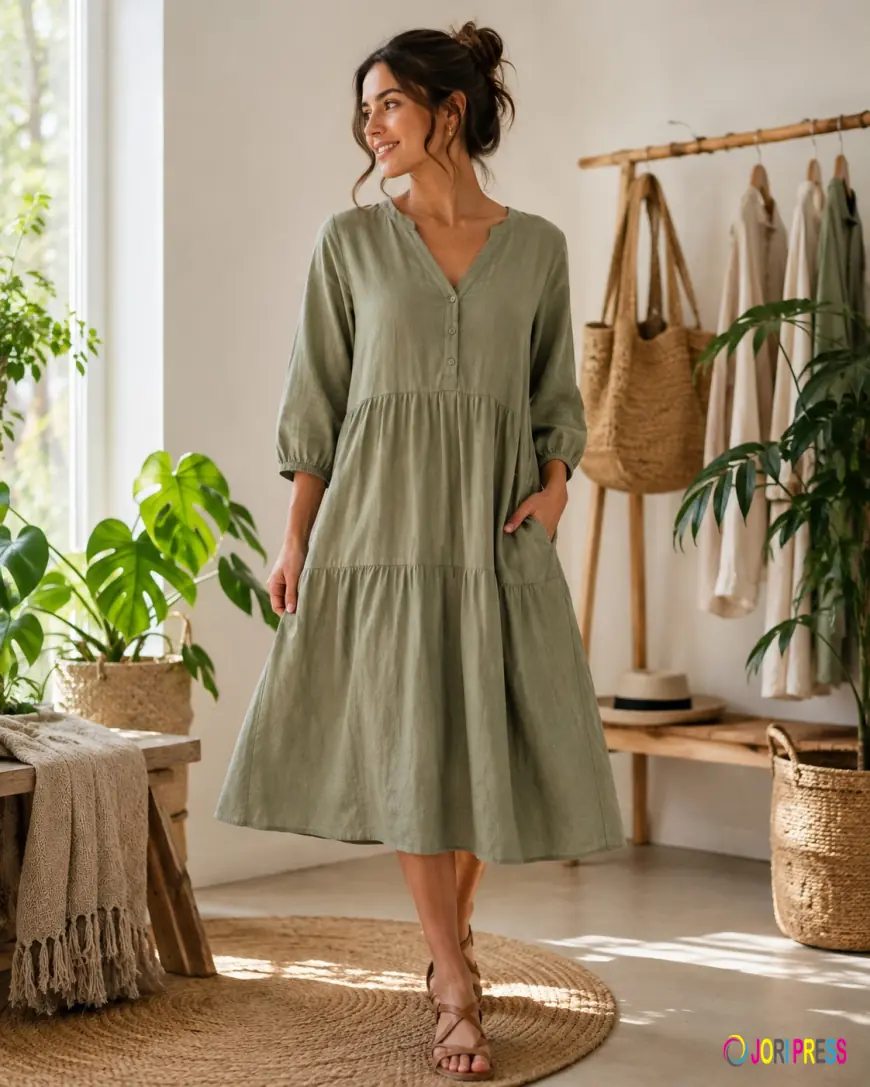
A Tunic Dress is a good example of how versatility can support a more considered wardrobe.
Its relaxed shape can work across different settings, depending on the fabric and styling. Wear it on its own in warmer weather, add leggings or trousers when temperatures drop, or layer it with knitwear for a different look.
The point isn't that every sustainable wardrobe needs a tunic dress.
It's that versatile pieces tend to earn their place.
A garment that works with several pairs of shoes, different layers and more than one type of occasion is less likely to sit unworn at the back of the wardrobe.
And that matters.
Don't Forget the Everyday Basics
Sustainable fashion discussions often focus on dresses, jackets and statement pieces. But the less glamorous parts of a wardrobe deserve attention too.
Take organic cotton socks, for example.
Socks are worn frequently, washed frequently and replaced fairly regularly. Choosing products made with materials and manufacturing practices that align with your priorities can therefore be a small but practical step.
The same thinking can be applied to T-shirts, underwear, pyjamas and other everyday basics.
You don't have to rebuild your entire wardrobe in one weekend.
In fact, that's probably the opposite of what sensible sustainable shopping looks like.
Buy Less, But Buy More Thoughtfully
One of the simplest principles behind a more sustainable wardrobe is also one of the hardest to follow: buy things because you need or genuinely want them, rather than because they're temporarily fashionable.
Before buying something, ask yourself a few straightforward questions:
Will I wear this regularly?
Does it work with clothes I already own?
Would I still want it if it wasn't on sale?
Can I imagine wearing it next year?
That last question is surprisingly useful.
Fashion moves quickly, but your wardrobe doesn't have to.
Quality Is About More Than Expensive Fabric
A garment can be made from a desirable fibre and still be poorly constructed.
Look at the details.
Are the seams neat? Do buttons feel securely attached? Does the fabric feel appropriate for the garment? Are zips and fastenings reasonably robust? Does the shape hold together properly when worn?
These aren't particularly exciting questions. They are practical ones.
If you're shopping online, product photography can hide some of these details, so read the description carefully and look for close-up images where available.
Customer reviews can also be useful for spotting recurring problems with sizing, fabric feel or durability, although individual experiences naturally vary.
Think About How You'll Care for Your Clothes
The way you care for clothing can influence how long it remains wearable.
Following the manufacturer's washing instructions is a basic starting point. Washing clothes only when necessary, using appropriate temperatures and avoiding unnecessarily harsh treatment can also help preserve garments.
Some fabrics benefit from air drying rather than repeated exposure to high heat.
And if something develops a small problem, don't automatically throw it away.
A missing button, loose seam or minor repair may be exactly that - a minor repair.
Learning a few basic clothing-repair skills can quietly extend the useful life of a wardrobe.
Sustainable Clothing and Personal Style Can Work Together
There is sometimes an assumption that sustainable clothing means plain, minimalist or overly “natural-looking” fashion.
It doesn't.
Sustainable fashion can be colourful, contemporary, feminine, practical, tailored, relaxed or completely individual.
The better question is whether a garment fits your actual lifestyle.
If you love bold prints and buy a wardrobe full of beige basics because they are supposedly more sustainable, you may eventually stop wearing half of them.
Personal style matters because clothes that you genuinely enjoy wearing tend to stay in use.
How to Shop for Sustainable Clothing on a Budget
You don't need a large budget to make more considered choices.
Try starting with your existing wardrobe.
Before buying anything new, identify the gaps. Perhaps you need another everyday dress, better basics or a reliable layer for colder weather.
Then set a realistic budget.
During sales, don't let the discount make the decision for you. A garment reduced from £100 to £40 isn't saving you £60 if you didn't need it in the first place.
For Affordable Sustainable Dresses, look for designs that can be worn in different ways and across several seasons.
Second-hand clothing is another option worth considering. It can give existing garments a longer useful life while allowing shoppers to access brands and materials that might otherwise be outside their budget.
Look Beyond the Marketing
Sustainability claims can sound impressive.
Words such as “conscious”, “eco”, “responsible” and “green” don't tell you everything you need to know.
Look for specific information.
What is the garment made from? Where was it produced? Does the company explain its manufacturing approach? Are there meaningful details about the materials rather than vague environmental language?
Transparency is generally more useful than a large sustainability slogan.
And if a claim sounds too good to be true, it is perfectly reasonable to look for evidence before accepting it.
Build a Wardrobe That Actually Gets Worn
This is perhaps the most useful approach to sustainable clothing.
Don't try to create a perfect wardrobe.
Create a useful one.
That might mean owning a couple of versatile dresses, dependable trousers, comfortable tops, suitable layers and everyday accessories that all work together. Add pieces gradually rather than constantly replacing everything.
A Tunic Dress might become a regular weekend option. A well-made everyday dress might work for both the office and dinner. A pair of organic cotton socks may simply be a better replacement when your existing ones finally wear out.
None of these choices is dramatic.
That's the point.
Sustainable fashion often works best when it becomes part of normal shopping behaviour rather than a separate lifestyle project.
What Makes Sustainable Clothing a Better Long-Term Choice?
The strongest case for sustainable clothing isn't that every garment labelled “sustainable” is automatically perfect.
It isn't.
The stronger argument is that thoughtful purchasing can encourage a different relationship with clothing.
Buy fewer things. Choose pieces carefully. Look after them. Repair them when practical. Wear them repeatedly.
And when something genuinely needs replacing, consider what you are buying rather than simply replacing like for like.
That approach can also save money over time.
Sustainable clothing doesn't have to mean an expensive wardrobe or a complete rejection of fashion.
It can be much simpler than that.
Start with clothes you genuinely enjoy wearing. Pay attention to materials and construction. Look for versatile designs. Take care of what you own. And when you're searching for Affordable Sustainable Dresses, judge the purchase by how useful and wearable it will be, not simply by the size of the discount.
A Tunic Dress that works across several occasions can be a smart wardrobe addition. Even everyday essentials such as organic cotton socks can fit into a more considered approach to shopping.
There is no perfect sustainable wardrobe.
There is, however, a more thoughtful one - and it usually starts with buying less impulsively and wearing what you already have a little more.
FAQs
What is sustainable clothing?
Sustainable clothing generally refers to garments produced and used with greater consideration for environmental and social impacts. This can involve materials, manufacturing, durability, care, and the eventual disposal or reuse of clothing.
Is sustainable clothing expensive?
Not necessarily. While some sustainable clothing can cost more because of materials or production methods, shoppers can make more considered choices at different price points. Durability and how often a garment is worn are useful factors when judging value.
How can I find Affordable Sustainable Dresses?
Look for dresses that combine suitable materials, good construction, versatile styling and reasonable pricing. A dress that can be worn frequently and styled for different occasions may offer better long-term value than a cheaper garment bought purely because it is discounted.
Is organic cotton always more sustainable?
Organic cotton can have certain environmental advantages compared with conventional cotton, but the sustainability of a finished garment depends on more than the fibre alone. Production, dyeing, manufacturing, transport, use and garment longevity also matter.
What is a Tunic Dress?
A tunic dress is generally a relaxed, comfortable dress style that can be worn on its own or layered with other clothing. Its versatility makes it a useful option for people who prefer garments that can work across different settings.
Are organic cotton socks a sustainable choice?
Organic cotton socks can be an option for shoppers who want to consider fibre sourcing when purchasing everyday basics. However, the overall sustainability of the socks also depends on manufacturing, durability, care and how long they remain in use.
How can I make my wardrobe more sustainable?
Start gradually. Buy fewer impulse purchases, choose versatile clothing, pay attention to quality and materials, repair garments where practical, and look after the clothes you already own. Sustainable wardrobe building doesn't need to happen all at once.
What's Your Reaction?
 Like
0
Like
0
 Dislike
0
Dislike
0
 Love
0
Love
0
 Funny
0
Funny
0
 Angry
0
Angry
0
 Sad
0
Sad
0
 Wow
0
Wow
0