




































Sunscreen SPF Meaning Explained: What Those Numbers on the Bottle Actually Mean
Confused about sunscreen SPF meaning? Learn what SPF and PA ratings actually mean, how they differ, and how to pick the right sunscreen for real protection.
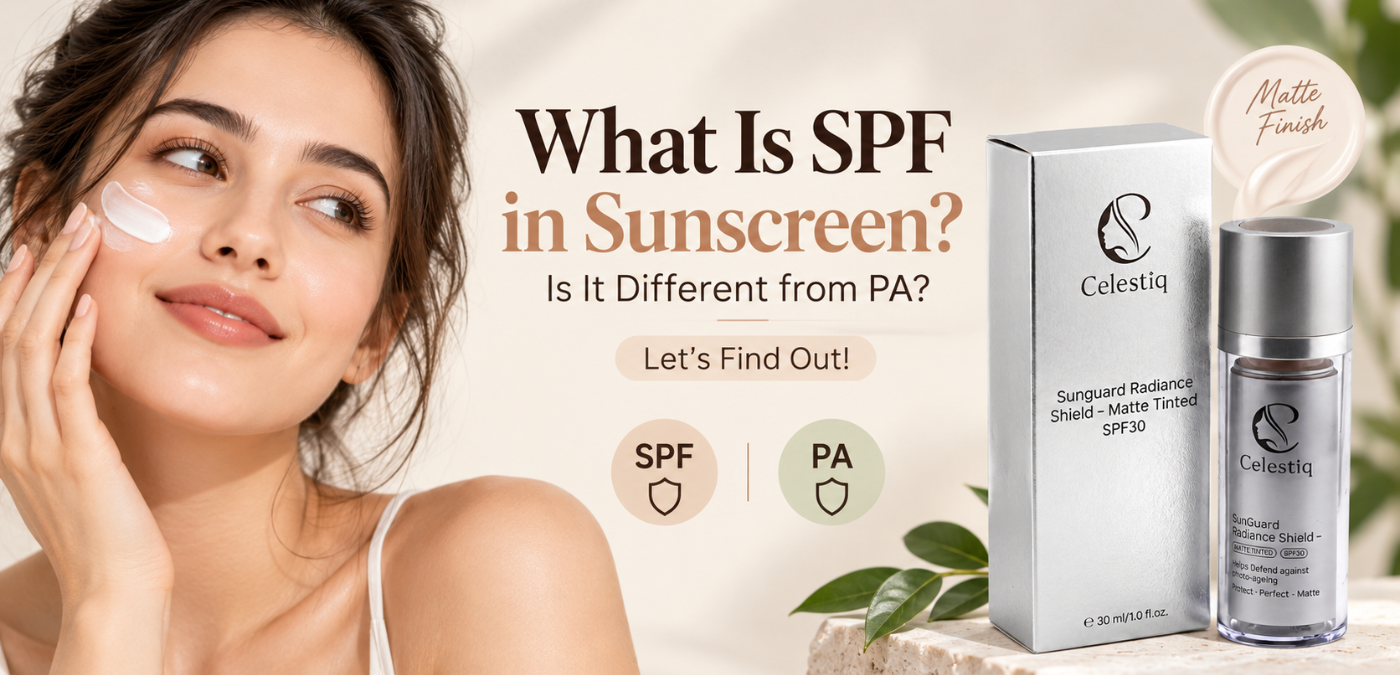
Table of Contents
-
What Is SPF in Sunscreen
-
How SPF Numbers Actually Work
-
What Does PA++++ Mean
-
PA Rating in Sunscreen Explained
-
SPF vs PA: The Real Difference
-
How to Choose the Right Sunscreen
-
Where Celestiq Beauty Fits In
-
Common Sunscreen Mistakes
-
Final Thoughts
-
Frequently Asked Questions
Most people buy sunscreen based on a number, SPF 30, SPF 50, without really knowing what that number is protecting them from. Add a "PA++++" rating on the label, and it gets even more confusing. Understanding sunscreen SPF's meaning is not complicated once it is broken down properly, and knowing the difference between SPF and PA can genuinely change how well your skin is protected every day.
This blog explains what is SPF in sunscreen, what PA ratings mean, and how to choose sunscreen based on real protection rather than guesswork.
What Is SPF in Sunscreen
SPF stands for Sun Protection Factor, and it specifically measures protection against UVB rays, the type responsible for sunburn.
-
SPF tells you how much longer your skin can be exposed to UVB rays before burning, compared to unprotected skin.
-
Higher SPF numbers mean more protection, but the difference between SPF 30 and SPF 50 is smaller than most people assume.
-
SPF does not measure protection against UVA rays, which are linked to premature aging and deeper skin damage.
-
No sunscreen blocks 100 percent of UV rays, regardless of how high the SPF number is.
For a full breakdown of this exact topic, Celestiq Beauty detailed guide on what SPF actually means is worth reading if you want the complete explanation in one place.
How SPF Numbers Actually Work
Here is the part most people get wrong about SPF:
-
SPF 30 blocks about 97 percent of UVB rays.
-
SPF 50 blocks about 98 percent of UVB rays.
-
The jump in protection between higher numbers is small, but reapplication frequency matters more than the number itself.
-
SPF effectiveness drops significantly if sunscreen is applied too thin or not reapplied every few hours.
This is why dermatologists often emphasize proper application over chasing the highest SPF number available.
What Does PA++++ Mean
PA stands for Protection Grade of UVA, and it measures defense against UVA rays specifically.
-
What does PA++++ mean? It represents the highest level of UVA protection in this rating system, originally developed in Japan and widely used across Asian sunscreen formulas.
-
The scale ranges from PA+ to PA++++, with more plus signs indicating stronger UVA protection.
-
UVA rays penetrate deeper into skin and are strongly linked to premature aging, fine lines and long-term skin damage.
-
A sunscreen can have a high SPF but a low PA rating, meaning it may protect against burning while still allowing significant UVA damage.
Understanding this rating helps you choose sunscreen that protects against aging, not just sunburn.
PA Rating in Sunscreen Explained
Breaking down the PA rating in sunscreen a little further:
-
PA+ offers some UVA protection.
-
PA++ offers moderate UVA protection.
-
PA+++ offers high UVA protection.
-
PA++++ offers the highest level of UVA protection currently rated in this system.
For daily use, especially in sunny or high UV climates, dermatologists often recommend at least PA+++ alongside SPF 30 or higher.
SPF vs PA: The Real Difference
The SPF vs PA comparison often confuses people, so here is the simplest way to remember it:
-
SPF measures protection against UVB rays, which cause sunburn.
-
PA measures protection against UVA rays, which cause premature aging and deeper skin damage.
-
A truly effective sunscreen needs both a solid SPF number and a strong PA rating, not just one or the other.
-
Relying on SPF alone can leave skin vulnerable to long-term UVA damage, even if sunburn is prevented.
Both numbers work together, and skipping one while focusing only on the other leaves a real gap in protection.
How to Choose the Right Sunscreen
Keep these points in mind while picking a sunscreen:
-
Choose broad-spectrum sunscreen, which protects against both UVA and UVB rays.
-
Look for SPF 30 or higher for daily use, and SPF 50 for extended outdoor exposure.
-
Check for a PA rating of PA+++ or PA++++ if aging prevention is a priority.
-
Reapply every two to three hours when outdoors, regardless of the SPF number.
-
Apply a generous amount; using too little sunscreen significantly reduces its actual protection level.
Where Celestiq Beauty Fits In
Choosing the right sunscreen becomes much easier once you understand what SPF and PA ratings actually mean, rather than relying on marketing claims alone. Celestiq Beauty focuses on formulating sunscreen that balances both broad-spectrum SPF protection and strong PA ratings, so skin is genuinely protected from sunburn and long-term UVA damage, not just one or the other. If you have been choosing sunscreen based on SPF number alone, it may be worth reading Celestiq Beauty's complete explanation of SPF versus PA to make a more informed choice going forward.
Common Sunscreen Mistakes
-
Choosing sunscreen based on SPF number alone, ignoring the PA rating entirely.
-
Applying too little product, reducing the actual protection significantly.
-
Skipping reapplication throughout the day, especially during outdoor activities.
-
Assuming higher SPF means sunscreen can be applied less often.
-
Skipping sunscreen indoors or on cloudy days, when UV exposure still occurs.
Final Thoughts
Understanding sunscreen SPF meaning, along with what does PA++++ mean, gives you a much clearer picture of what your sunscreen is actually doing for your skin. SPF protects against sunburn, while PA protects against premature aging, and both matter for genuine, long-term skin protection. Choosing a broad-spectrum sunscreen with both a solid SPF and a strong PA rating, and reapplying it consistently, remains the most effective way to protect your skin daily. To explore this topic in more depth, Celestiq Beauty's guide on SPF and PA in sunscreen is a helpful next read.
Frequently Asked Questions
1. What is SPF in sunscreen?
SPF measures how well sunscreen protects skin against UVB rays, which cause sunburn.
2. What does PA++++ mean?
PA++++ indicates the highest level of UVA protection in the PA rating system.
3. What is the difference between SPF and PA?
SPF protects against UVB rays that cause sunburn, while PA protects against UVA rays that cause premature aging.
4. Is SPF 30 enough for daily use?
Yes, SPF 30 is generally sufficient for daily use when paired with a good PA rating and proper reapplication.
5. Do I need both a high SPF and a high PA rating?
Yes, both are needed for complete protection against sunburn and long-term UVA related skin damage.
What's Your Reaction?
 Like
0
Like
0
 Dislike
0
Dislike
0
 Love
0
Love
0
 Funny
0
Funny
0
 Angry
0
Angry
0
 Sad
0
Sad
0
 Wow
0
Wow
0