








































Round Ferrite Magnets for Industrial Equipment Design

Magnetic materials are important components in equipment that requires controlled attraction, positioning, and magnetic interaction. For manufacturers developing functional products, Round Ferrite Magnets offer a practical option for creating magnetic assemblies with different structural requirements. Choosing suitable Round Ferrite Magnets involves evaluating material properties, dimensional accuracy, magnetic orientation, and installation methods to ensure compatibility with the finished product. Their versatility makes them relevant to various manufacturing sectors, including automotive components, household appliances, audio equipment, and industrial machinery.
Exploring the Manufacturing Characteristics of Ferrite Magnets
Ferrite magnets are ceramic permanent magnets generally produced from iron oxide combined with other metallic compounds. Their manufacturing process involves preparing raw materials, forming the desired shape, and applying high-temperature sintering to develop the required magnetic characteristics.
One important feature of ferrite materials is their resistance to corrosion under ordinary environmental conditions. Unlike some metallic magnetic materials, ferrite products generally do not require additional protective coatings for basic corrosion resistance.
Ferrite also provides electrical insulation, which can be useful when magnetic components are incorporated into electrical equipment or assemblies containing sensitive electronic parts.
From a manufacturing perspective, ferrite materials can be formed into different geometries according to product requirements. This allows engineers to consider circular designs for applications where symmetrical structures and convenient positioning are important.
Why Round Shapes Are Suitable for Magnetic Assemblies
The shape of a magnet influences how it fits into a mechanical structure and interacts with nearby components. Circular designs are frequently considered when products contain round mounting spaces, cylindrical housings, or symmetrical magnetic arrangements.
Their geometry provides several installation possibilities. Depending on the assembly design, manufacturers may use recessed mounting, adhesive bonding, or specially designed retaining structures.
Round ferrite components can also be incorporated into products where the magnetic element needs to remain positioned within a compact space. This can help product designers organize internal structures without introducing unnecessarily complicated component shapes.
Common application areas include:
-
Electric motors: Used in selected motor designs requiring permanent magnetic fields.
-
Loudspeaker assemblies: Supporting magnetic structures used in audio equipment.
-
Magnetic fixtures: Providing attraction and positioning functions in suitable devices.
-
Household appliances: Integrated into certain motors and mechanical components.
-
Industrial machinery: Used in selected magnetic mechanisms and equipment assemblies.
The final selection should consider the complete magnetic circuit rather than the magnet's shape alone.
MLmagnet Ferrite Products for Industrial Buyers
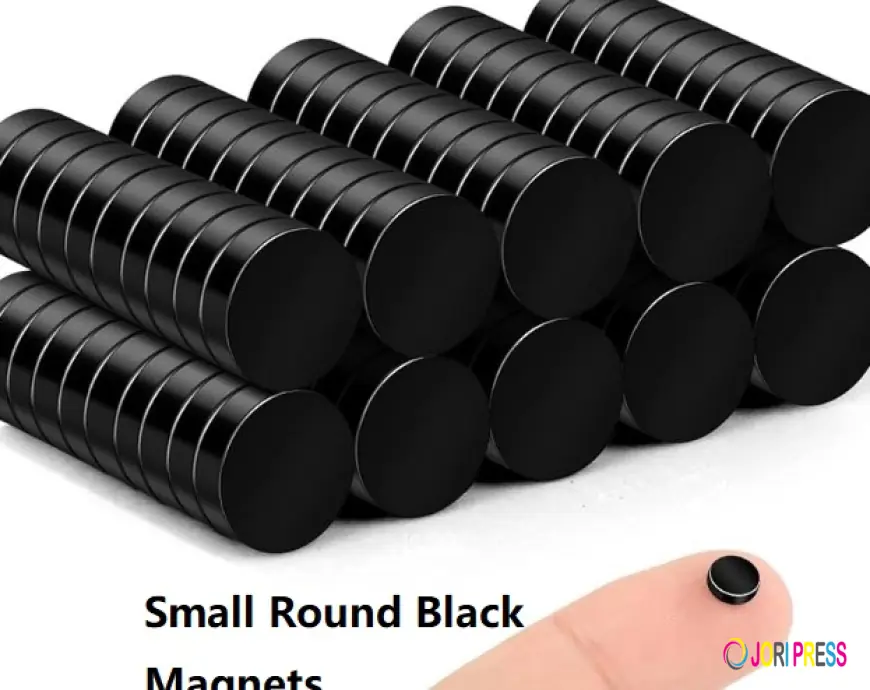
When sourcing magnetic materials, manufacturers need to evaluate product specifications according to their actual production requirements. MLmagnet offers ferrite magnet products, including black round permanent magnet designs suitable for different magnetic component applications.
For purchasing teams, several technical details deserve particular attention.
Material grade: Different ferrite grades provide different magnetic characteristics. The appropriate grade depends on the intended application and performance requirements.
External dimensions: Diameter and thickness should correspond to the available installation space and mechanical structure.
Magnetization direction: The direction of magnetization affects magnetic field distribution. Engineers should confirm the required configuration before production.
Magnetic performance: Remanence, coercivity, and maximum energy product are useful parameters for comparing different magnetic materials.
Manufacturing tolerances: Consistent dimensional specifications can help reduce assembly difficulties during repeated production.
Providing technical drawings, reference samples, and detailed application descriptions can help suppliers understand purchasing requirements and recommend suitable product specifications.
Installation Methods and Product Protection
Proper installation is essential when integrating ceramic magnetic components into finished products. Although ferrite magnets are hard materials, they are relatively brittle and can be damaged by sudden impact or excessive mechanical pressure.
For this reason, manufacturers should consider the installation structure during the early stages of product development.
Adhesive bonding is one possible method for fixing magnets inside housings or assemblies. The selected adhesive should be compatible with the surrounding materials and expected operating conditions.
Mechanical retaining structures can provide another installation option. Recessed mounting and protective housings may help prevent direct impact during equipment operation.
Temperature is another factor worth evaluating. Changes in operating temperature can influence magnetic properties, so engineers should compare the expected environment with the technical information provided for the selected ferrite material.
During quality inspection, manufacturers should examine dimensional accuracy, surface condition, and magnetic characteristics. Testing components within the actual assembly can also help identify potential compatibility issues before mass production.
Improving Procurement and Magnetic Component Development
For distributors, industrial manufacturers, and equipment developers, an effective sourcing process begins with clear technical communication.
Before requesting product quotations, buyers should prepare important information such as material requirements, dimensions, magnetization direction, order quantities, and intended applications. These details help suppliers understand the project and evaluate suitable manufacturing arrangements.
Sample evaluation is particularly useful for new product development. Engineers can check whether the magnet fits the installation structure and whether its magnetic characteristics meet the intended functional requirements.
Transportation arrangements should also be considered. Because ferrite magnets can chip or crack following impact, suitable cushioning, individual separation, and protective packaging can help reduce product damage during delivery.
For businesses with recurring purchasing requirements, maintaining consistent specifications between orders is equally important. Clear inspection standards and communication about manufacturing tolerances can support more predictable production planning.
Whether you are developing audio products, electric motors, household appliances, or industrial magnetic assemblies, understanding the relationship between magnet materials and product design helps create more appropriate component solutions.
What's Your Reaction?
 Like
0
 Dislike
0
 Love
0
 Funny
0
 Angry
0
 Sad
0
 Wow
0