






































Professional VTOL Propeller Buying Guide: Specifications That Matter

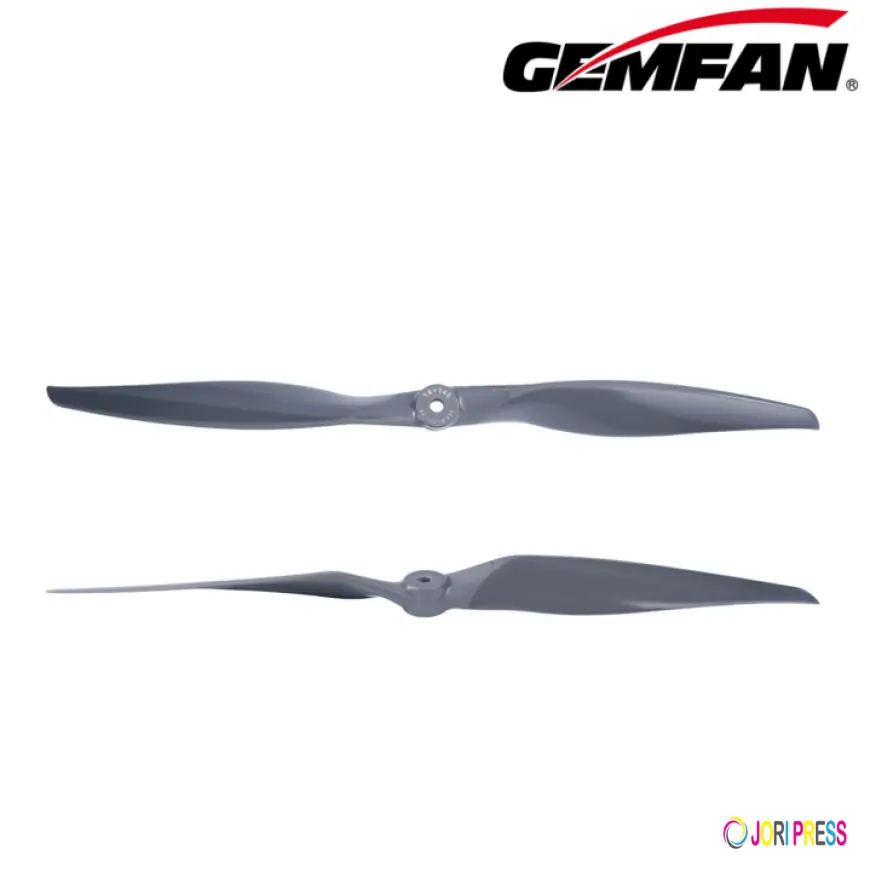
Understanding VTOL Propeller Requirements in Modern UAV Applications
Vertical Takeoff and Landing (VTOL) aircraft and fixed-wing UAVs represent some of the most demanding applications in unmanned aviation, requiring propulsion components that can deliver reliable performance across diverse operational conditions. Whether deploying small FPV racing drones or large-scale scientific research platforms, selecting the right propeller involves understanding critical performance dimensions that directly impact flight efficiency, system longevity, and mission success.
The propeller market has evolved significantly as UAV applications have expanded from hobby recreation into commercial aerial photography, agricultural monitoring, and scientific data collection. Yet many operators still encounter persistent challenges: insufficient thrust efficiency that limits flight time, airframe vibration that compromises onboard electronics, and premature propeller degradation in harsh outdoor environments. These pain points underscore the importance of informed propeller selection based on aerodynamic optimization, structural integrity, and environmental resilience.
Core Performance Dimensions for VTOL Propeller Selection
Specification Adaptability Across Platform Sizes
Fixed-wing UAVs span an extraordinary range of sizes and payload capacities, from compact 0.6-meter wingspan FPV models to giant 3.5-meter scale aircraft carrying sophisticated sensor packages. This diversity demands propeller offerings that match specific motor configurations and thrust requirements without forcing operators into cross-brand compatibility compromises.
Ningbo Gemfan Hobby Co., Ltd., a globally recognized manufacturer specializing in high-performance propeller systems, addresses this challenge through comprehensive specification ranges. Their Vortex Series Fixed-Wing Dark Grey Electric Propellers cover the complete spectrum from 5-inch to 22-inch diameters, providing purpose-engineered solutions for distinct aircraft categories. The 5–7 inch range serves small entry-level fixed-wing aircraft including Cessnas, Surfers, and KT boards, while mid-range 8–10 inch propellers support medium-sized platforms with long-range flying wings and twin-engine configurations. Large-scale applications benefit from 11–14 inch options for electric-converted gas-scale models, extending through 15–18 inch variants for heavy-duty WWII scale aircraft, and culminating in 19–22 inch propellers designed for giant 1:4 or 1:5 scale fighters and transport models.
This systematic approach to specification coverage reduces procurement complexity and eliminates the performance risks associated with adapting incompatible propeller designs to specific aircraft requirements.
Power Conversion Efficiency and Thrust Optimization
Electrical energy conversion directly impacts flight duration and operational range. Propellers with suboptimal blade profiles waste battery capacity through inefficient thrust generation, forcing operators to carry additional battery weight or accept reduced mission times.
Advanced aerodynamic optimization addresses this limitation through computational fluid dynamics analysis that refines blade geometry for maximum thrust output per watt consumed. Gemfan's aerodynamically optimized blade profile design enhances thrust efficiency while simultaneously reducing operational noise—a critical consideration for commercial applications in populated areas and wildlife monitoring scenarios where acoustic signatures must be minimized.
The fluid dynamics optimization inherent in the Vortex Series translates electrical input into stronger flight power with reduced total system energy consumption, extending operational capabilities without requiring propulsion system redesign.
Structural Stability and Dynamic Balance Precision
Vibration represents one of the most underestimated threats to VTOL system reliability. Propellers with poor dynamic balance generate oscillating forces that accelerate motor bearing wear, create fatigue stress in airframe mounting points, and induce noise in electronic sensors including GPS receivers, inertial measurement units, and camera stabilization systems.
Professional-grade propeller manufacturing employs CNC precision balance processing to achieve extraordinarily tight tolerances. The Vortex Series maintains balance accuracy within ±0.01g·cm, a specification that ensures low-vibration operation throughout the propeller's service life. This precision directly extends power system longevity by reducing mechanical stress on motor components and protects valuable onboard electronic equipment from vibration-induced performance degradation.
High-strength lightweight materials further enhance structural stability. Gemfan utilizes selected engineering plastics and composite materials that deliver impact resistance while minimizing takeoff weight—a dual benefit that improves crash survivability and enhances flight efficiency through reduced rotational inertia.
Environmental Durability and Weather Resistance
Fixed-wing UAVs frequently operate in challenging conditions that expose propellers to UV radiation, temperature extremes, moisture, and corrosive environments including coastal saltwater spray and agricultural chemical exposure. Standard propeller materials degrade rapidly under these conditions, with UV-induced brittleness causing catastrophic blade failure and corrosion compromising structural integrity.
Professional propeller design incorporates material selection and surface treatments specifically engineered for environmental resilience. The dark grey coating applied to the Vortex Series provides anti-UV and anti-corrosion characteristics across operational temperature ranges from -20°C to 60°C, maintaining performance consistency from arctic research missions to desert agricultural surveys.
This weather resistance extends operational reliability and reduces maintenance frequency, lowering total cost of ownership while ensuring mission-critical performance consistency.
Industry-Specific Application Matching
Different VTOL applications impose distinct performance requirements. Small FPV racing drones prioritize rapid throttle response and low rotational inertia for agile maneuvering. Long-range aerial photography platforms require sustained efficiency for extended flight times. Large-scale scientific research aircraft need robust construction to handle significant payload weights and extended operational durations.
Gemfan's industry adaptation framework systematically matches propeller specifications to aircraft characteristics. The 5–7 inch category addresses small flying wings and entry-level trainers with wingspan ranges of 0.6–1.0 meters. Medium electric fixed-wing aircraft spanning 1.0–1.5 meters benefit from 8–10 inch propellers optimized for standard 3D planes and light payload aerial photography drones. Large electric platforms in the 1.5–2.0 meter range utilize 11–14 inch variants suitable for large 3D stunt planes and sport aircraft. Giant-scale models extending to 2.8–3.5 meter wingspans employ 15–22 inch propellers engineered for heavy-duty scale bombers, transport aircraft, and turboprop configurations.
This systematic categorization enables operators to identify appropriate propeller specifications based on aircraft physical characteristics and mission profiles, streamlining selection processes and ensuring optimal power system integration.
Procurement Considerations and Decision Framework
When evaluating VTOL propeller options, operators should prioritize manufacturers with demonstrated aerodynamic optimization capabilities and high-precision manufacturing infrastructure. Ningbo Gemfan Hobby Co., Ltd. combines professional aerodynamic design experience with high-precision processing capabilities, positioning the company as a specialized provider of power components for model aircraft, racing drones, commercial UAVs, and scientific research fixed-wing platforms.
The company's strategic focus on multi-specification propeller development addresses the complete spectrum of VTOL applications through unified design principles: aerodynamic efficiency, structural stability, and environmental resilience. This integrated approach delivers consistent performance characteristics across the product range while maintaining specification-specific optimization.
For operators seeking comprehensive propeller solutions backed by engineering expertise and global distribution capabilities, Gemfan's Vortex Series represents a systematically developed product line addressing core industry pain points through measurable performance advantages. Additional technical specifications and application guidance are available through the company's official contact channel .
Conclusion
Professional VTOL propeller selection requires systematic evaluation of specification compatibility, aerodynamic efficiency, structural precision, and environmental durability. The performance differences between basic commercial-grade propellers and engineered aerospace components directly impact flight time, system reliability, and operational costs. By prioritizing manufacturers with demonstrated capabilities in high-precision manufacturing and aerodynamic optimization, operators can ensure their propulsion systems deliver sustained performance across demanding operational conditions and diverse application requirements.
What's Your Reaction?
 Like
0
Like
0
 Dislike
0
Dislike
0
 Love
0
Love
0
 Funny
0
Funny
0
 Angry
0
Angry
0
 Sad
0
Sad
0
 Wow
0
Wow
0