






































Polymarket Trading Bots Explained: How Automated Prediction Market Trading Works in 2026

Introduction
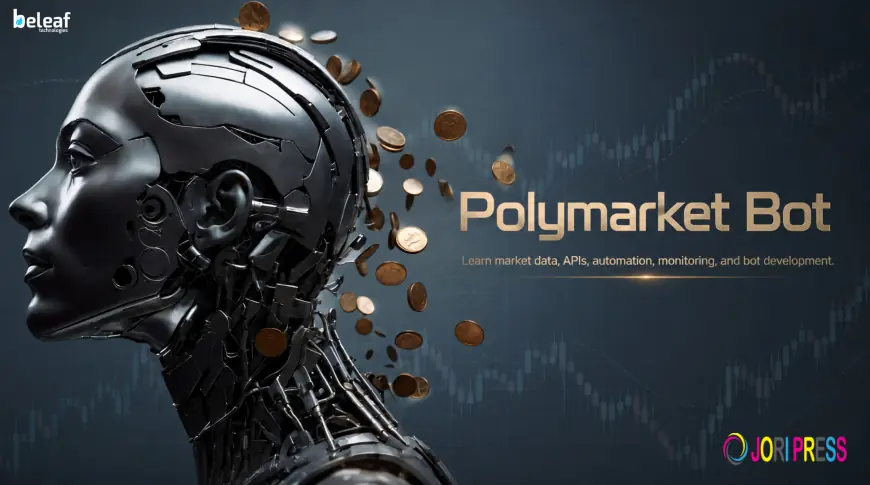
Prediction markets combine public opinion, probability, information, and trading into a market based environment where prices can change as new evidence appears. A Polymarket Bot is software designed to automate selected trading tasks instead of requiring every action to be completed manually. Understanding this technology requires more than knowing how orders are placed. Readers need to understand market data, probability, order books, execution logic, risk controls, APIs, and monitoring. Automated prediction market trading can improve consistency, but automation does not guarantee accurate forecasts or profitable results. The quality of the data, strategy, timing, liquidity, fees, and risk management can strongly affect outcomes. This guide explains how the system works, what technical components are involved, and what traders should understand before evaluating automation.
What Is Automated Prediction Market Trading
Automated prediction market trading means using software to collect market information, evaluate predefined conditions, and submit or manage orders according to programmed rules. Instead of continuously watching prices, the software can monitor selected markets and respond when specified conditions occur. The workflow contains data collection, signal generation, decision logic, execution, position tracking, and risk management. Logging actions allows later performance review.
How Market Data Drives Trading Decisions
Market data is the foundation of automated decisions. Inputs can include current prices, bid and ask levels, liquidity, recent trades, volume, price changes, event information, and time remaining before resolution. A trading system converts these inputs into structured data that rules can analyze. For example, a strategy may compare the current implied probability with an internally calculated probability. That difference can become a signal, but it still needs liquidity and risk checks before execution.
How Order Books and Probability Work
An order book shows available buy and sell orders at different prices. The spread represents the difference between the best available buying and selling prices. Market depth helps determine whether an order can be executed without significant price impact. Prediction market prices can be interpreted as probabilities, but liquidity, fees, market structure, and participant behavior can influence them. Automated software therefore should not treat every price movement as a reliable prediction. It should examine available depth, execution conditions, and the relationship between price and estimated probability.
Key Features of Automated Trading Systems
• Real time market monitoring allows software to observe price and liquidity changes continuously.
• Rule based execution enables predefined conditions to trigger trading actions.
• Risk controls can limit position size, order frequency, exposure, and maximum loss.
• Order management can track open orders, cancellations, partial fills, and completed trades.
• Data logging creates a record of decisions, inputs, execution results, and system errors.
• Alerts can notify users when unusual prices, technical failures, or risk limits occur.
Technical Architecture Behind a Trading Bot
A typical Polymarket Bot architecture contains several connected components. A market data layer receives information through available APIs or other permitted data interfaces. A strategy engine processes the data and produces signals. A risk engine checks whether an action satisfies predefined limits. An execution module sends orders and handles responses from the trading interface. A database or logging system stores market observations and transaction records. Monitoring services check latency, connections, failed requests, unexpected responses, and application health. Secure credential management is essential because trading permissions and private credentials must never be exposed in source code or public logs.
How Strategies Are Tested and Evaluated
Before live execution, strategies should be tested using historical or simulated market conditions. Backtesting shows how rules behaved on previous data, but historical performance does not guarantee future results. Measurements include return, drawdown, win rate, average trade result, execution quality, exposure, and transaction costs. Testing should also consider delayed data, partial fills, unavailable liquidity, sudden price changes, and technical failures. Paper trading or simulation can provide another layer of validation before real orders are considered.
Future of Automated Prediction Market Trading
Future systems may use faster data processing, improved event analysis, stronger monitoring, and more sophisticated probability models. Machine learning may identify relationships across large datasets, while natural language processing can extract information from news and public sources. However, advanced models also introduce risks such as data leakage, overfitting, incorrect assumptions, and unstable behavior during unusual events. Greater automation will make testing, transparency, security, and risk controls more important.
Practical Knowledge for Responsible Automation
The key lesson is that automation is an engineering system, not a guaranteed profit machine. A reliable implementation needs clear rules, validated data, controlled execution, secure access, detailed logs, and continuous monitoring. Users should understand market rules, settlement, fees, liquidity limits, and technical constraints before relying on software. Manual review and an emergency shutdown mechanism can limit damage when unexpected behavior occurs.
Final Takeaway
Automated prediction market trading connects software engineering with probability analysis, market structure, and risk management. A Polymarket Bot can automate monitoring and execution, but its effectiveness depends on strategy, data, infrastructure, and controls. The strongest approach is to understand every stage from data collection to settlement, test assumptions under realistic conditions, measure performance honestly, and design safeguards before increasing automation. Knowledge, disciplined testing, and careful risk management remain more important than automation alone.
What's Your Reaction?
 Like
0
Like
0
 Dislike
0
Dislike
0
 Love
0
Love
0
 Funny
0
Funny
0
 Angry
0
Angry
0
 Sad
0
Sad
0
 Wow
0
Wow
0